
I thought I was done with the Travel Log, yet there is one more post I want to share.
Why? Dubrovnik, Croatia deserves a post all of its own. What a delightful place to end this trip.
The”Pearl of the Adriatic” situated on the Dalmatian coast, became an important Mediterranean sea power from the 13th century onwards. Although severely damaged by an earthquake in 1667, Dubrovnik managed to preserve the beautiful Gothic, Renaissance and Baroque churches, monasteries, palaces and fountains. Damaged again in the 1990s by armed conflict, it is now the focus of a major restoration program coordinated by UNESCO.

Zee and I had two full days in Dubrovnik, and it didn’t feel like enough time. This is a town of approximately 40,000 people. There was a time when the old town, which is surrounded by two walls, held the lives of close to five thousand people. Today, approximately 800 people live inside the walls.
The city walls, mostly a double line, have long been a source of pride for Dubrovnik. The walls were erected in the 16th century and run for about 6,365 feet (1.3 miles, encircling most of the old city, and reach a maximum height of about 80 feet. Along its course within its walls lie several towers and fortresses, as well as numerous historic monuments.


What is it like to live in a city this old? It’s not easy. Everything needs to be carried in by self-labor or by a little cart for a good amount of money. No cars, no scooters. I did see an occasional bicycle or push scooter, but most of it is walking.
No motor vehicles are allowed inside the walls, and, except for the Stradun, the old city is a maze of picturesque narrow streets, many of them steep and twisting.

For families that have lived within the walls, living there is easy. For others who move in from outside, life within the walls is hard and not well loved.
Beyond the walls are many gardens that surround many villas.
Interesting Sites Within & Outside the Walls
The Orphanage
One side street has a difficult history. In earlier centuries, some infants born to household maids were abandoned or harmed. Local nuns later established an orphanage to provide a safer alternative. Mothers could leave infants anonymously through a rotating basket system, allowing the children to be taken in by the orphanage.


The children would stay until they were 6 years old, and then farmers would claim them for labor on their farms. It was not always an easy life for the children.
Worlds Oldest Grafittii
The oldest graffiti in the Old Town of Dubrovnik is unique and historically significant. It was carved in 1597 on the east wall of the church of St. Rocco. The content and message of the graffiti, written in Latin, is cautionary and philosophical.

The graffiti reads: “PAX. VOBIS. MEMENTO MORI QVI. LVDETIS PIL”, which translates to “Peace be with you, remember you who play the ball will die”. This text is aimed at young football players, reminding them of mortality and the transience of life. It’s a kind of reminder that while play and entertainment are important, life is finite and every moment should be cherished.
Proposing Marriage

Proposing with an earring is a beautiful, deeply rooted Croatian custom. Traditionally, men in the Dalmatia region gifted a small pair of intricate filigree earrings to their fiancée for the engagement. Later, during the church wedding ceremony, they would gift a larger pair to signify she is a married woman
The Church of the Holy Annunciation
This church is a stunning Serbian Orthodox church located in Dubrovnik. Built in 1877, this Neo-Byzantine style church is home to a remarkable collection of icons dating back to the 15th century. The church also boasts a library with over 12,000 books, including a rare New Testament printed in Kiev in 1703.

I learned that this church allows its priests to marry. They have no confession, and although the services are two hours long, it is standing room only in this beautiful church. There were some high-backed wooden chairs along the side for the elderly and infirmed.
Quarantime
Between the 14th and 16th centuries, Dubrovnik was a key hub in the trade between the Ottoman Empire and the West. Its Lazaret, or quarantine station, was built in 1627 to isolate the ill and prevent plagues from entering the city through people on the ships entering its port.

The walls surrounding the complex were added in the 18th century following the outbreak of a deadly epidemic. Considered the most humane and efficient facility of its kind at the time of its construction, the lazaret continued to fulfill its original function as a quarantine unit until the beginning of the 19th century. After its closure, it slowly deteriorated due to lack of maintenance and damage from by salt air, fire, earthquakes, and civil unrest. Modest repairs to the complex occurred in 1969-70.
The Dubrovnik lazareti is one of the only remaining and best preserved examples of its kind in Europe, and the only example of a maritime lazaret in the Mediterranean. Its survival with a large portion of its original materials, details, shape, and structure is unusual. Most comparable structures, including the oldest ones in Milan and Venice, and smaller quarantines on the Dubrovnik islands, were pulled down after the threat of plague had passed.

What is This?
I saw these in a few of the walls. The original part was the thin straight opening. Arrows were shot through these openings in defense of the city.
Later, the round area was added when cannons became part of the defense of Dubrovnik.
The Game of Thrones
Dubrovnik was a major set for the HBO series “Game of Thrones”. It was filmed in the Old City and in areas outside of the town. I have never watched this, but Zee is a big fan. Here are some of the areas you fans might recognize.


E1 series Racing
And finally into the current day. The E1 Series was in Dubrovnik while we were there. The E1 Series is the world’s first all-electric powerboat championship. Often called the “Formula 1 of the sea,” it combines sustainable marine technology with high-speed racing in iconic global cities.

It was fun to sit with other people to watch the races. I enjoy coming across unexpected events such as this.
Before we went to the airport, Zee and I took one more ferry to Lorkum Island. It was a short ride. The island is part of the history of Dubrovnik. Lokrum Island is a small, lush nature reserve located just off the coast of Dubrovnik. It is famous for its Benedictine monastery ruins, wild peacocks, and the “Dead Sea” (a small, salty lake for swimming). The island is also a popular Game of Thrones filming location.


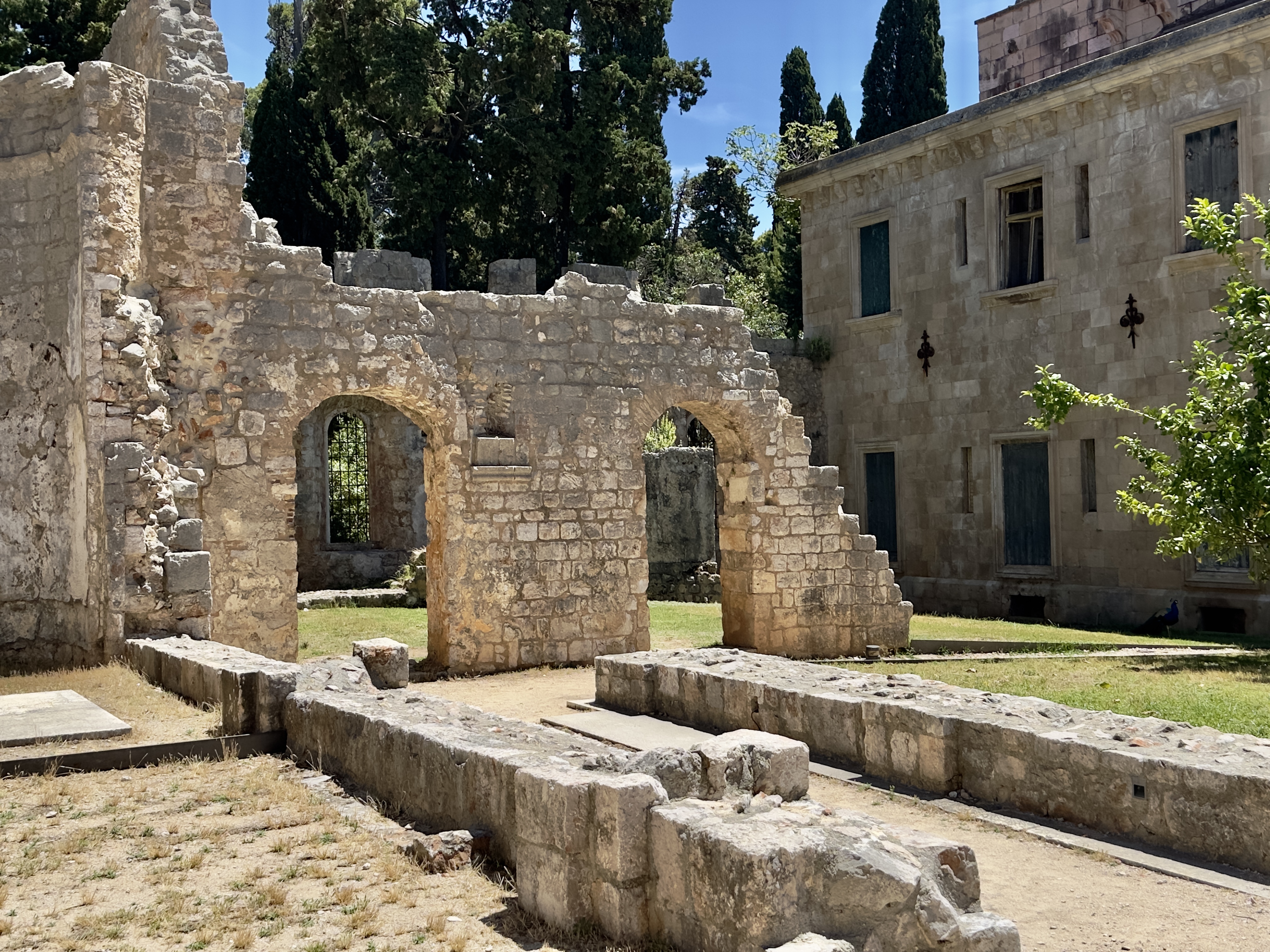


And just like that, it was time to go to the airport. It was time to say goodbye to Croatia. Both of these countries, Turkyie and Croatia, were hard to leave behind. Maybe I will be back again someday.
Currently, though I returned to the United States twenty-four hours ago, late in the evening. And a wonderful holiday is over. As long as I can, there will be other adventures to discover.
And one more time.
