A Travel Log of Korčula: From Old Town to National Parks

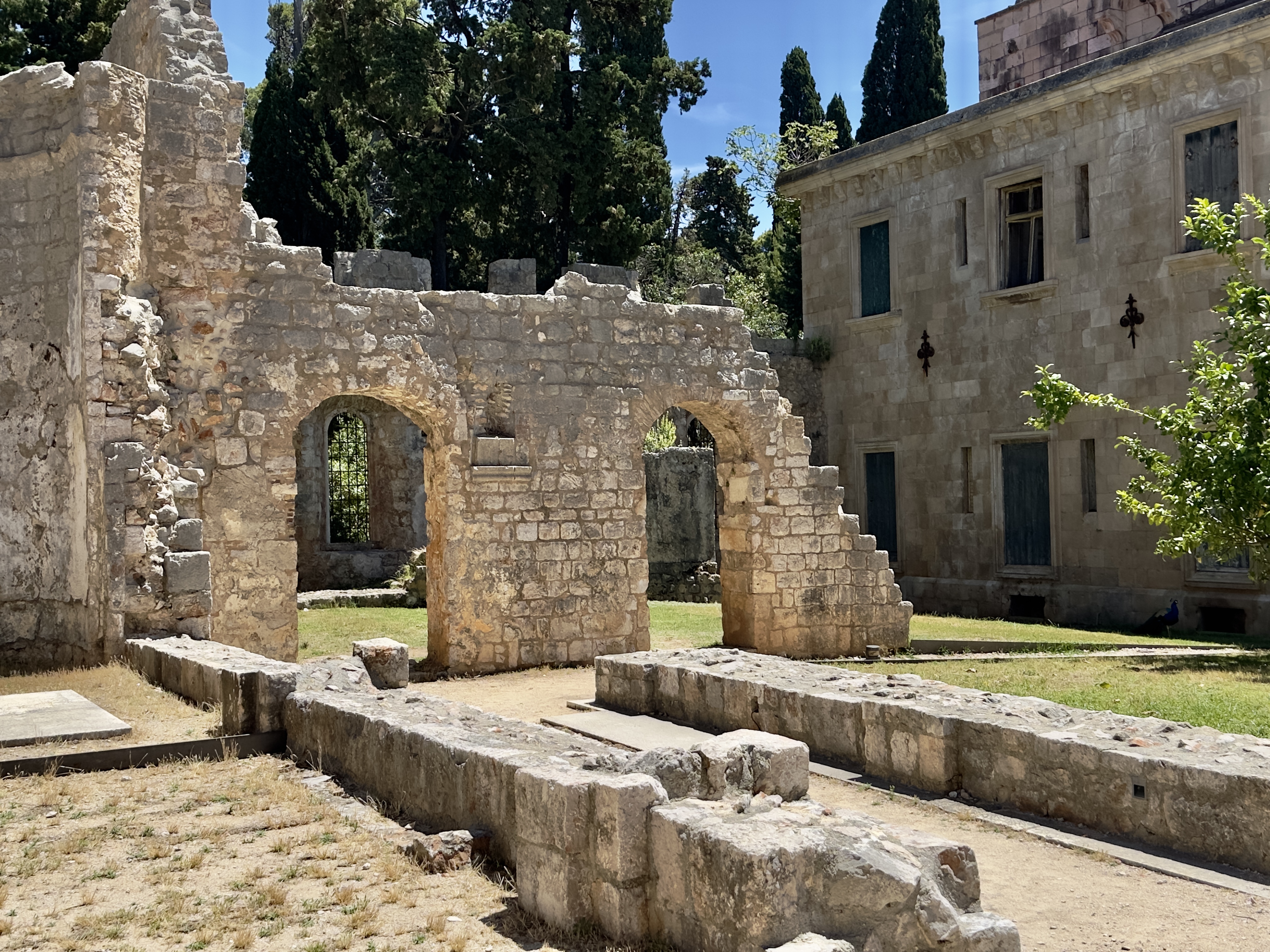
One more Croatian Island to go. After leaving Hvar, we moved on to Korčula, another unique Croatian town and Island. I felt like I had walked into the movie set for The Lord of the Rings. True towers, a drawbridge, battles from the ramparts, pirates, and more.

Compared to Hvar and several other places I visited, Korcula was quiet. There were tourists there, but not in the numbers I had seen in many of the other parts of Croatia.

Korčula has been inhabited since prehistoric times, as evidenced by Stone Age finds from Vela Spila near Vela Luka, now part of the Vela Luka Culture Center’s collection. In the 4th century BC, the Greeks founded a colony on Korčula and called it Korkyra Melaina or Black Korčula. Under their rule, the island was called Korkyra Nigra. The attribute “Melaina” or “Nigra” this beautiful island owes precisely to the lush Mediterranean vegetation, primarily forests of holm oak and pine.

The island of Korčula is almost completely connected to Pelješac by the Pelješac canal. The town of Korčula is among the most beautiful and best preserved medieval towns on the Croatian coast and in all of the Mediterranean, and is justly referred to as “Little Dubrovnik.” It still has the appearance it had at the turn of the 16th century – the same stone towers, walls, and the same fishbone structure of the streets.

Korčula’s town planners took into consideration both functionality and perfect harmony with nature – the streets are lined so that the refreshing wind from the west can pass, while the cold winter winds from the northeast (called bura) are blocked.

We started our exploration of Korcula with a walking tour of the “Old Town”. Old town, of course, means within the fortress walls. Our guide was very informative. The creation of this town was planned well.

The steps are a later creation. There used to be a drawbridge where the steps are today. If the enemy came, they drew up the bridge. If you enlarge the photo by clicking on it, you can see the holes in the tower where the ropes were for the drawbridge.

The streets of Korčula’s Old Town are designed in a brilliant geometric herringbone pattern. Built in the Middle Ages by the Venetians, this layout acts like natural air conditioning, controlling the wind and the sun to keep the town comfortable.

How the Herringbone Design Works

  • Central Spine: A single main street divides the old town, running straight along the top of the island’s ridge.
  • Western Streets: The streets on the town’s western side are laid out in straight lines. This lets the refreshing summer breeze, called the maestral, blow straight through the town and cool the houses. 
  • Eastern Streets: The streets on the eastern side are slightly curved. This curve blocks the fierce, cold winter winds, known as the bura, from rushing through the city and freezing the homes. 

Other unique features of this town are included below.

Hidden Plumbing: The houses are built in long, parallel blocks. The fronts of the houses face the streets, while the backyards and wastewater canals were cleverly hidden in the middle of the blocks.

Narrow and Shaded: The side alleys are incredibly narrow. This provides deep shade during the hot summer months, ensuring the sun never hits the ground directly. 

Stepped Alleys: Because the town sits on a small hill, almost all the side streets use steps to help you climb up and down easily. 

Arches Across the Alleys: You owned a small home. If you wanted to expand and acquired the home across the street, an arch was built to connect the kitchens.

The Kitchens & Bathrooms: To prevent fires, the kitchens were on the top floor. The bathrooms were on the first floor.

The Street of Thoughts: There is one notable street running along the southeastern wall, without any steps. Local history says it was called the “Street of Thoughts” because walkers did not have to stare at their feet to watch for stairs.

Korcula Old Town, Within the Walls

Unique in its design, the system still had some flaws. The town was once home to close to 1,000 residents. They lived there for protection and community. Today, approximately 300 live within the city walls. Why? Look how narrow the streets are. No cars can come into these streets. That means you have to carry everything in and out of the walled city. There are steps everywhere; only one street has no steps.

While we were exploring the old city, we climbed the bell tower at the Korcula Cathedral. The stairs were not for the weak of heart. The view from the top was breathtaking. I hoped the bells did not ring while I was up there.

Climbing the Cathedral Tower.

One evening we went to the west side of the walled city to have dinner and see the sunset. People seem to do that a lot here. It was not disappointing.

Sunset View

On the second full day, we took the ferry, a 35-minute ride, to the island of Mljet. One of Croatia’s National Parks is on the island. With a bit of trepidation, along with Mary, I rented an E-bike to bike the park. After a few practice runs up and down the main street, I was ready to go.

Mljet National Park is a large area that borders two saltwater lakes. The Lakes stretch for about 4 kilometers. Right in the middle of the Large Lake, there is a small island/islet, Melita (Sveta Marija), with a large building of the former Benedictine monastery, erected there in the 12th century. The monastery’s building is now a café/restaurant. The small island is connected by boats that sail there from both sides of the Lake.

Miljet National Park.

The Benedictine Monastery is now a restaurant. You flag them from the mainland, and they send a boat over to pick you up. It was early, so we pushed on.

There was a small steep bridge we needed to cross with our bikes. Up, Up. Down, Down. Have I told you how heavy E-bikes are? Our very own angels showed up. They easily lifted the bikes up and down while Zee and I followed behind.

The bridge is fairly new. At one point, Tito moved to the island with the Monastery. He tore down the original bridge to gain full access to the ocean and bring in supplies. After he left, the new bridge was built.

The National Park was cool, quiet, and unhurried. It took us about 3 hours to bike the park. I enjoyed stopping and looking at all the Butterflies on the thistle and lavender.

Upon our return to the ferry port, we found a cool place in the shade, met this lovely woman from Switzerland, and chatted until the ferry returned us to Korcula.

Today we say farewell to the islands and return to the mainland. Back to the big city, Dubrovnik. Well, not quite the big city, as Dubrovnik has approximately 40,000 residents. I am not quite done exploring yet. We have two full days to explore before returning to Istanbul and the flight stateside. Oh, what a trip it has been.

Travel-log – Hvar Island: From Ancient Times to Modern Luxury

Time on the islands of Croatia never feels long enough. With the warm sunny days and the beautiful blue Adriatic Sea, it feels like I could spend more time on each of the islands I have visited. But wait…there are more islands to visit. I guess I will have to return.

A true hedonism has been present on the island of Hvar, ever since the time of sumptuous Roman villas, springing from the walls of Renaissance summer houses, and, despite all the challenges of island life, it slips even today into the reveries of modern nomads who enjoy the splendor of Hvar, where, 157 years ago, organized European tourism began.

As one would expect on an island, the history of Hvar has been broadly shaped by outsiders, each invading force leaving its mark, resulting in a rich cultural, archaeological, and architectural legacy.

The earliest signs of civilization on Hvar date back to Neolithic times and the so-called Hvar Culture of 3500 – 2500 BC.

Given its prominent position on a busy sea route, it is perhaps surprising that the island was not settled earlier than 384 BC, when the Ancient Greeks founded the settlement of Pharos (modern-day Stari Grad). The Ionian Greeks, the Parans, were in search of a base for military and trade expansion, and the deep bay at Pharos offered the best protection.

The first recorded naval battle in the Adriatic took place just off Hvar, with the Greeks successfully taking on the native Illyrian tribe of the Liburni.

With the decline of the Syracuse Empire, Pharos enjoyed a brief period of local rule under Demetrius of Hvar, who kept the Romans at bay until they finally smashed the walls of Pharos in 229 BC. The Romans used the island as a strategic and logistical base, keeping their boats in the protected bays of the Scedro and the Pakleni Islands. Roman holiday houses sprang up in the bays close to fresh water, most notably in Hvar, Stari Grad and Jelsa. Archaeological finds confirm that the islanders were engaged in wine growing, fishing, and trade.

There is little recorded about Hvar after Roman rule, but the island, along with the surrounding islands, was under the Croatian state of the Neretljani in the early Middle Ages before being briefly occupied by Venice in 1147. This was only temporary, however, as Croatian-Hungarian King Bela III managed to bring Dalmatia under his rule.

The Venetians were back in 1278, having been invited back by the islanders looking for protection from the pirates of Omis. One of the early changes the Venetians introduced was moving the central administration from Stari Grad to Hvar, and the new center became a regional administrative center for Hvar, Vis, and Brač. A plan to build walls around the town and monastery was initiated in 1292.

Venice’s rule was far from secure, and the island’s noblemen rebelled in 1310. Hvar’s rulers changed several times (Croatian-Hungarian kingdom, Bosnian kingdom, and Dubrovnik) before, along with the rest of Dalmatia, a more protracted period of Venetian rule from 1420 to 1797.

Hvar became the main Venetian port in the eastern Adriatic, but was under constant threat of attack from the Turkish fleet, which controlled the mainland near Makarska. A devastating Turkish naval attack in 1571 under Algerian commander Uluz Ali in 1571 laid waste to Vrboska, Stari Grad and Hvar.

Hvar prospered under Venetian rule and was known for wine, lavender, olives, rosemary, fishing, and boatbuilding. More than three centuries of Venetian rule came to an end in 1797, when the Austrians briefly took over before being themselves usurped by the French. The Russians bombarded Hvar in 1807 in a period of general instability and warfare in Europe, until the Austrians retook control in 1813, a rule that lasted into the 20th Century.

Austrian rule was stable and brought prosperity, most notably in the development of health tourism on the island, with the founding of the Hvar Hygienic Society in 1868. The oldest meteorological station in Croatia was also established in 1858. Austrian rule also brought infrastructure improvements to the island, including the rebuilding of all the ports, the construction of new lighthouses, the reclamation of malaria-infested marshland, and the construction of a road connecting Jelsa to Pitve and Vrisnik in 1907.

The Italians were back in November 1919, occupying Hvar once more after fierce fighting, an occupation which lasted until the 1921 Treaty of Rapallo consigned the island to membership of the Kingdom of Serbs, Croats and Slovenes, later the first Yugoslavia and then the Socialist Federal Republic of Yugoslavia.

Hvar’s latest (and one would hope permanent) change of master occurred on January 15, 1992, when Croatia was recognized as an independent state.

The former Yugoslav army (JNA) attacked Croatia in July 1991, and Hvar was blockaded the following month. The main effects of the blockade were shortages of foodstuffs normally brought from the mainland, such as flour, and a lack of access to hospitals and other medical services.

A ceasefire was signed, and the navy left Sucuraj territorial waters on December 3, 1991.

St Stephens Square

The situation on the ground in the mainland was dire, with large tracts of Croatia occupied. A steady stream of refugees had to be housed, and a logical supplier of beds was Hvar, devoid of tourists due to the conflict. Refugees, particularly from the front-line town of Vukovar, began to arrive by boat.

The refugee situation deteriorated in 1992 as Croatia took in numerous refugees from the brutal war in Bosnia and Hercegovina. The effect of traumatized refugees replacing affluent tourists was twofold: a severe reduction in revenue and a severe increase in wear and tear in the hotels.

A UN fact-finding mission in August 1992 found that there were 624 displaced persons and 3,727 refugees on Hvar, of whom 1,323 were in private accommodation, the rest in hotels. Usually closed in winter, most of the hotels had no heating installations, which caused problems for the new temporary residents.

With the demographic balance upset in both directions – an increased population during the winter and a decrease in the summer due to a lack of tourists – the hotels were full year-round, which had a negative impact on the condition of the buildings.

The absence of many paying visitors had a devastating effect on the island’s economy, leading to the closure of many cafes and restaurants.

The cafes & restaurants closed due to a lack of electricity (from the occupation of the Peruca dam, the source of hydroelectric power) and difficulties obtaining necessary goods such as coffee, milk, etc., from the mainland. Many of Hvar’s male population were drafted into the defense forces on the front line near Zadar, where one man from Stari Grad was killed, and many more returned suffering from PTSD.

Thankfully, both Hvar and Croatia have recovered well from those dark days. A highly successful marketing campaign under the slogan, Croatia, the Mediterranean as It Once Was, proved very effective, and a new generation of tourists joined the returning older generation to discover the magic of the Adriatic. Hvar was named one of the 10 most beautiful islands in the world by Condé Nast readers back in 1997, and it has never looked back. Major investments in the town’s hotels and the upgrading of cultural treasures such as the Arsenal and the oldest public theatre in Europe has meant that Hvar is once more a major luxury tourism destination on the Croatian coast.

A trail from Hvar leads to Napoleon’s fortress, built in 1812 on top of a 230-meter-high hill above the town of Hvar. Today, Napoleon’s Fortress is home to the Hvar Observatory. The research office is dedicated to astrophysics and has the largest star telescope in Croatia with a one-meter mirror. The trail from Hvar leads along a narrow, steep path through a beautiful pine forest to Napoleon’s Fortress. The fort offers a beautiful view of the town of Hvar and many nearby islands, such as the Pakleni Islands, Vis, Brač, and Solta.

We did not have time to visit this fortress while we were there. The stairs looked daunting, and we had excursions while on the island. I would go back just to explore this Fortress.

The first evening included a sunset sail and swim. The water was not as warm as I expected. Our captain told us to give it a few more weeks, and it would be warming up for the influx of tourists in the busy season, July and August.

Our first full day, we took a high-speed boat tour to the outer islands, including the island and town of Vis.

In 397 BC, Dionysius the Elder, ruler of Syracuse, founded the colony of Issa, known today as Vis.

And like many other posts on my blog since my arrival to Turkyie the history of Vis is of the rise and fall of empires.

Much like the surrounding islands and area, Vis fell to French and then Austrian control. However, following the Battle of Lissa in 1811 (between the British, the French, and the Venetians), British bases were established on the island, including George’s Fortress. As part of the Austrian Empire, Vis became a naval base and was strategically important in a sea battle between the Austrians and Italians in 1866 (with Croatians making up a large number of the sailors on Austrian ships).

During World War II, Vis was the hiding place of partisan/resistance leader Josip Broz Tito, who became leader of Yugoslavia after WWII. During this war, Vis was also a major base for British and Allied troops – there is a British military cemetery on the island. Allied fighter planes were also based there.

A sign in front of a cave on Vis marking the fact that Tito – leader of the Yugoslav Partizan resistance movement during World War II – stayed and worked here in 1944

After 1945, Vis was closed to tourism by the Yugoslav army as it was used as a major naval base. The pictures below show bunkers on the island. They also had a hidden water bunker for any captured submarines.

It was reopened to foreigners only in 1989 and was part of Croatia, which gained independence in 1991. All the navy/military buildings on the island were abandoned at that time, although many of them can be visited today – including the cave in which Tito ‘hid’ in during World War II.

It was a full day of traveling and swimming. I took time in the evening to do what so many others do in Hvar. I walked the waterfront, and people watched. Hvar felt very much like a Mediterranean seaside resort. Don’t misunderstand me, there was so much history here to unravel and understand. But sitting in the main square and on the walkways on a Saturday night was truly a fashion extravaganza. Women were dressed in long luxurious summery gowns, and the men were in full suits. It was such a parade. I enjoyed strolling, sitting, and watching as the parade of people unfolded before me.

The last full day on the island, Zee and I went on a guided kayaking tour. Crossing the main channel from Hvar to the Pakslinski Islands was rough. Waves were coming in one direction, and the wind was blowing from the opposite direction. Big ferries and boats came zipping past. I was pretty exhausted by the time we arrived back in Hvar later in the day. It was quite the ride. Once again, we had this knowledgeable young guide with us who knew so much about Croatia’s history.

After a busy time on this island, we had to say farewell. There was so much to see here and the time felt short. But wait…There are more islands to visit, so sadly we had to say farewell to this island and the people who made it so special.

I realized today that in each place we have visited in Croatia, I have met the nicest people. They are from all over the world. It has helped that most have spoken English. Most people in Croatia begin learning English in grade school.

Enjoy the travel log; as my trip comes to a close, there will be only a few more posts. I hope that you have enjoyed the photos and stories of this trip.

And without fail…A Kitty!

Travel-log: Today Turkey – Tomorrow Croatia

Well it has been an action-packed two weeks. When traveling with a tour group, one is on the move. I have seen a lot of Turkyie and reawakened some ancient world history.

Before I get on the plane, I wanted to share some photos of the last places I have been since I last posted.

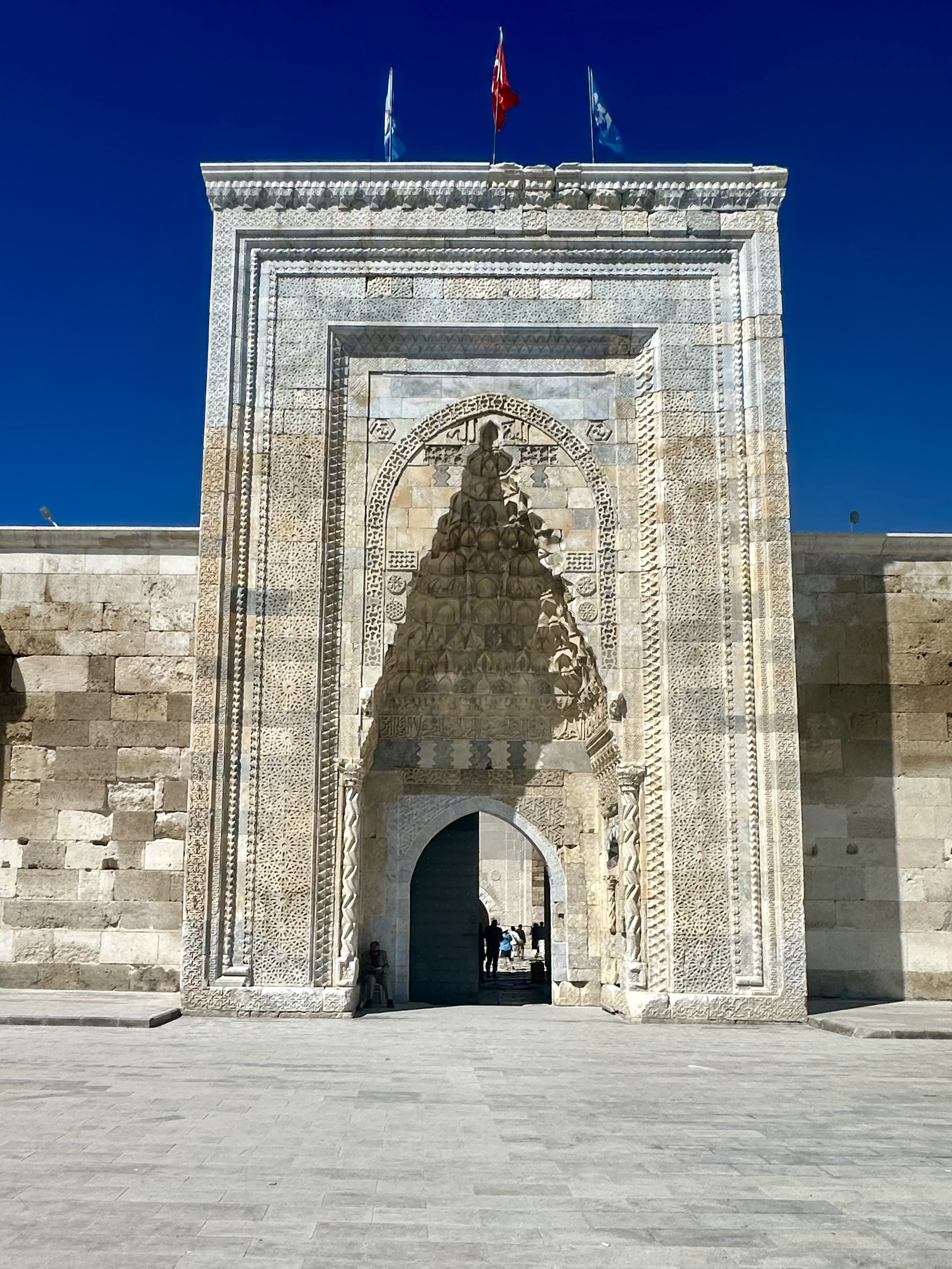
First stop was on the Silk Road at a Caravanserais. Hmmm…What is that?

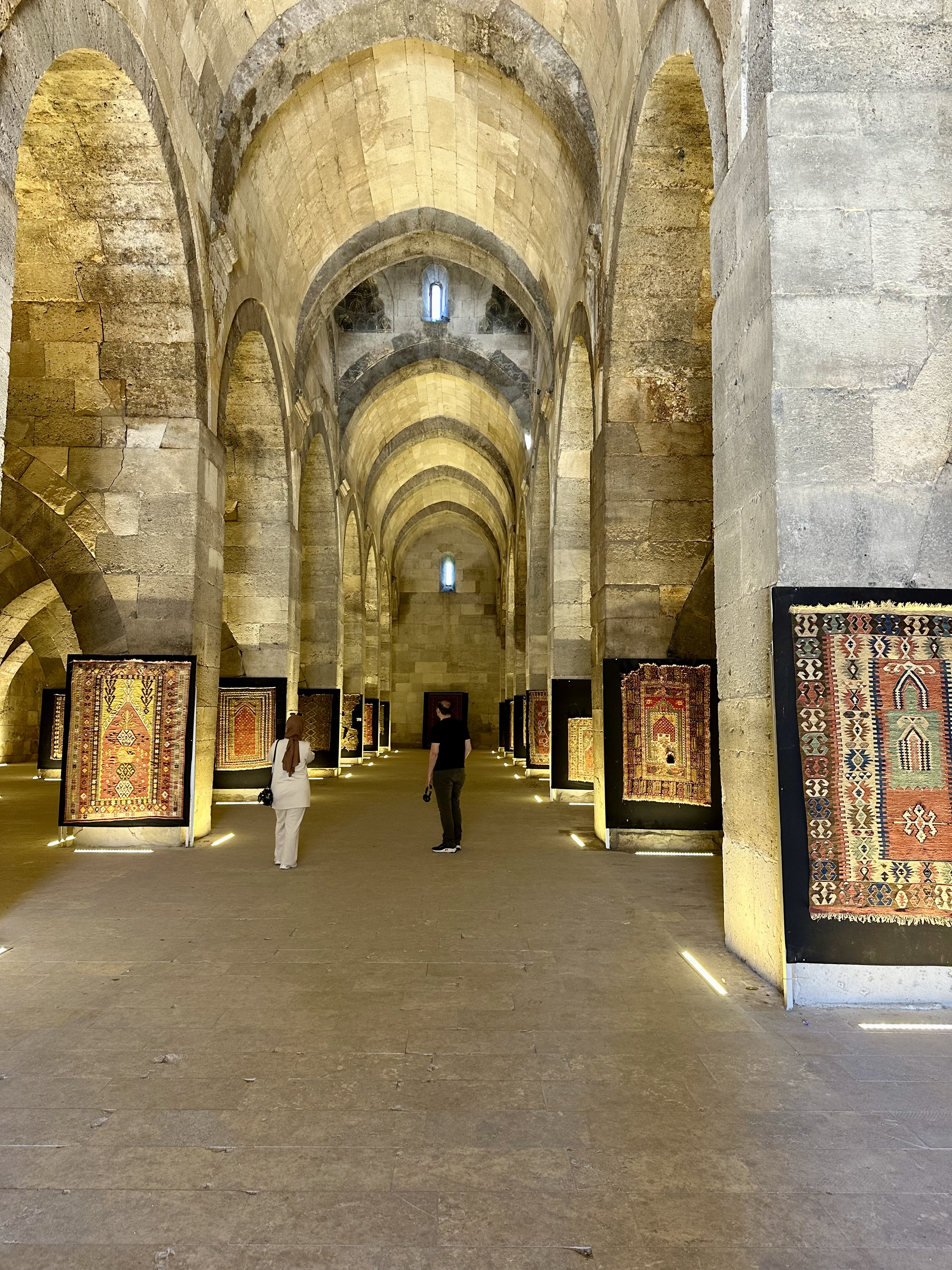
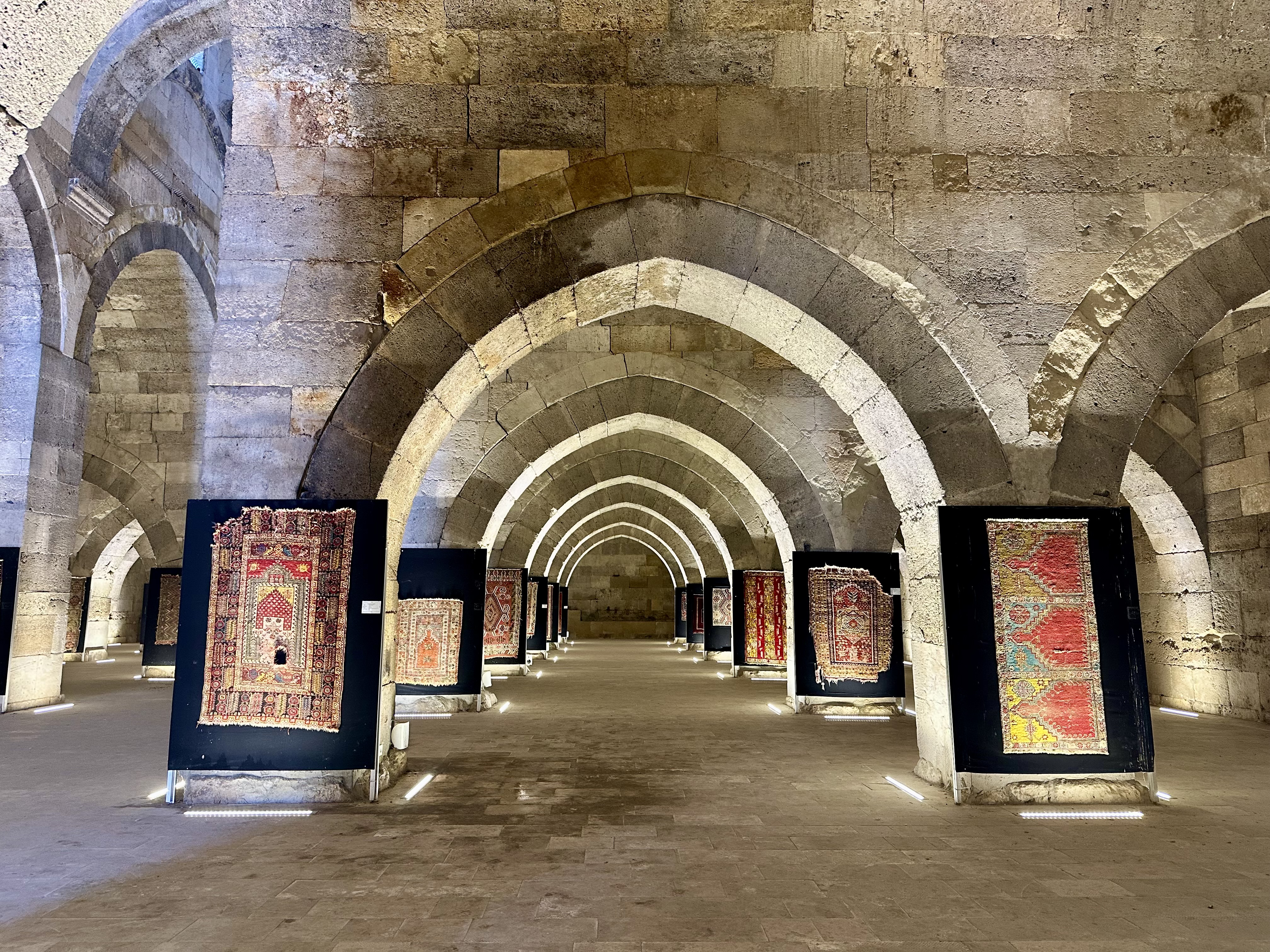
The site, formally known as Sultan Han, is widely regarded as one of the finest surviving examples of Seljuk-era architecture anywhere in the world, and carries the additional distinction of being the largest caravanserai still standing in the entire country — covering approximately 4,900 square metres, which is a considerable amount of 13th-century stonework by anyone’s standards. It was built between 1229 and 1236 on the orders of the Seljuk Sultan Alaeddin Keykubad I, who had apparently decided that the 300-kilometre stretch of road between Konya and Aksaray needed a decent pit stop, and wasn’t going to do things by halves.

The word han translates roughly as “inn” or “hostel,” which rather undersells this place. Caravanserais like this one were the essential infrastructure of the medieval trading world — vital stopping points along the great overland routes of the age, including the Silk Road, that extraordinary network of tracks and paths connecting China and Central Asia to the Mediterranean and beyond. Merchants travelling these routes were shifting silk, spices, ceramics, glassware, and every other commodity you care to mention across thousands of miles of difficult and often dangerous terrain. They needed somewhere to stop, eat, sleep, water their animals, and repair their equipment. Sultan Han provided all of that, and at the Seljuk Sultan’s express instruction, it did so entirely free of charge for the first three days of any traveller’s stay. Three days. Free food, free lodging, free stabling. The medieval equivalent of an extremely generous service station.

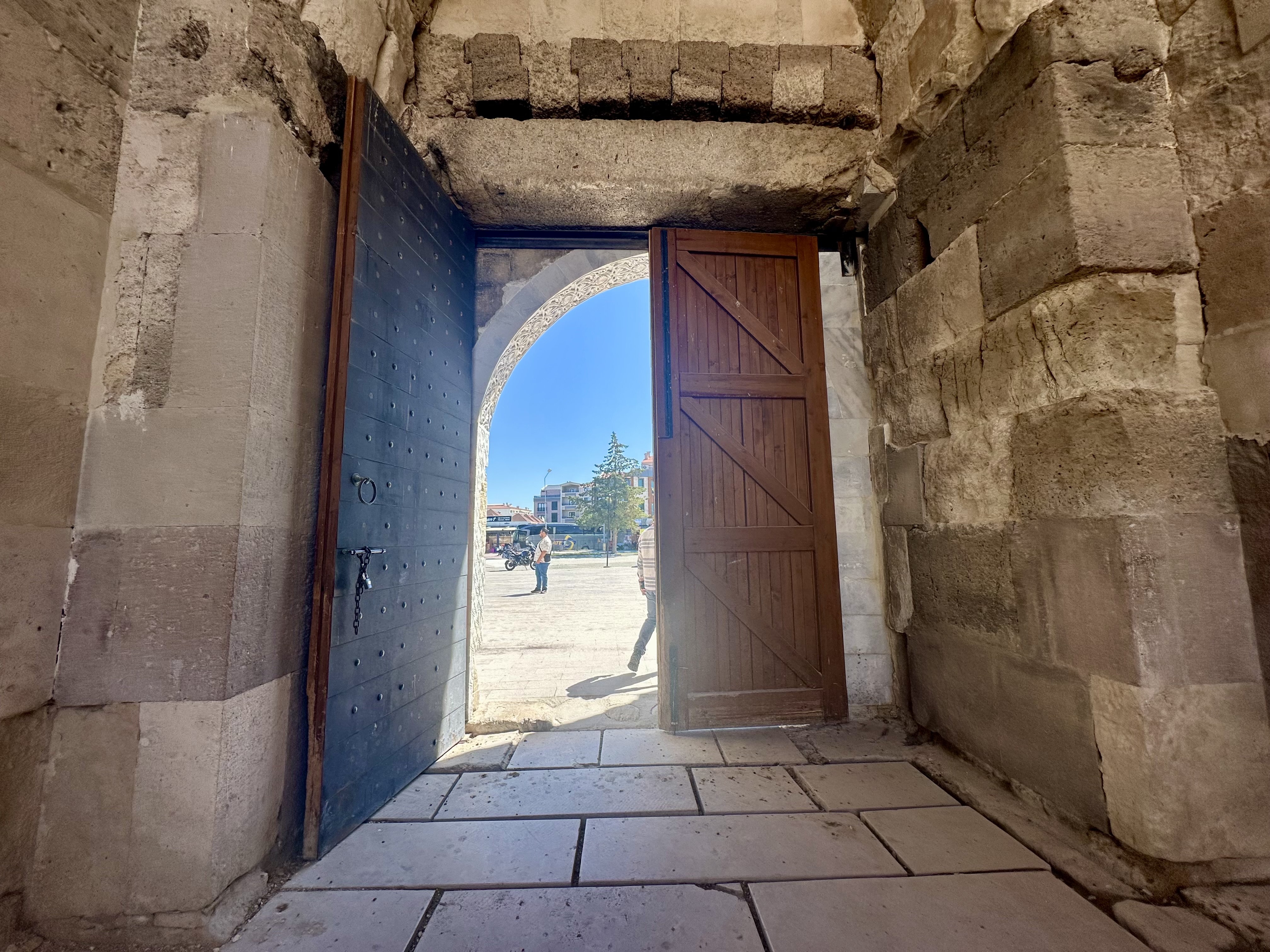
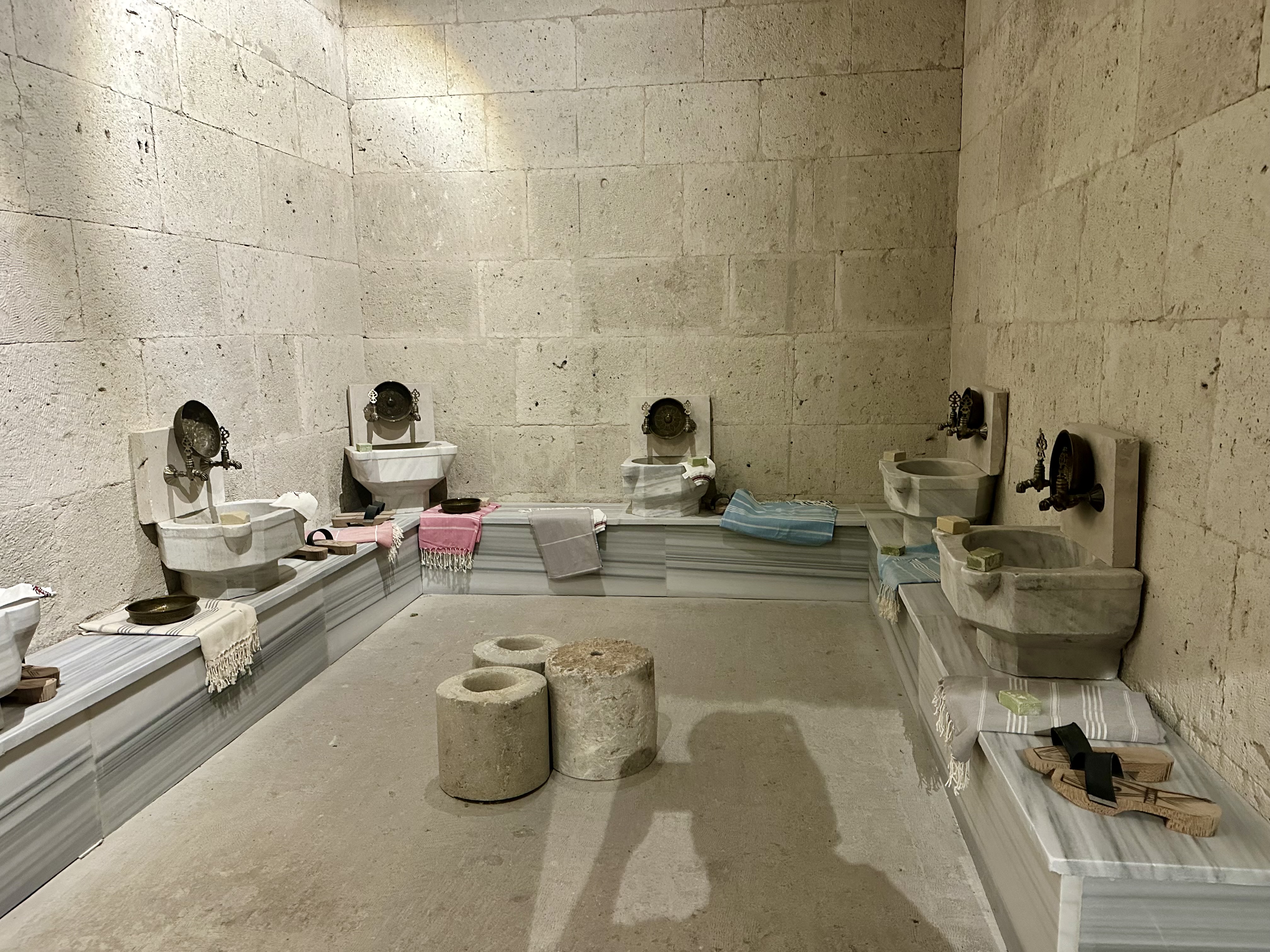
In practical terms, these structures were simultaneously inns, warehouses, stables, bathhouses, mosques, and fortresses. The fortress element was not decorative — travelling merchants were carrying valuable goods through remote and occasionally lawless territory, and the thick stone walls and single heavily guarded entrance were there for very good reason. The Seljuk Sultanate of Rûm, which controlled much of Anatolia during this period, built a string of caravanserais roughly a day’s journey apart — approximately 30 to 40 kilometres (about 25 miles), a camel’s ride length— specifically to encourage and protect trade.

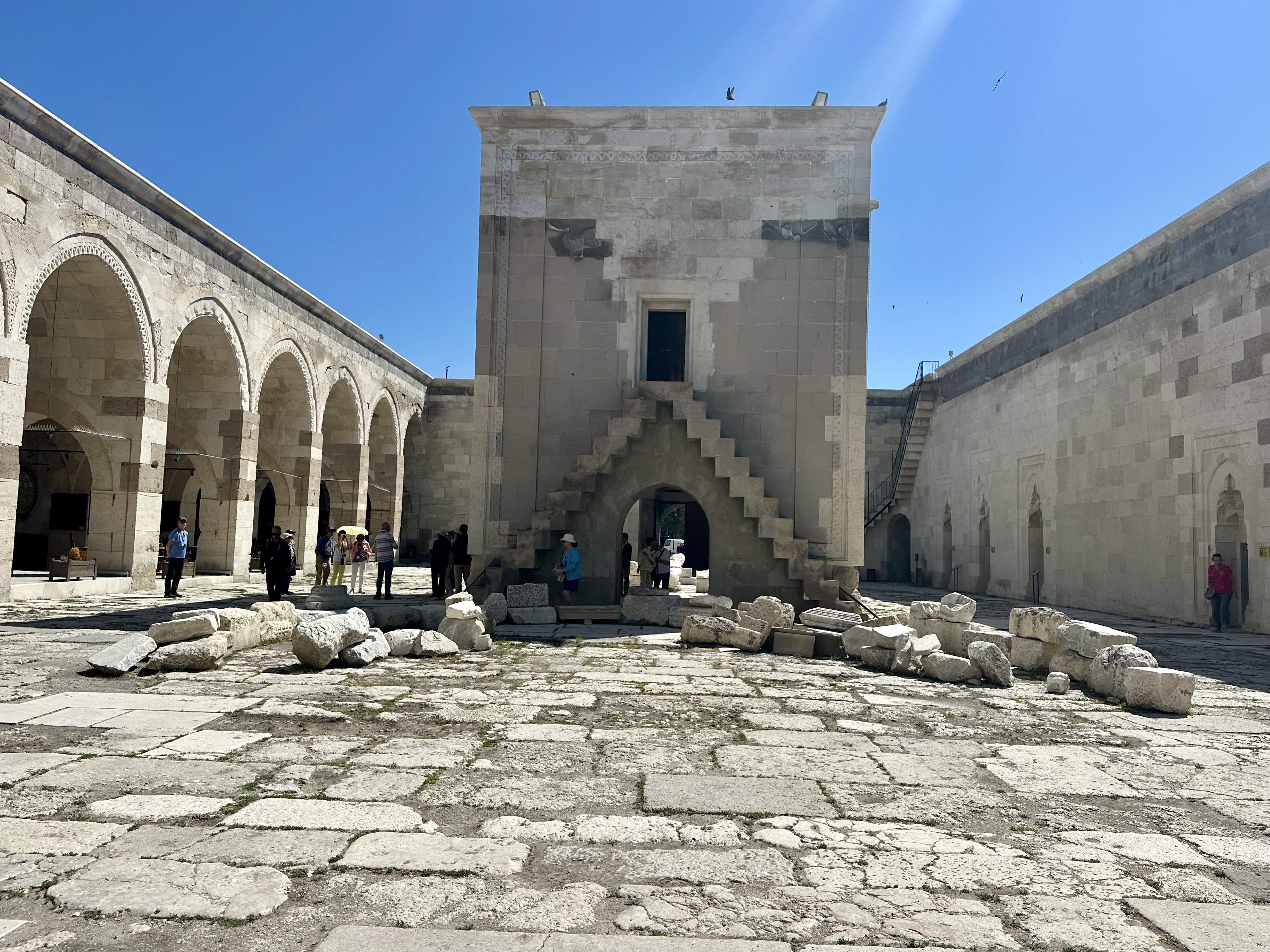
Once through the entrance, this courtyard would have been absolutely heaving with life. During the warmer months, traders arriving along the old caravan routes would have bedded down here alongside their camels, horses, and whatever else they’d dragged across the desert. It wasn’t glamorous, but then neither is a Premier Inn, and at least here you could see the stars.

One side of the courtyard is lined with a covered arcade — a shaded walkway of the kind you find all over the ancient trading world, designed less for aesthetic charm and more for keeping the sun off your head while you argued about the price of silk.

It’s generally believed that this arcade area originally served as stabling for animals or storage for goods — the kind of unglamorous but essential infrastructure that kept the whole trading system ticking. Nobody builds a plaque for the horse stalls, of course, but without them the merchants would have got precisely nowhere. Over the centuries, as the caravans stopped coming and tourism quietly took their place, the space was repurposed. It’s a practical reuse of what was there, and to be fair, it doesn’t feel cynically commercial — more like a sensible acknowledgement that the world moves on and people still need somewhere to sit.

As a reminder of the Caravan Days today next to the site is a small shopping area with a cafe. You can buy many things there but tea and ice cream are still a favoriite.

Next it was on to Cappadocia the place of the Cave Houses and Churches with a history that goes way back.

The cave houses of Cappadocia, carved directly into the soft volcanic tuff of central Anatolia, have been continuously inhabited for thousands of years. Originally adapted by ancient civilizations as basic shelter, they later served as safe havens for persecuted Christians before evolving into today’s sought-after boutique hotels.

Hittites & Phrygians (circa 8th–7th Centuries BC): Early inhabitants of the Anatolian plateau began carving basic structures into the soft volcanic rock for seasonal storage, wineries, and simple dwellings.

Geological Advantage: The landscape’s “fairy chimneys” are made of volcanic tuff, which is remarkably easy to carve with basic tools, yet hardens into a strong, insulating material when exposed to air.The cave houses of Cappadocia, carved directly into the soft volcanic tuff of central Anatolia, have been continuously inhabited for thousands of years. Originally adapted by ancient civilizations as basic shelter, they later served as safe havens for persecuted Christians before evolving into today’s sought-after boutique hotels.

The Origins: Ancient Civilizations

Hittites & Phrygians (circa 8th–7th Centuries BC): Early inhabitants of the Anatolian plateau began carving basic structures into the soft volcanic rock for seasonal storage, wineries, and simple dwellings.

Geological Advantage: The landscape’s “fairy chimneys” are made of volcanic tuff, which is remarkably easy to carve with basic tools, yet hardens into a strong, insulating material when exposed to air.

Kayakapi Premium Caves – Cappadocia

The Byzantine Era: Monasteries and Refuge

Early Christians (4th Century AD onward): During the Roman Empire and subsequent Arab-Byzantine conflicts, Christians facing religious persecution sought refuge in the region.

Underground Cities: Locals expanded the cave systems into massive, multi-level underground cities like Derinkuyu Underground City and Kaymaklı. These subterranean marvels contained living quarters, ventilation shafts, wells, and stables, allowing thousands to hide from invaders for weeks.

Cave Churches: Above ground, monks and ascetics carved intricate churches and monasteries into the cliffs and spires, such as those found in the Göreme Open Air Museum.

The Ottoman Period: Community Living

Expansion (18th & 19th Centuries): Throughout the Ottoman Empire, the rock-cut homes continued to be heavily utilized by the local Turkish and Greek populations.

Architecture: Traditional Cappadocian stone-cutting flourished during this time. Houses were built with arched doorways, stylized ivy motifs, and were often paired with carved dovecotes (pigeon houses) which provided essential agricultural fertilizer.Modern Times: Desertion and Revival
Mid-20th Century Relocation: By the mid-20th century, many residents began abandoning the cave dwellings for modern brick-and-mortar homes, as living in caves was increasingly associated with poverty.

Tourism Boom: In the late 1990s and 2000s, the value of the caves was radically reassessed. Their unparalleled natural insulation—cool in the summer, warm in the winter—and unique aesthetic transformed them into a booming tourism industry.

Today: Many historic cave houses have been beautifully restored into world-famous boutique hotels, preserving an ancient architectural legacy while meeting modern living standards

The Byzantine Era: Monasteries and Refuges

Early Christians (4th Century AD onward): During the Roman Empire and subsequent Arab-Byzantine conflicts, Christians facing religious persecution sought refuge in the region.

Cave Churches: Above ground, monks and ascetics carved intricate churches and monasteries into the cliffs and spires, such as those found in the Göreme Open Air Museum.

The Ottoman Period: Community Living

Expansion (18th & 19th Centuries): Throughout the Ottoman Empire, the rock-cut homes continued to be heavily utilized by the local Turkish and Greek populations.

Architecture: Traditional Cappadocian stone-cutting flourished during this time. Houses were built with arched doorways, stylized ivy motifs, and were often paired with carved dovecotes (pigeon houses) which provided essential agricultural fertilizer.
Modern Times: Desertion and Revival

Mid-20th Century Relocation: By the mid-20th century, many residents began abandoning the cave dwellings for modern brick-and-mortar homes, as living in caves was increasingly associated with poverty.

Tourism Boom: In the late 1990s and 2000s, the value of the caves was radically reassessed. Their unparalleled natural insulation—cool in the summer, warm in the winter—and unique aesthetic transformed them into a booming tourism industry.

Today: Many historic cave houses have been beautifully restored into world-famous boutique hotels, preserving an ancient architectural legacy while meeting modern living standards.

Our accomodations were in one of the cave hotels. It was exotic and stayed a pretty steady temperature without the need for airconditioning. It was a large room. When we first open the door I thought I was looking in a mirror. My bed was in the back and Mary’s to the forward part of the photo.

The last evening we had the opportunity to see the Prayer ceremony featuring the Whirling Dervishes.

A “whirling dervish” refers to a practitioner of the Mevlevi Order of Sufism, a mystical branch of Islam. Founded in the 13th century by the followers of the poet and mystic Jalāl al-Dīn Muḥammad Rūmī (Mevlana), they are famous for their Sema—an ecstatic, spinning meditation ritual performed to achieve a connection with God.The traditional ceremony and physical movements carry deep symbolic meaning:The Attire: Dervishes wear a tall, brown felt cap called a sikke (symbolizing the tombstone of the ego) and a long, sleeveless white robe called a tennure (symbolizing the ego’s shroud).The Dance: While spinning rhythmically, the dervish raises their arms toward heaven. Their right palm points upward to receive divine grace, while the left palm points downward to bestow that grace upon humanity.Cosmic Connection: The continuous spinning is a symbolic imitation of the planets in the solar system orbiting the sun and a mechanism to abandon personal desires in order to reach the divine.

The last day before we flew back to Istanbul was a mix of events leading off with viewing the area of the Fairy Chimneys. We were suppose to fly over them in a Hot Air Balloon but the weather did not cooperate.
Weather and Wind hellped create thes unique formations.

We stopped at a coffee house that served Turkish Coffee, Pistachio Coffee and Hazelnut Coffee. I had the Pistachio and it was delicious.

One of our last stops before our flight back to Istanbul was a stop to learn about pottery making and it’s importance to Turkyie.

The art of Turkish ceramics developed in Anatolia in the earliest ages of the region, and play a very important role in Turkey’s history and culture.

Turkey’s history of ceramic production dates back to about 10,000 years, with different types developing in multiple regions. During the mid-20th century era, mass production began as Turkish ceramic producers built factories to produce the ceramics on a much larger scale, leading to the popularity and incline in production of Turkish ceramics.

A big part of the fascination with Turkish ceramics was, and is, the strength of the shell. Turkish ceramics can hold good condition and their color for centuries.

During the 12th century, the Seljuk Turks created the ceramics using themes that focused on geometrical shapes and patterns and prioritizing shades of blue. As the culture shifted from the 15th and 17th centuries during the Ottoman Empire, colors of ceramics became more bold and distinctive, with clearer outlines and shapes. Iznik work grew to its peak in the 16th century, leading to the production of over 300 artistic workshops running effectively at once.

During this time, ceramics were not only used for decoration but also to assist in building and formulating a design for plain surfaces. Tile making, brick production, and roof production all have creative groups that are considered branches of ceramics. The most popular type of Turkish ceramic is the Iznik, however, there are many historic, regional variations of ceramics.

And just like that my time in Turkey has come to an end. Well almost.