Travel-log: Today Turkey – Tomorrow Croatia

Well it has been an action-packed two weeks. When traveling with a tour group, one is on the move. I have seen a lot of Turkyie and reawakened some ancient world history.

Before I get on the plane, I wanted to share some photos of the last places I have been since I last posted.

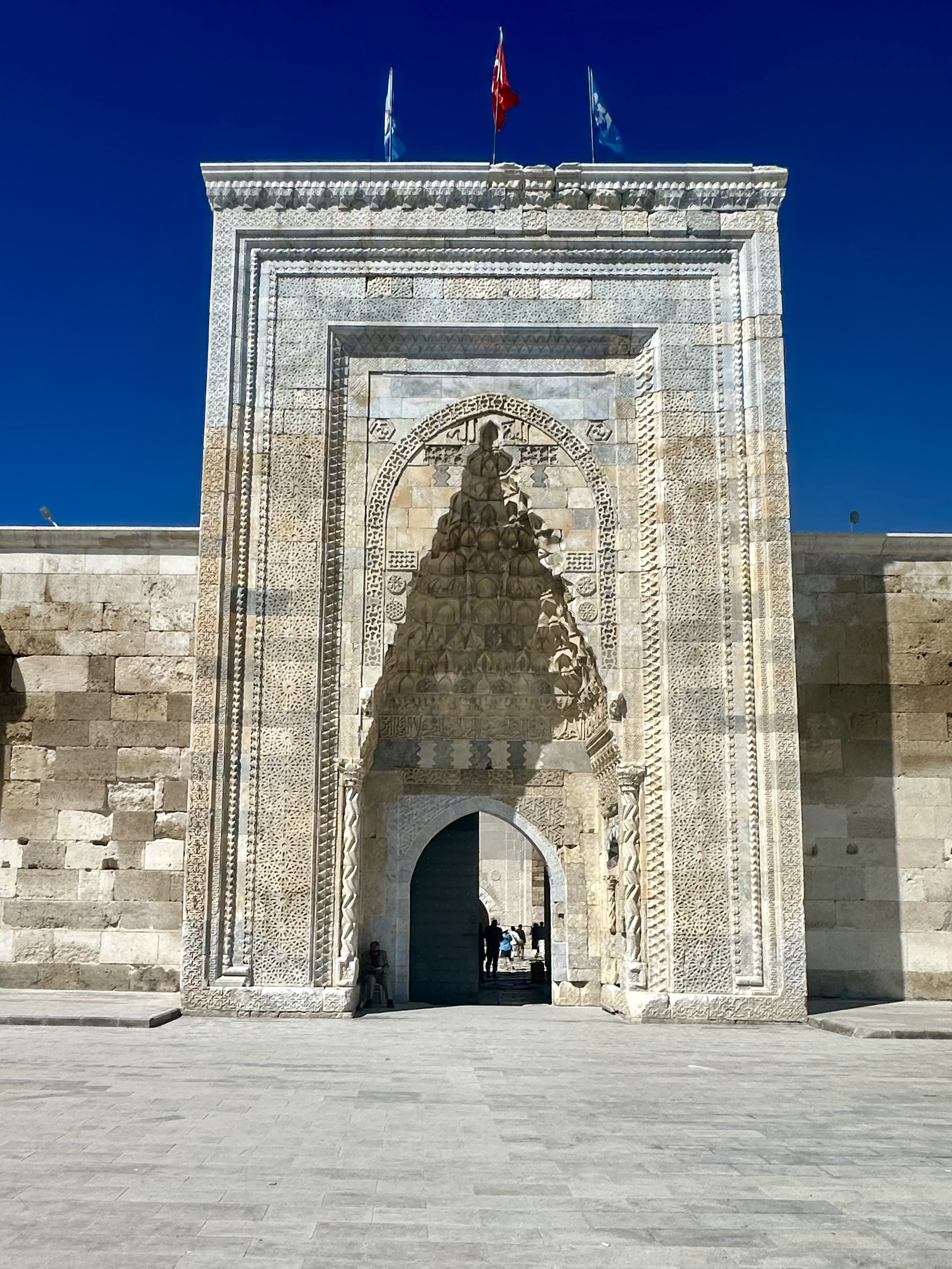
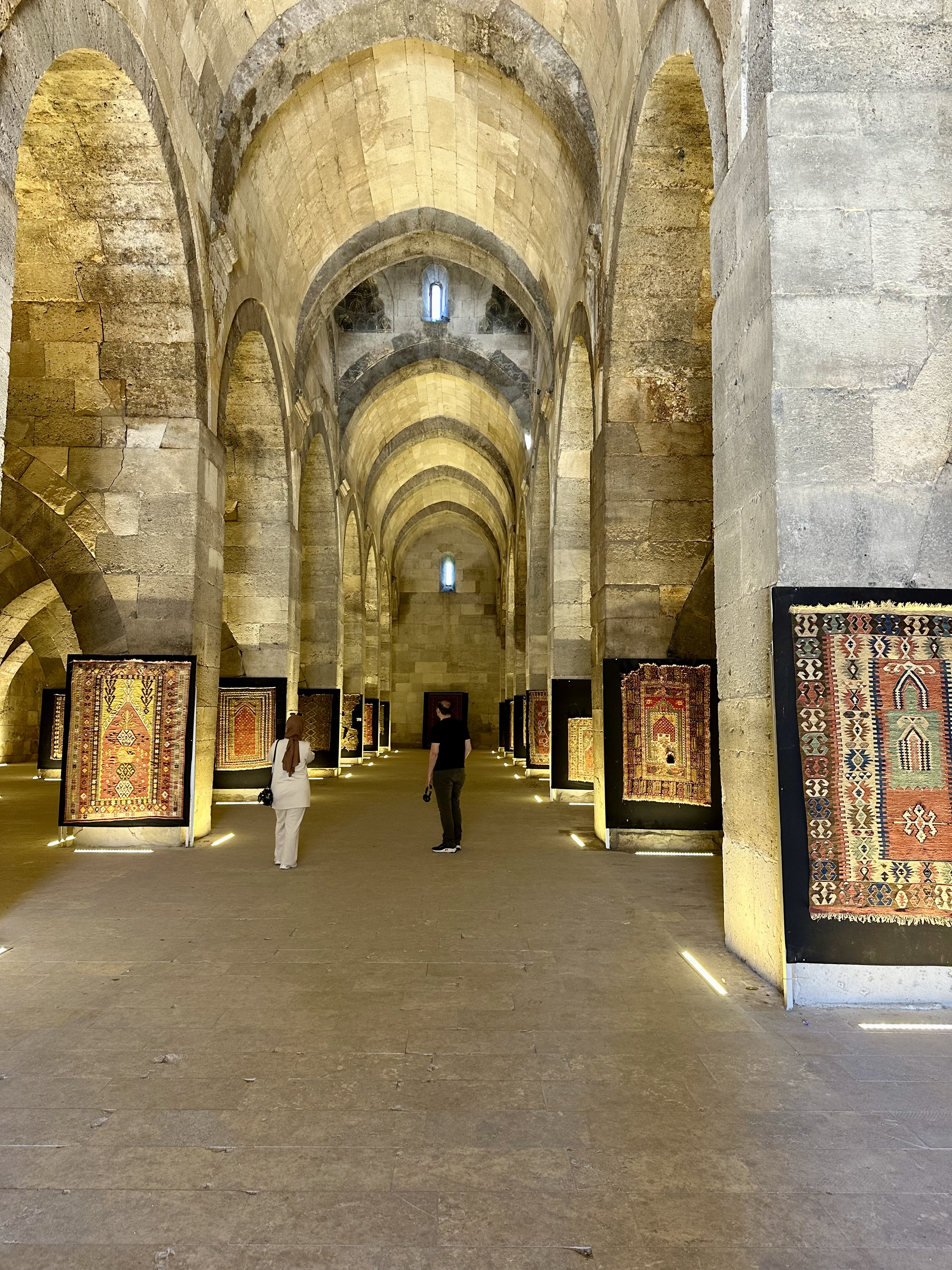
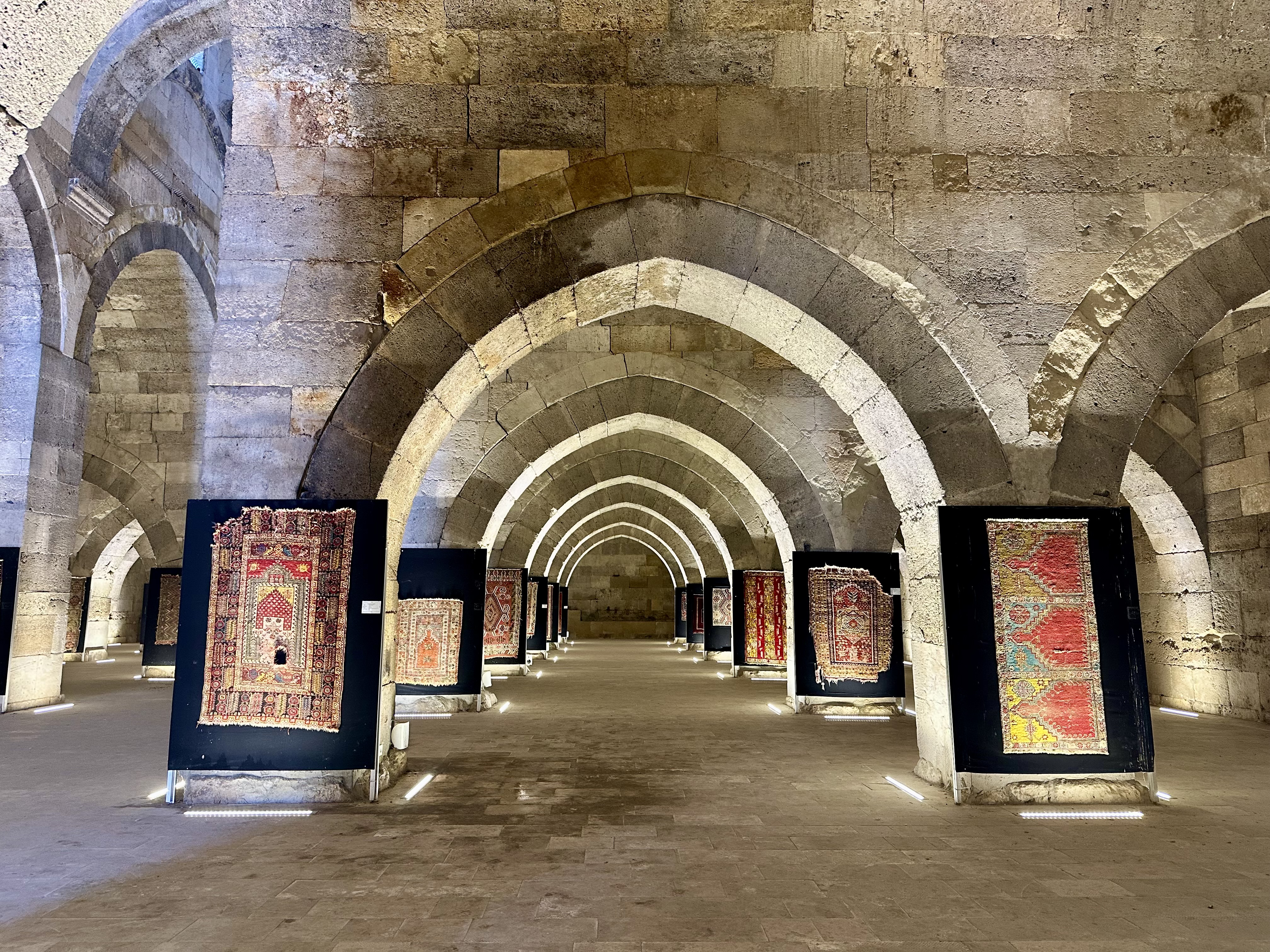
First stop was on the Silk Road at a Caravanserais. Hmmm…What is that?

The site, formally known as Sultan Han, is widely regarded as one of the finest surviving examples of Seljuk-era architecture anywhere in the world, and carries the additional distinction of being the largest caravanserai still standing in the entire country — covering approximately 4,900 square metres, which is a considerable amount of 13th-century stonework by anyone’s standards. It was built between 1229 and 1236 on the orders of the Seljuk Sultan Alaeddin Keykubad I, who had apparently decided that the 300-kilometre stretch of road between Konya and Aksaray needed a decent pit stop, and wasn’t going to do things by halves.

The word han translates roughly as “inn” or “hostel,” which rather undersells this place. Caravanserais like this one were the essential infrastructure of the medieval trading world — vital stopping points along the great overland routes of the age, including the Silk Road, that extraordinary network of tracks and paths connecting China and Central Asia to the Mediterranean and beyond. Merchants travelling these routes were shifting silk, spices, ceramics, glassware, and every other commodity you care to mention across thousands of miles of difficult and often dangerous terrain. They needed somewhere to stop, eat, sleep, water their animals, and repair their equipment. Sultan Han provided all of that, and at the Seljuk Sultan’s express instruction, it did so entirely free of charge for the first three days of any traveller’s stay. Three days. Free food, free lodging, free stabling. The medieval equivalent of an extremely generous service station.

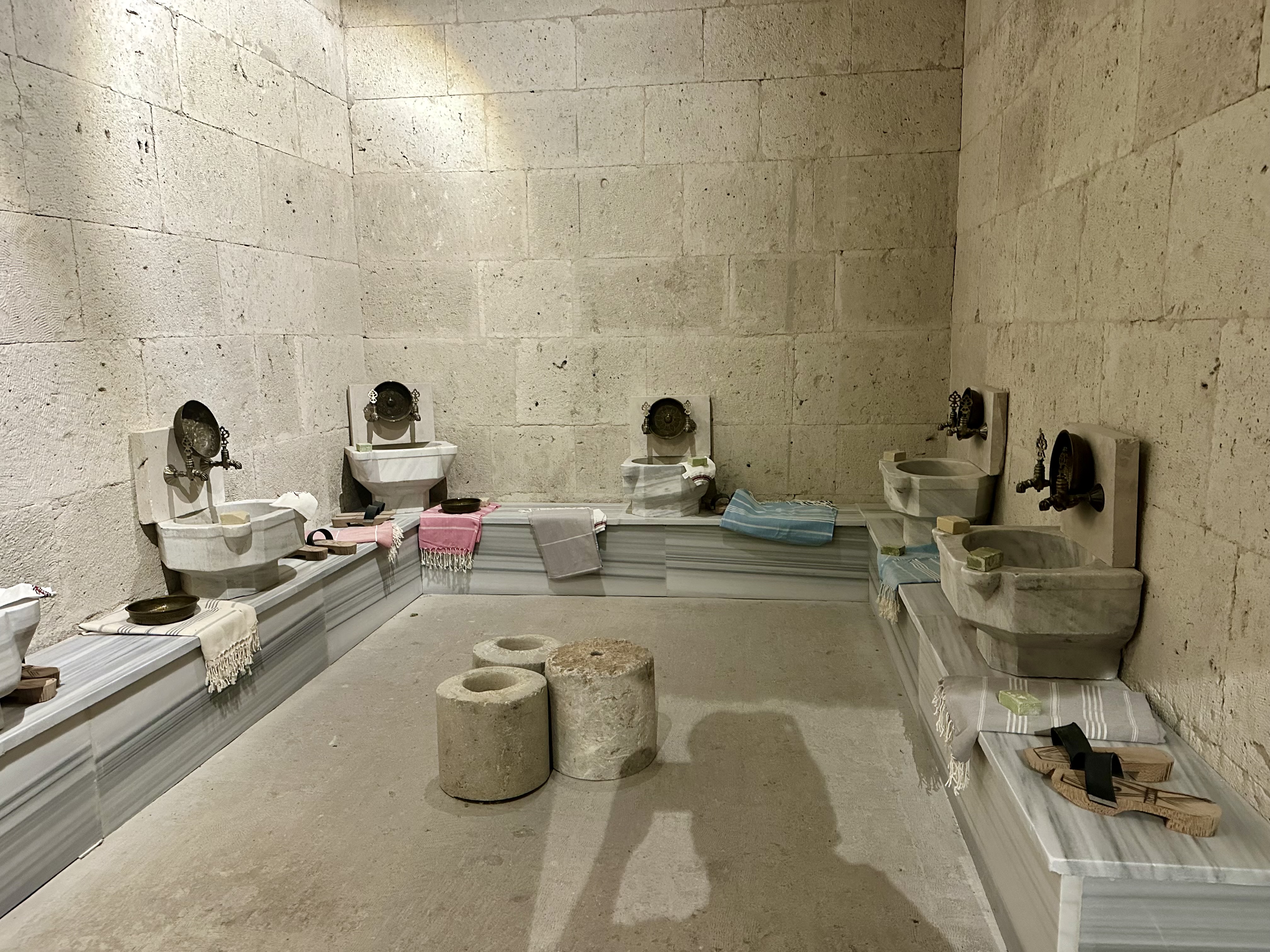
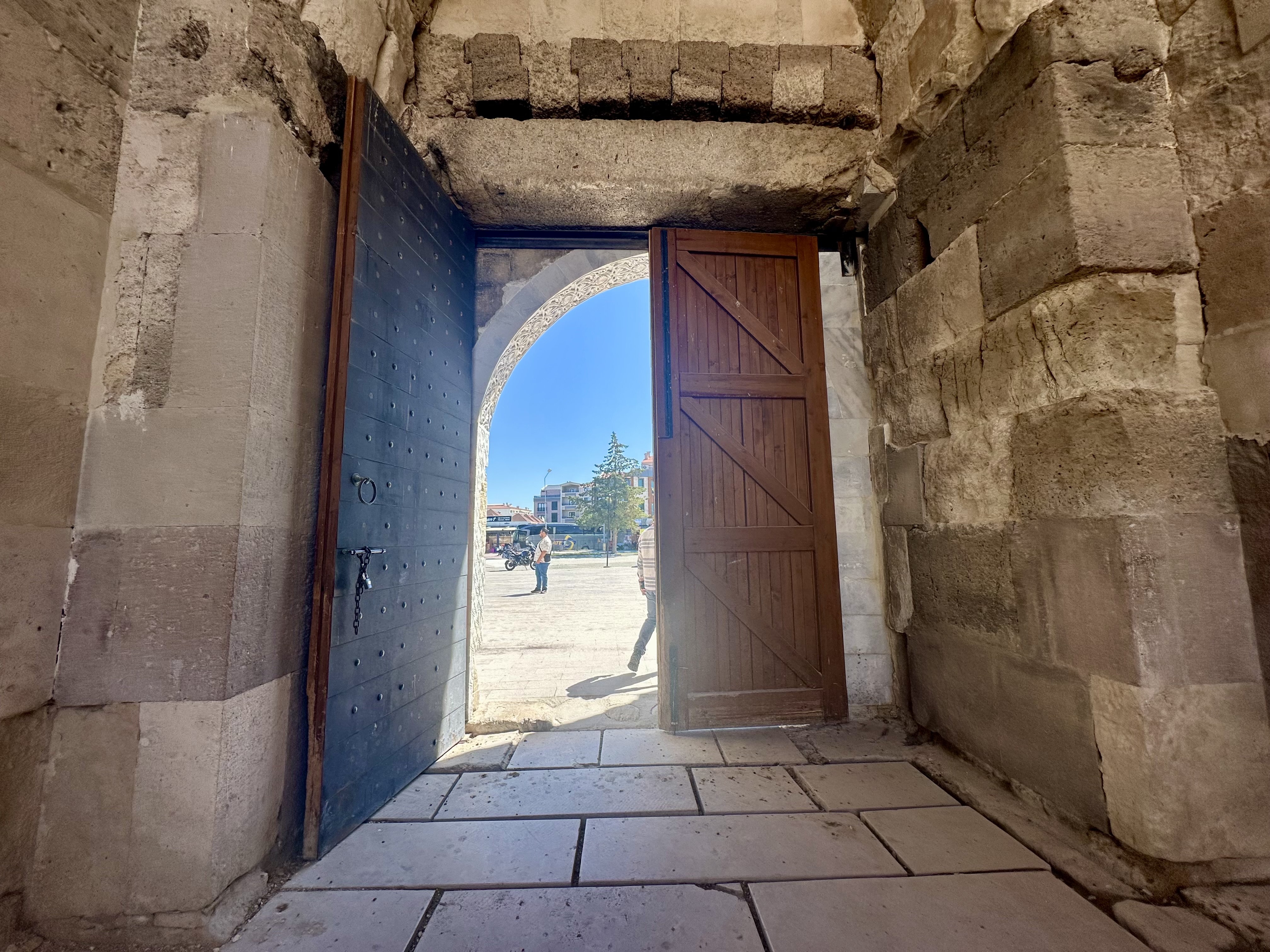
In practical terms, these structures were simultaneously inns, warehouses, stables, bathhouses, mosques, and fortresses. The fortress element was not decorative — travelling merchants were carrying valuable goods through remote and occasionally lawless territory, and the thick stone walls and single heavily guarded entrance were there for very good reason. The Seljuk Sultanate of Rûm, which controlled much of Anatolia during this period, built a string of caravanserais roughly a day’s journey apart — approximately 30 to 40 kilometres (about 25 miles), a camel’s ride length— specifically to encourage and protect trade.

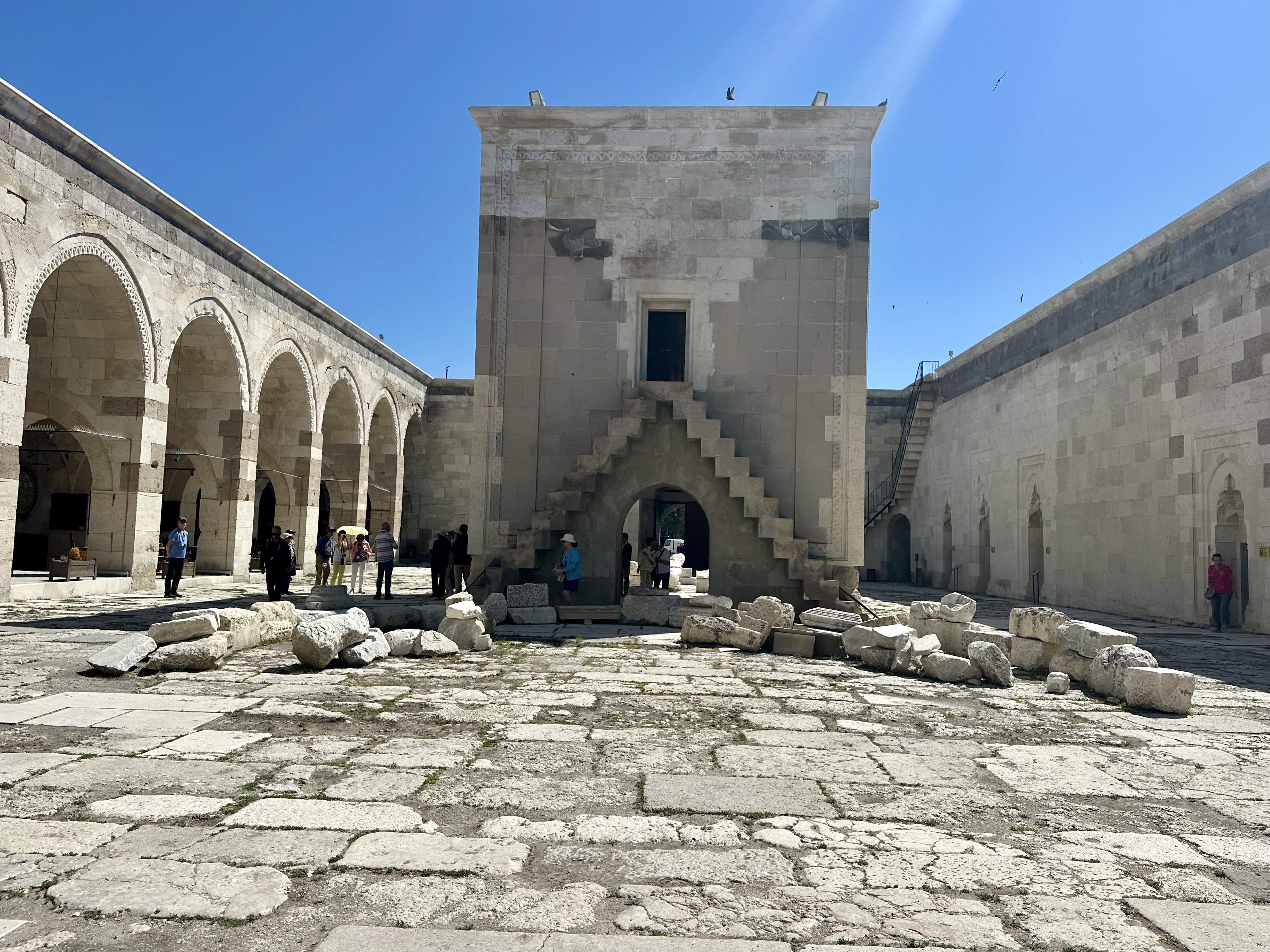
Once through the entrance, this courtyard would have been absolutely heaving with life. During the warmer months, traders arriving along the old caravan routes would have bedded down here alongside their camels, horses, and whatever else they’d dragged across the desert. It wasn’t glamorous, but then neither is a Premier Inn, and at least here you could see the stars.

One side of the courtyard is lined with a covered arcade — a shaded walkway of the kind you find all over the ancient trading world, designed less for aesthetic charm and more for keeping the sun off your head while you argued about the price of silk.

It’s generally believed that this arcade area originally served as stabling for animals or storage for goods — the kind of unglamorous but essential infrastructure that kept the whole trading system ticking. Nobody builds a plaque for the horse stalls, of course, but without them the merchants would have got precisely nowhere. Over the centuries, as the caravans stopped coming and tourism quietly took their place, the space was repurposed. It’s a practical reuse of what was there, and to be fair, it doesn’t feel cynically commercial — more like a sensible acknowledgement that the world moves on and people still need somewhere to sit.

As a reminder of the Caravan Days today next to the site is a small shopping area with a cafe. You can buy many things there but tea and ice cream are still a favoriite.

Next it was on to Cappadocia the place of the Cave Houses and Churches with a history that goes way back.

The cave houses of Cappadocia, carved directly into the soft volcanic tuff of central Anatolia, have been continuously inhabited for thousands of years. Originally adapted by ancient civilizations as basic shelter, they later served as safe havens for persecuted Christians before evolving into today’s sought-after boutique hotels.

Hittites & Phrygians (circa 8th–7th Centuries BC): Early inhabitants of the Anatolian plateau began carving basic structures into the soft volcanic rock for seasonal storage, wineries, and simple dwellings.

Geological Advantage: The landscape’s “fairy chimneys” are made of volcanic tuff, which is remarkably easy to carve with basic tools, yet hardens into a strong, insulating material when exposed to air.The cave houses of Cappadocia, carved directly into the soft volcanic tuff of central Anatolia, have been continuously inhabited for thousands of years. Originally adapted by ancient civilizations as basic shelter, they later served as safe havens for persecuted Christians before evolving into today’s sought-after boutique hotels.

The Origins: Ancient Civilizations

Hittites & Phrygians (circa 8th–7th Centuries BC): Early inhabitants of the Anatolian plateau began carving basic structures into the soft volcanic rock for seasonal storage, wineries, and simple dwellings.

Geological Advantage: The landscape’s “fairy chimneys” are made of volcanic tuff, which is remarkably easy to carve with basic tools, yet hardens into a strong, insulating material when exposed to air.

Kayakapi Premium Caves – Cappadocia

The Byzantine Era: Monasteries and Refuge

Early Christians (4th Century AD onward): During the Roman Empire and subsequent Arab-Byzantine conflicts, Christians facing religious persecution sought refuge in the region.

Underground Cities: Locals expanded the cave systems into massive, multi-level underground cities like Derinkuyu Underground City and Kaymaklı. These subterranean marvels contained living quarters, ventilation shafts, wells, and stables, allowing thousands to hide from invaders for weeks.

Cave Churches: Above ground, monks and ascetics carved intricate churches and monasteries into the cliffs and spires, such as those found in the Göreme Open Air Museum.

The Ottoman Period: Community Living

Expansion (18th & 19th Centuries): Throughout the Ottoman Empire, the rock-cut homes continued to be heavily utilized by the local Turkish and Greek populations.

Architecture: Traditional Cappadocian stone-cutting flourished during this time. Houses were built with arched doorways, stylized ivy motifs, and were often paired with carved dovecotes (pigeon houses) which provided essential agricultural fertilizer.Modern Times: Desertion and Revival

Mid-20th Century Relocation: By the mid-20th century, many residents began abandoning the cave dwellings for modern brick-and-mortar homes, as living in caves was increasingly associated with poverty.

Tourism Boom: In the late 1990s and 2000s, the value of the caves was radically reassessed. Their unparalleled natural insulation—cool in the summer, warm in the winter—and unique aesthetic transformed them into a booming tourism industry.

Today: Many historic cave houses have been beautifully restored into world-famous boutique hotels, preserving an ancient architectural legacy while meeting modern living standards

The Byzantine Era: Monasteries and Refuges

Early Christians (4th Century AD onward): During the Roman Empire and subsequent Arab-Byzantine conflicts, Christians facing religious persecution sought refuge in the region.

Cave Churches: Above ground, monks and ascetics carved intricate churches and monasteries into the cliffs and spires, such as those found in the Göreme Open Air Museum.

The Ottoman Period: Community Living

Expansion (18th & 19th Centuries): Throughout the Ottoman Empire, the rock-cut homes continued to be heavily utilized by the local Turkish and Greek populations.

Architecture: Traditional Cappadocian stone-cutting flourished during this time. Houses were built with arched doorways, stylized ivy motifs, and were often paired with carved dovecotes (pigeon houses) which provided essential agricultural fertilizer.

Modern Times: Desertion and Revival

Mid-20th Century Relocation: By the mid-20th century, many residents began abandoning the cave dwellings for modern brick-and-mortar homes, as living in caves was increasingly associated with poverty.

Tourism Boom: In the late 1990s and 2000s, the value of the caves was radically reassessed. Their unparalleled natural insulation—cool in the summer, warm in the winter—and unique aesthetic transformed them into a booming tourism industry.

Today: Many historic cave houses have been beautifully restored into world-famous boutique hotels, preserving an ancient architectural legacy while meeting modern living standards.

Our accomodations were in one of the cave hotels. It was exotic and stayed a pretty steady temperature without the need for airconditioning. It was a large room. When we first open the door I thought I was looking in a mirror. My bed was in the back and Mary’s to the forward part of the photo.

The last evening we had the opportunity to see the Prayer ceremony featuring the Whirling Dervishes.

A “whirling dervish” refers to a practitioner of the Mevlevi Order of Sufism, a mystical branch of Islam. Founded in the 13th century by the followers of the poet and mystic Jalāl al-Dīn Muḥammad Rūmī (Mevlana), they are famous for their Sema—an ecstatic, spinning meditation ritual performed to achieve a connection with God.The traditional ceremony and physical movements carry deep symbolic meaning:The Attire: Dervishes wear a tall, brown felt cap called a sikke (symbolizing the tombstone of the ego) and a long, sleeveless white robe called a tennure (symbolizing the ego’s shroud).The Dance: While spinning rhythmically, the dervish raises their arms toward heaven. Their right palm points upward to receive divine grace, while the left palm points downward to bestow that grace upon humanity.Cosmic Connection: The continuous spinning is a symbolic imitation of the planets in the solar system orbiting the sun and a mechanism to abandon personal desires in order to reach the divine.

The last day before we flew back to Istanbul was a mix of events leading off with viewing the area of the Fairy Chimneys. We were suppose to fly over them in a Hot Air Balloon but the weather did not cooperate.

Weather and Wind hellped create thes unique formations.

We stopped at a coffee house that served Turkish Coffee, Pistachio Coffee and Hazelnut Coffee. I had the Pistachio and it was delicious.

One of our last stops before our flight back to Istanbul was a stop to learn about pottery making and it’s importance to Turkyie.

The art of Turkish ceramics developed in Anatolia in the earliest ages of the region, and play a very important role in Turkey’s history and culture.

Turkey’s history of ceramic production dates back to about 10,000 years, with different types developing in multiple regions. During the mid-20th century era, mass production began as Turkish ceramic producers built factories to produce the ceramics on a much larger scale, leading to the popularity and incline in production of Turkish ceramics.

A big part of the fascination with Turkish ceramics was, and is, the strength of the shell. Turkish ceramics can hold good condition and their color for centuries.

During the 12th century, the Seljuk Turks created the ceramics using themes that focused on geometrical shapes and patterns and prioritizing shades of blue. As the culture shifted from the 15th and 17th centuries during the Ottoman Empire, colors of ceramics became more bold and distinctive, with clearer outlines and shapes. Iznik work grew to its peak in the 16th century, leading to the production of over 300 artistic workshops running effectively at once.

During this time, ceramics were not only used for decoration but also to assist in building and formulating a design for plain surfaces. Tile making, brick production, and roof production all have creative groups that are considered branches of ceramics. The most popular type of Turkish ceramic is the Iznik, however, there are many historic, regional variations of ceramics.

And just like that my time in Turkey has come to an end. Well almost.

Travel-log Continues: The Mediterranean Adventure

Moving on is what one does on a tour. It amazes me that I used to lead these. It is much better to be a passenger and look out the window.

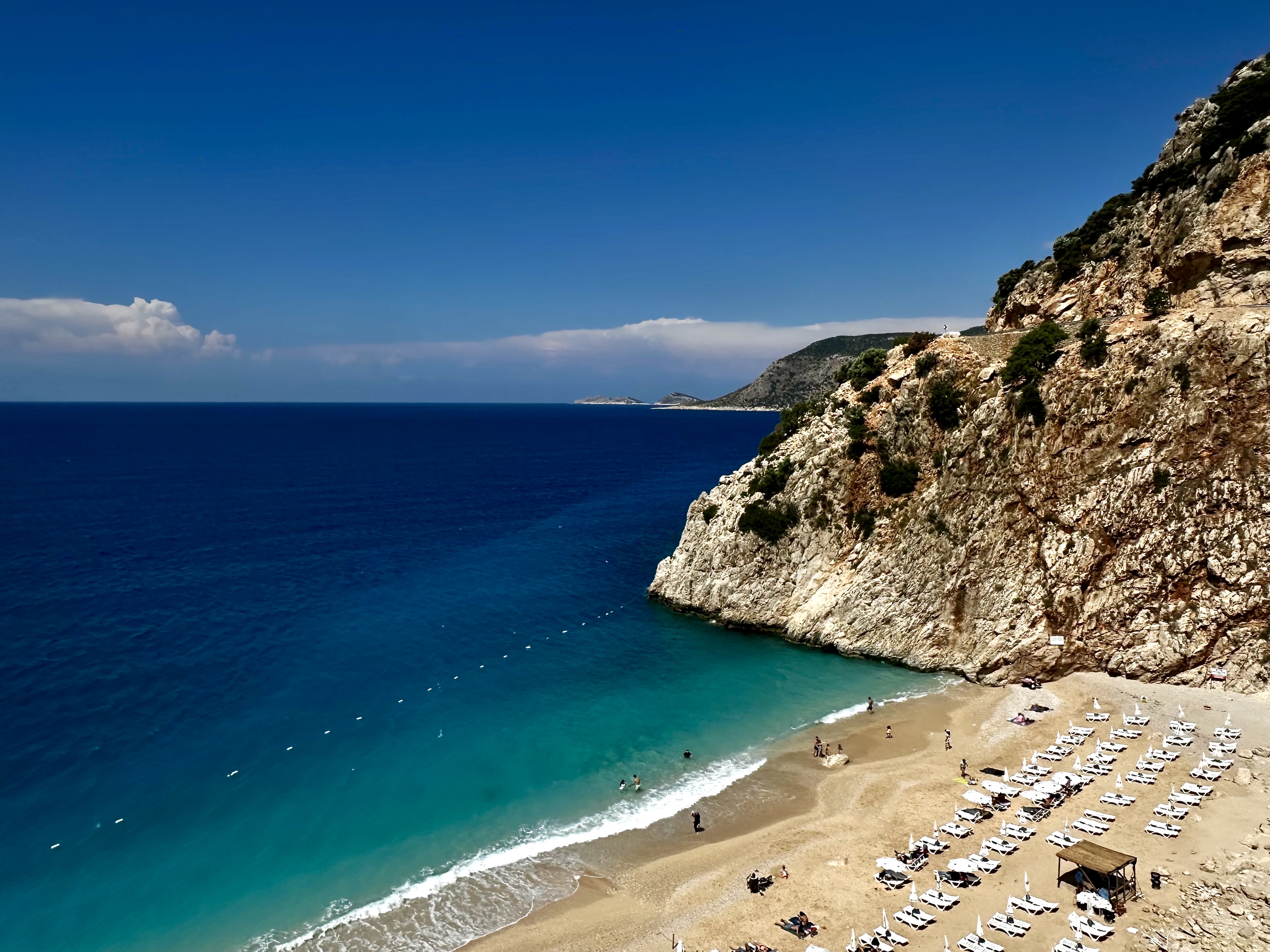
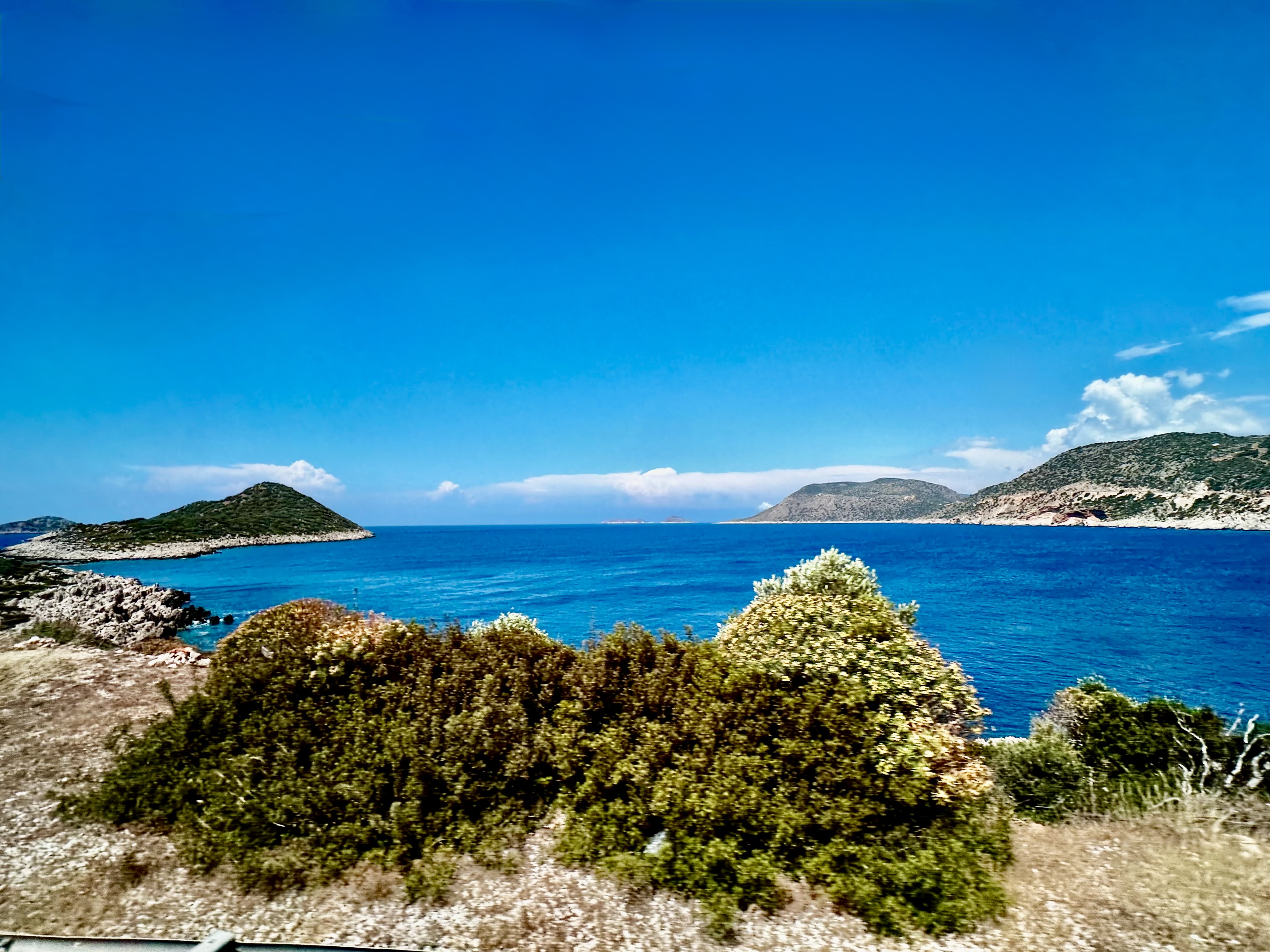
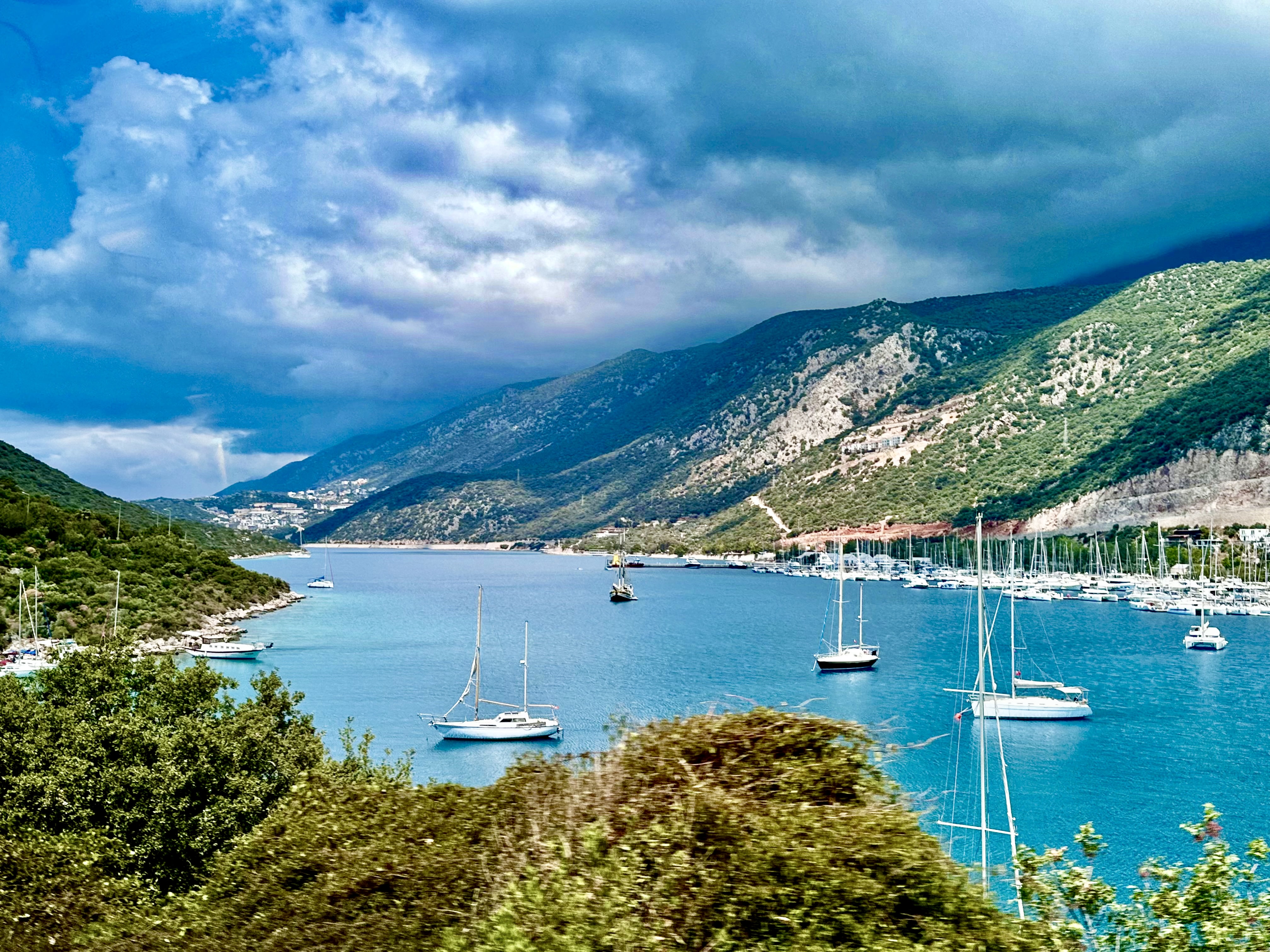
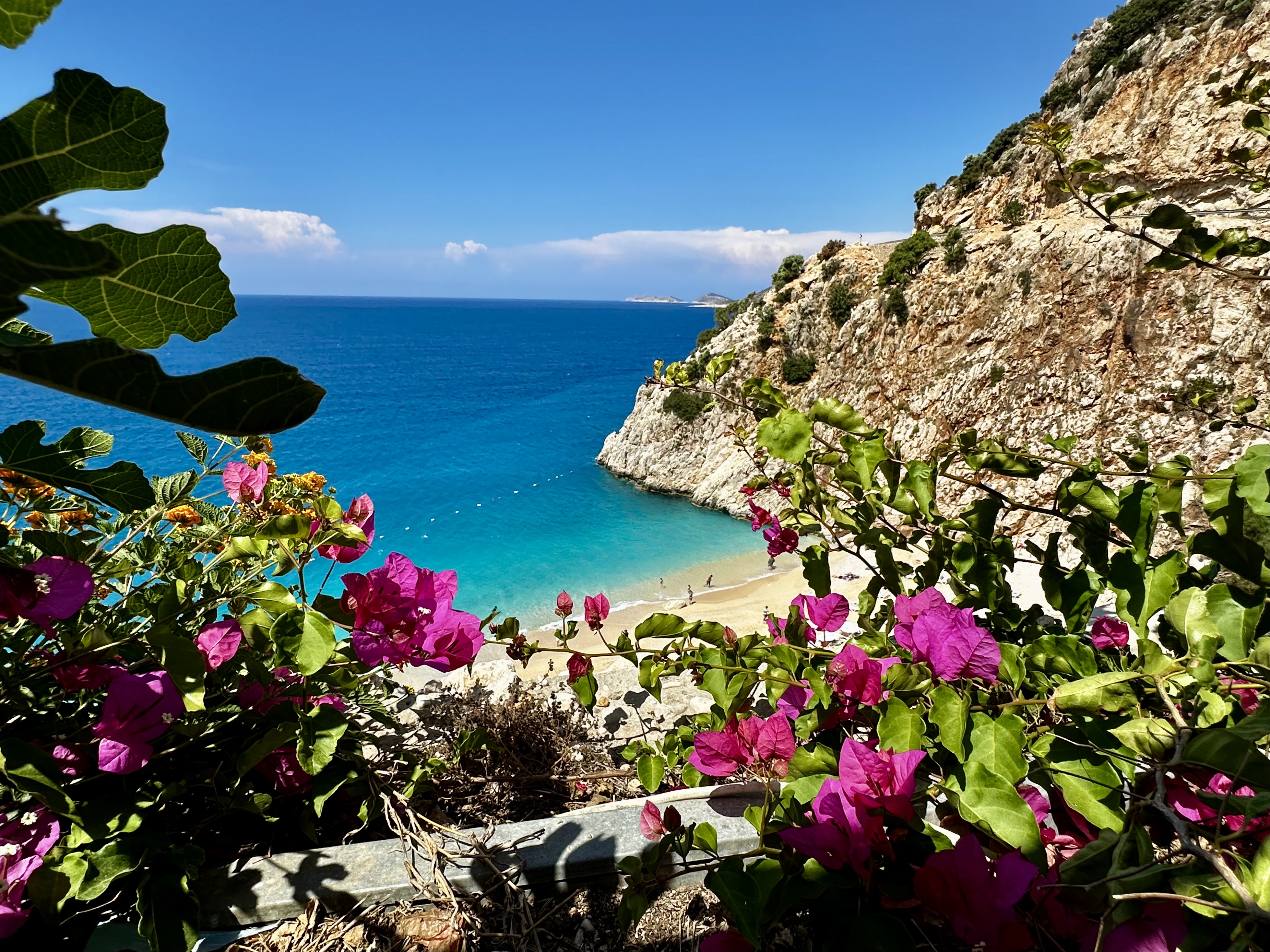
After we left the ruins at Ephesus we started to head to the junction of the Agean and Mediterranean Seas. The next few days found us on the Mediterranean Coast. The water is so blue and the sky is so blue and all the limestone formations made the colors more vivid.

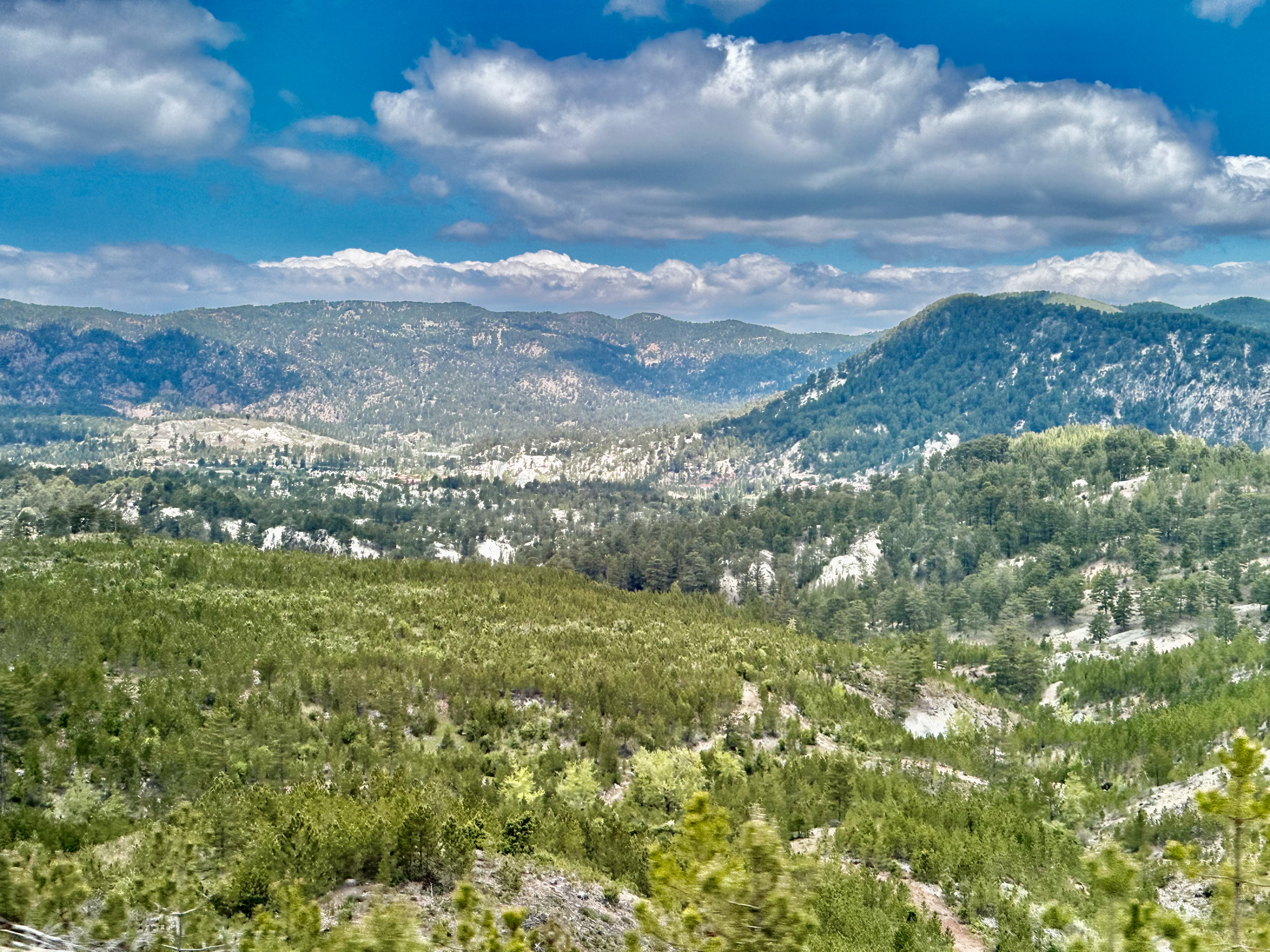
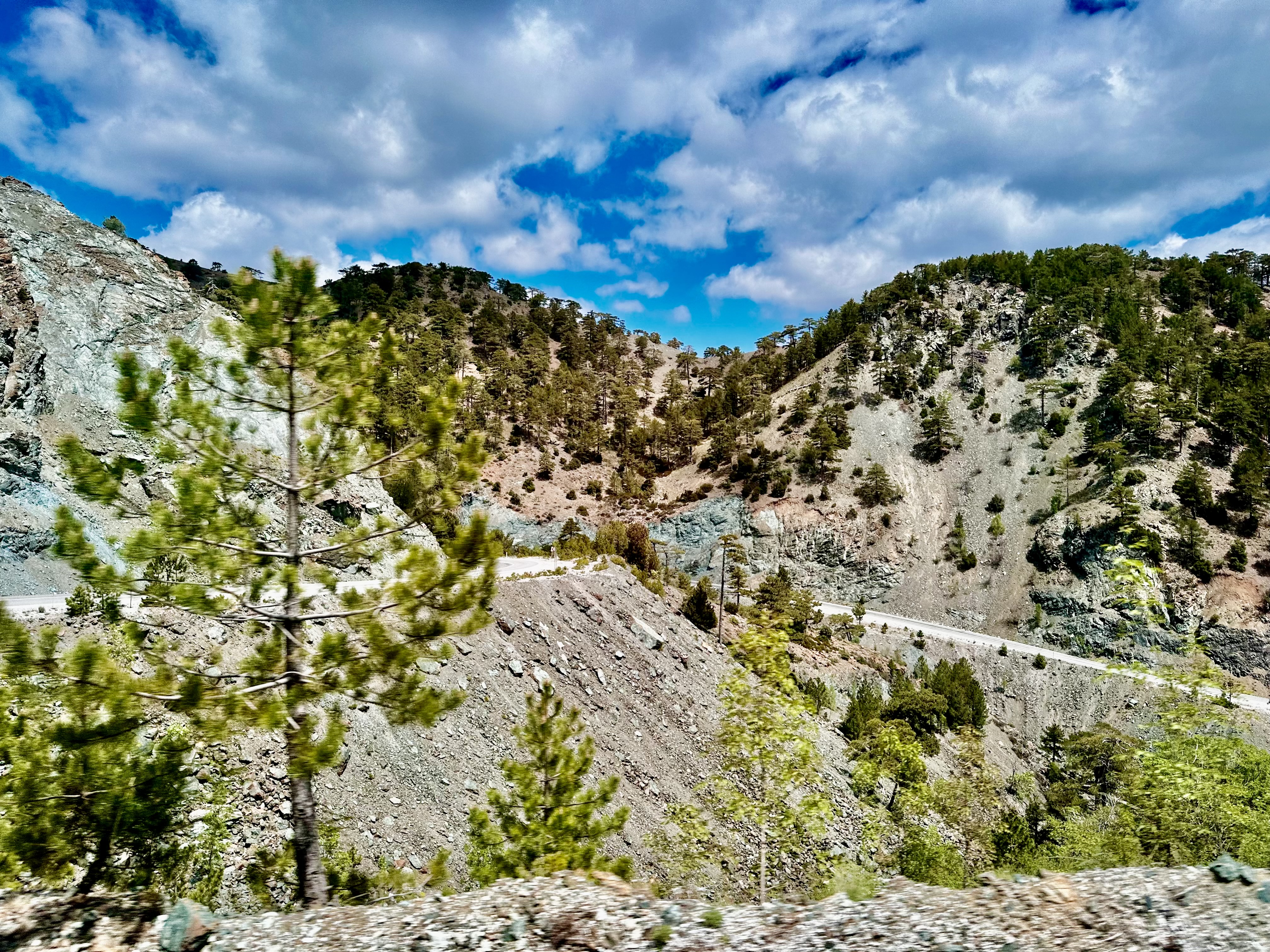
Riding across the Taurus Mountains to arrive at the Sea.

The Mediterranean Sea

We stayed in the town of Kas for two nights.

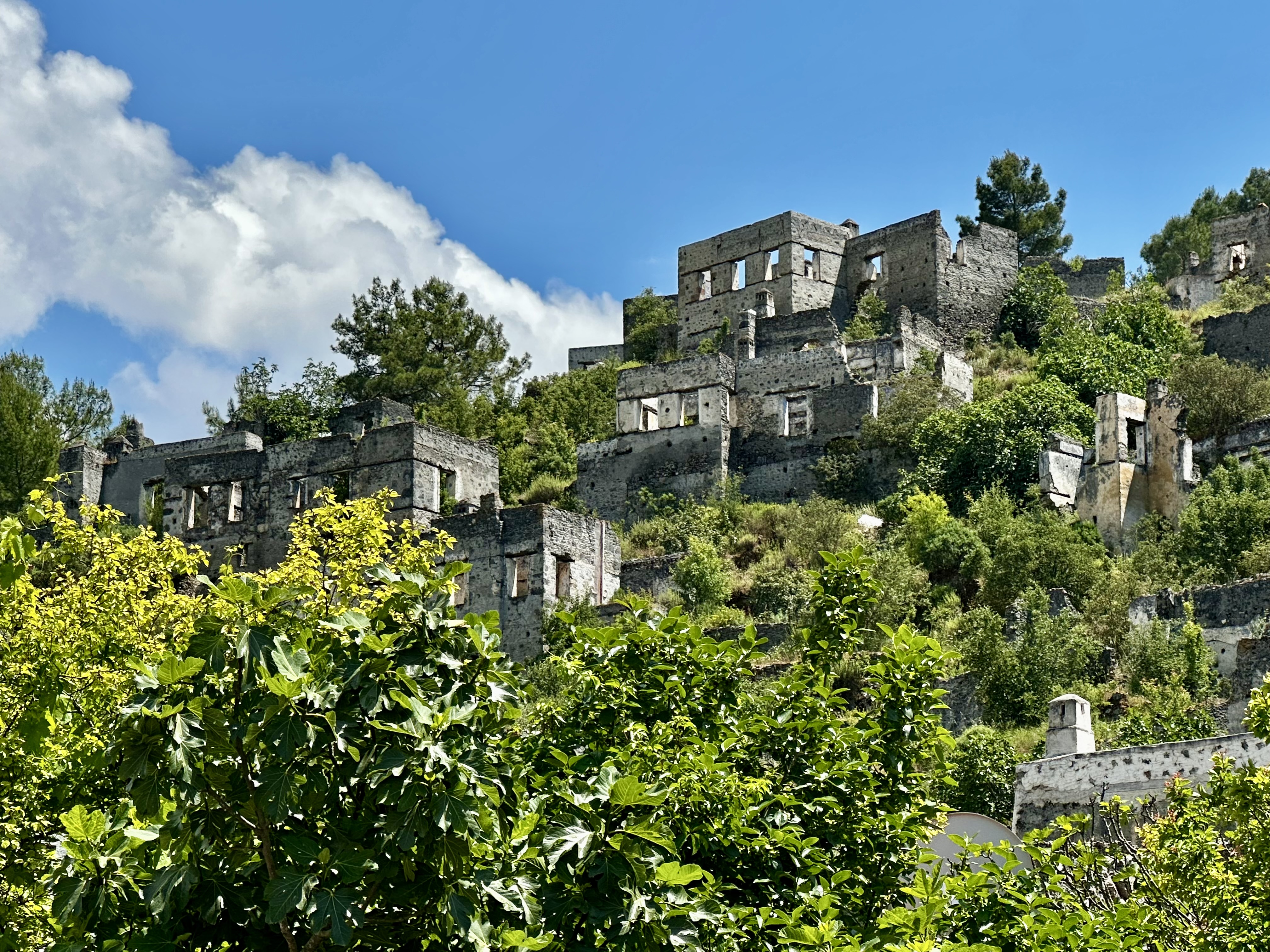
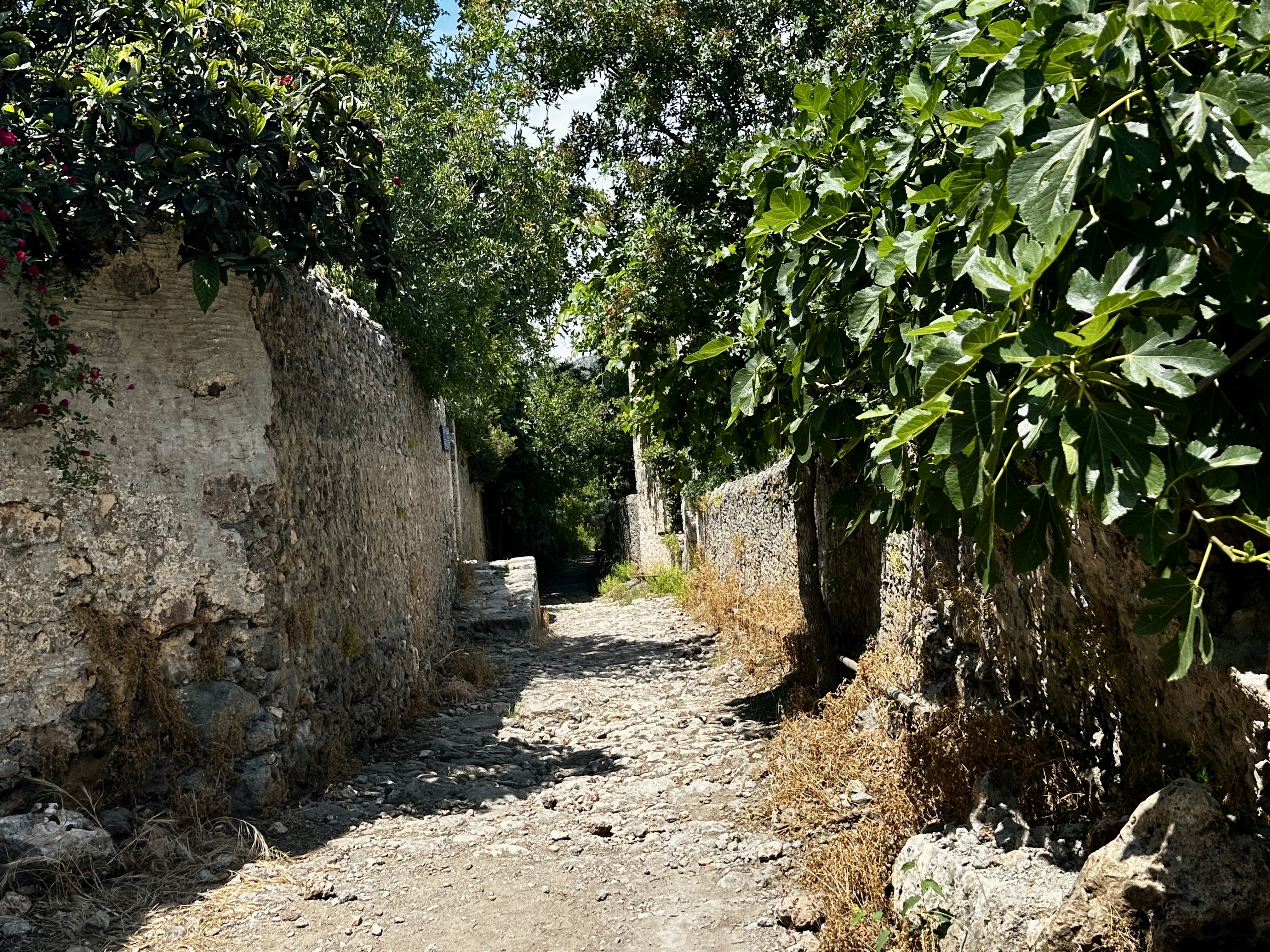
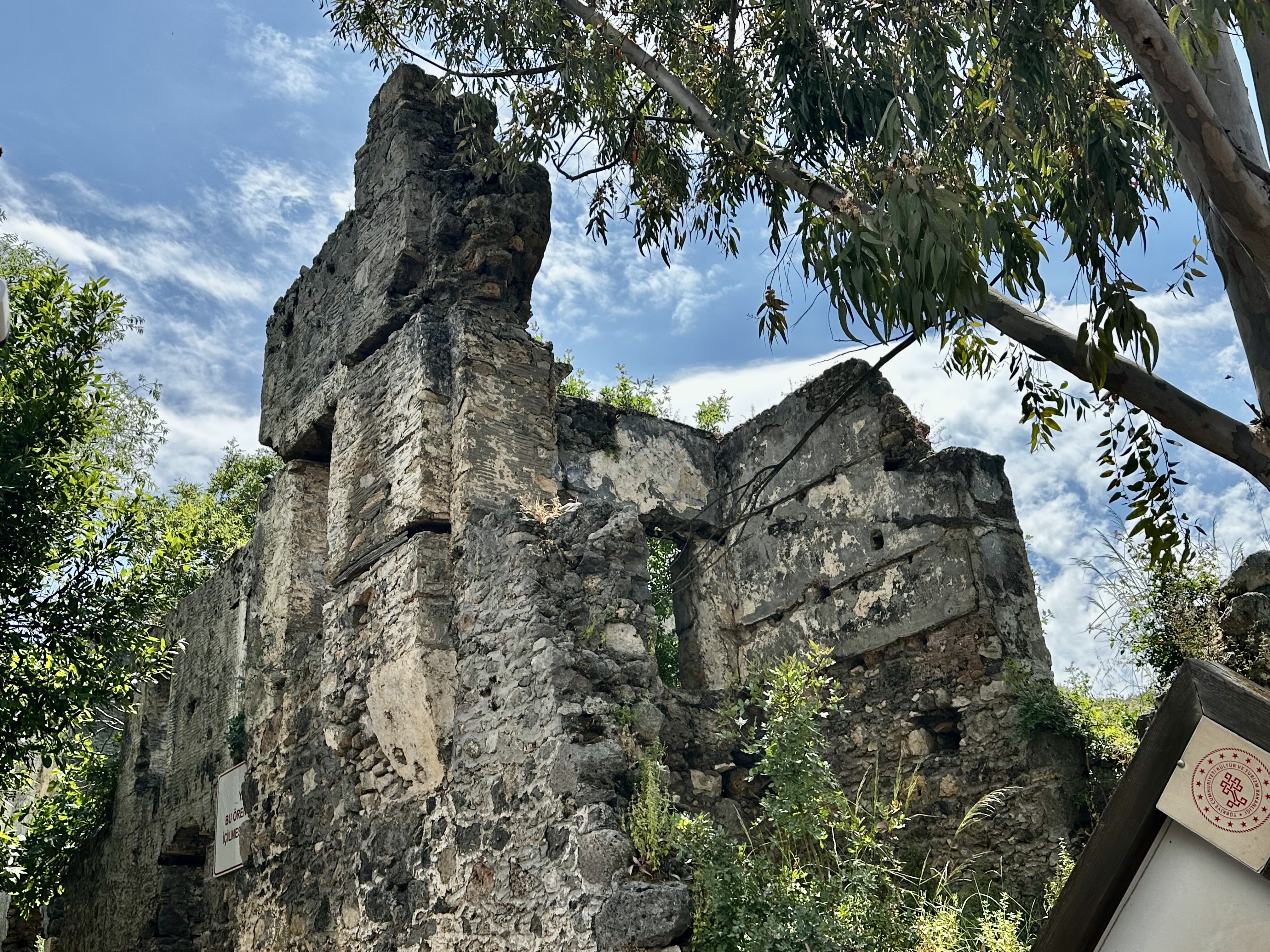
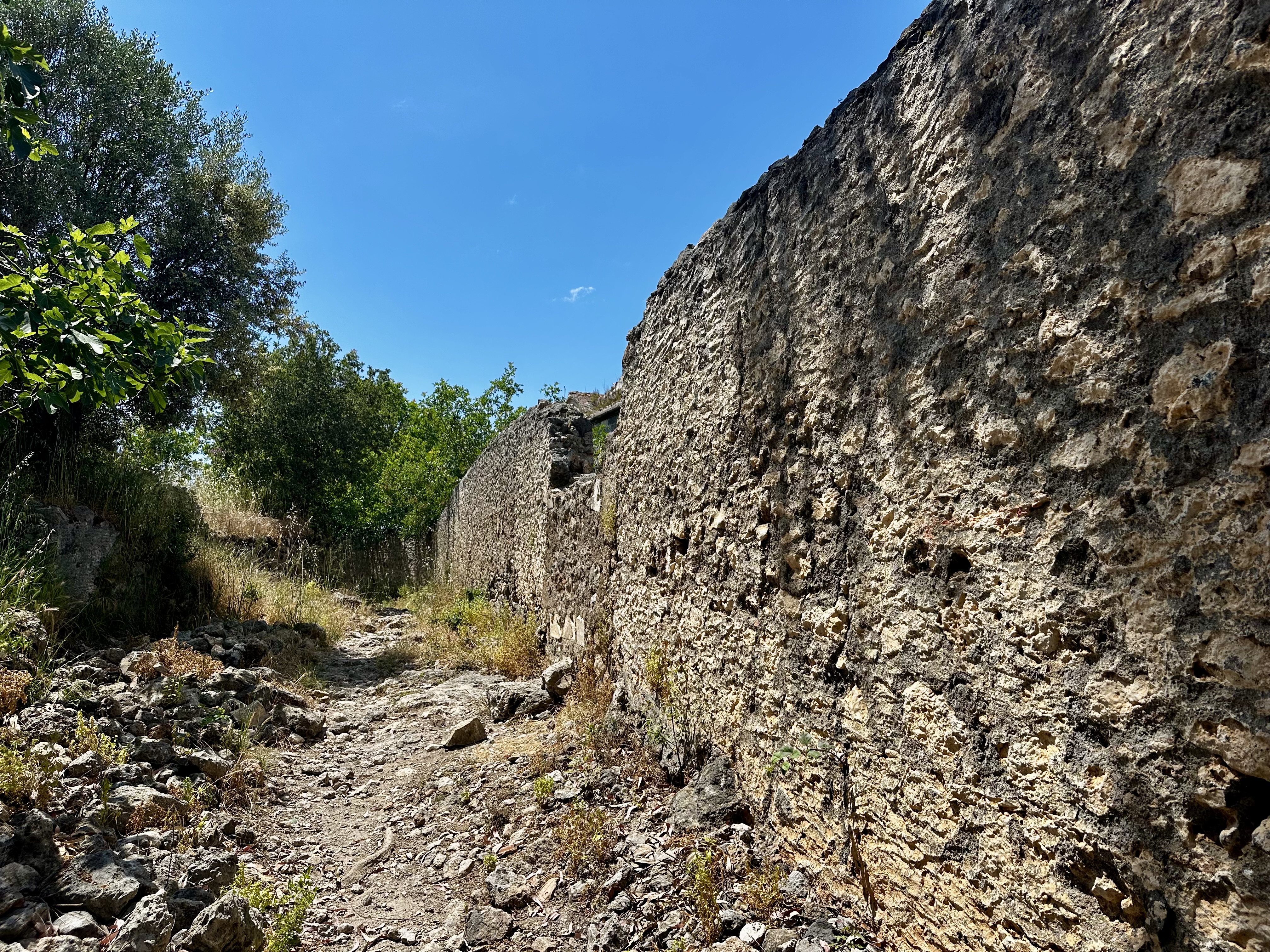
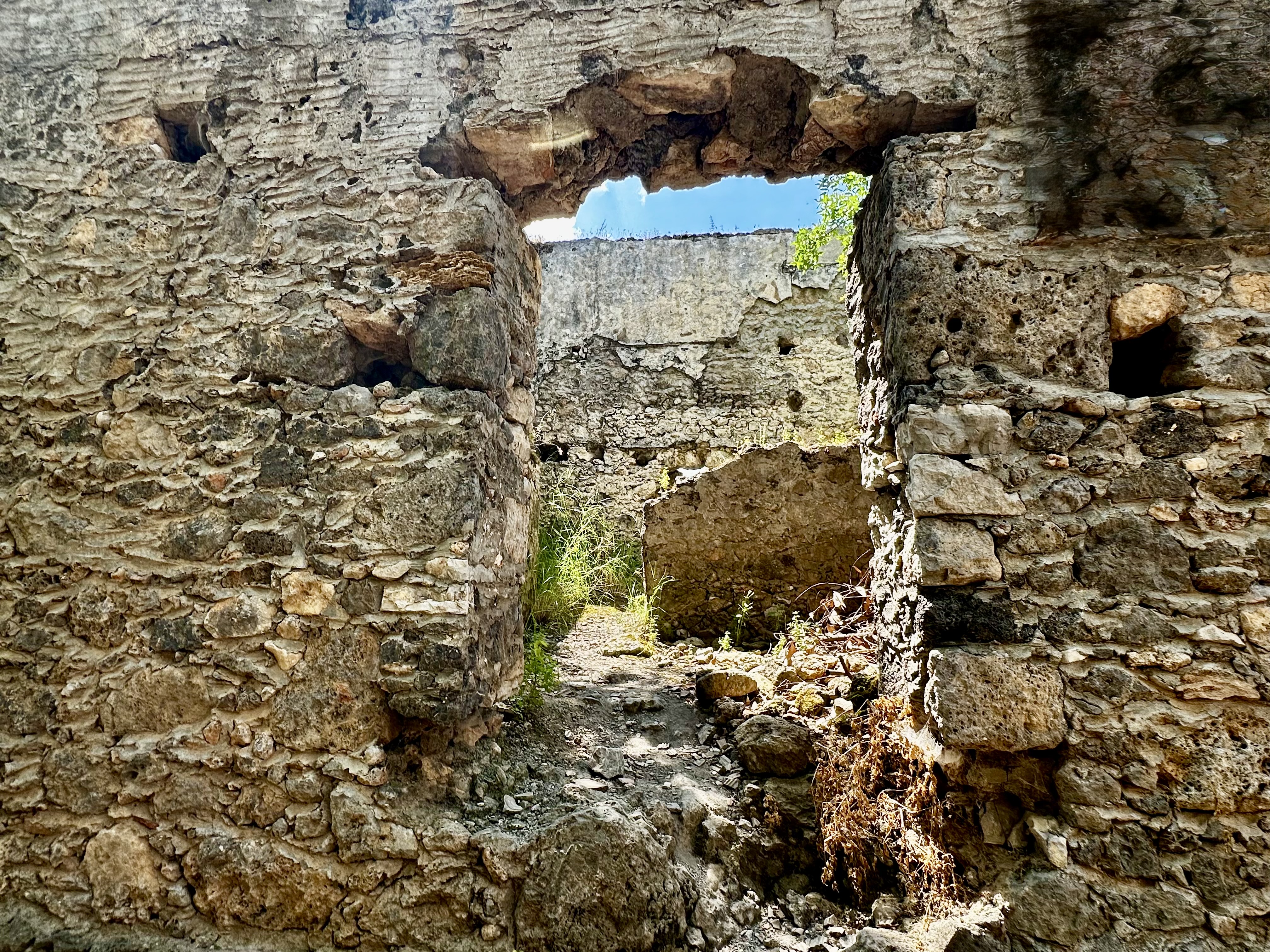
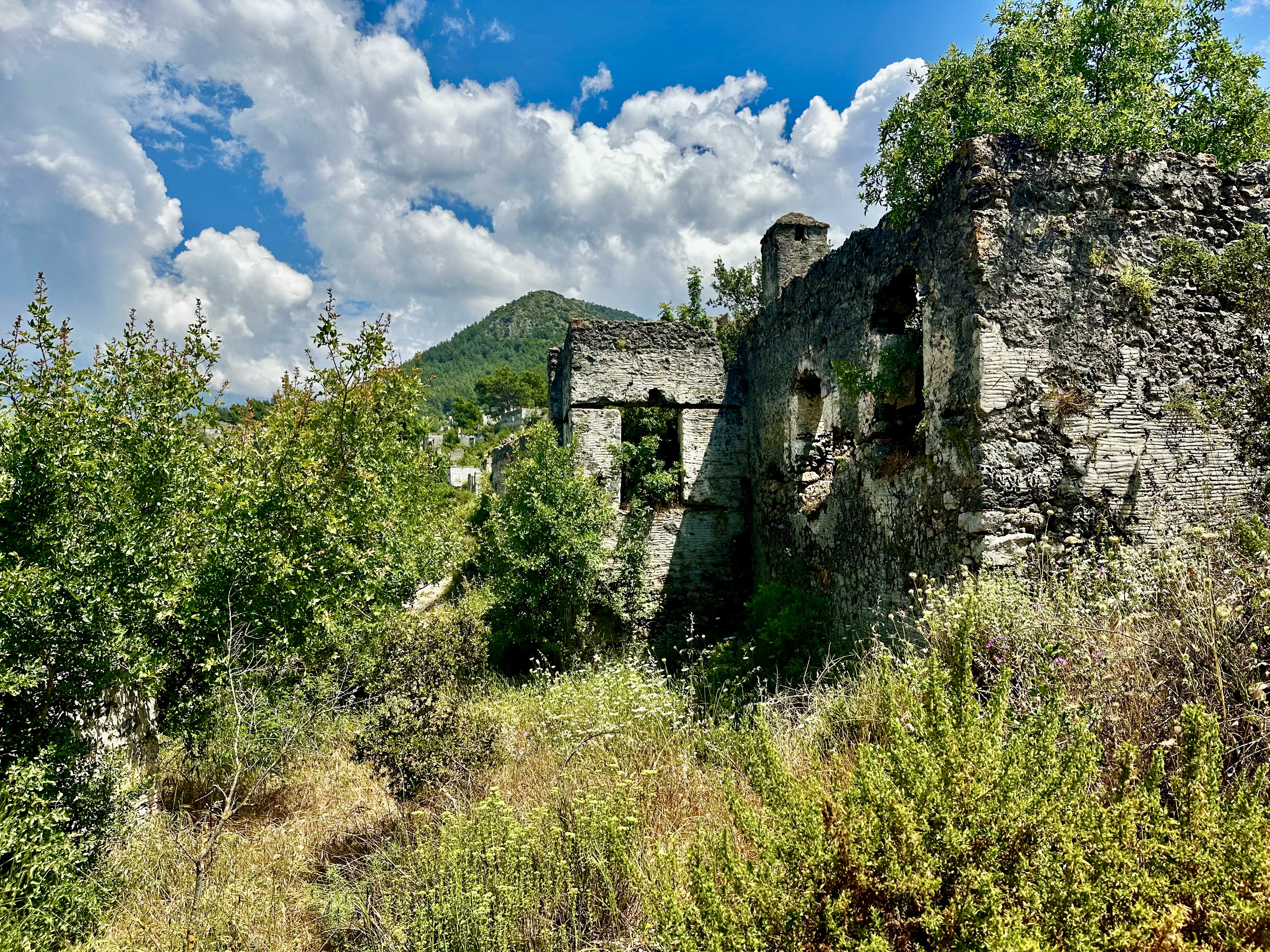
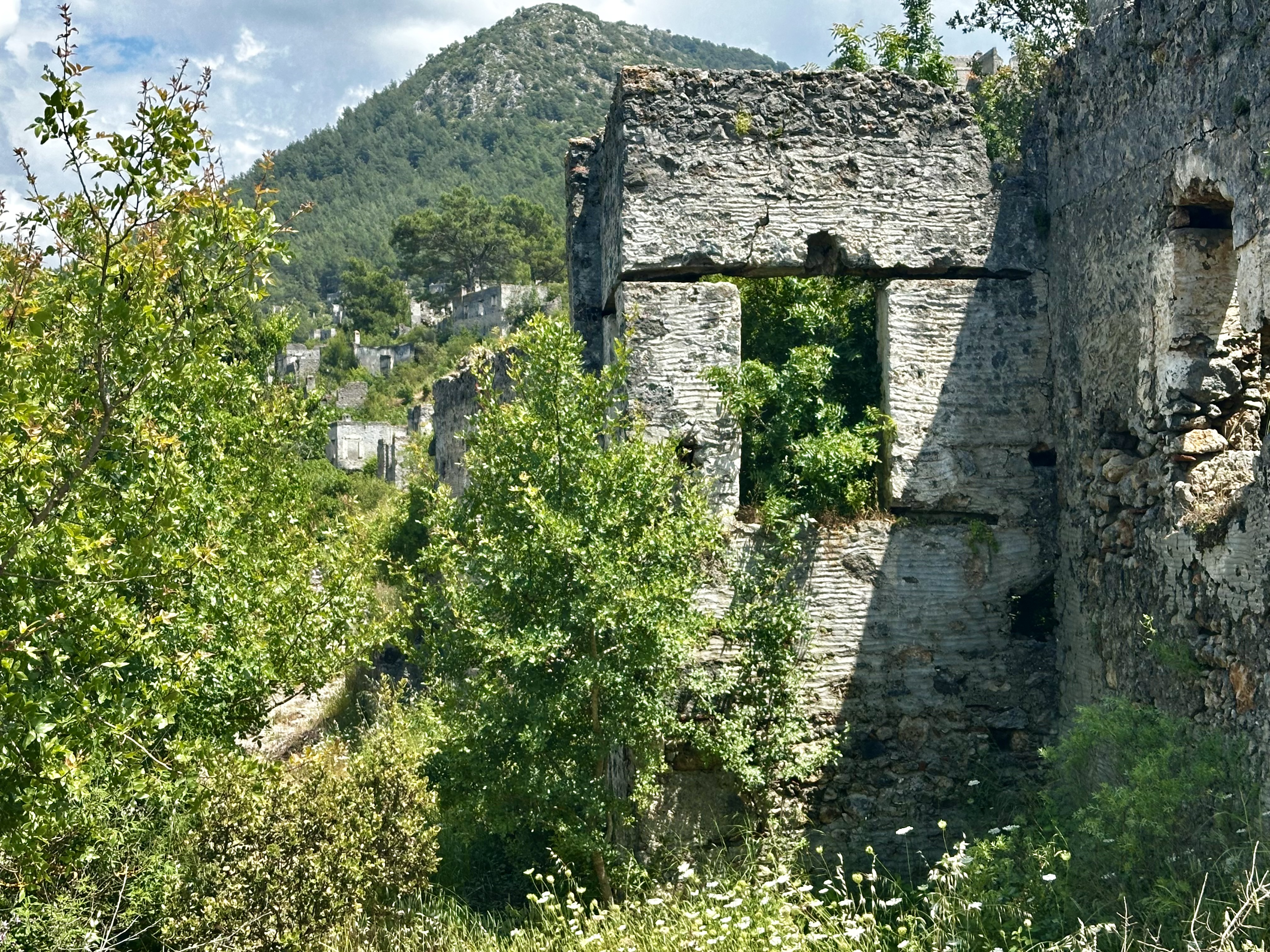
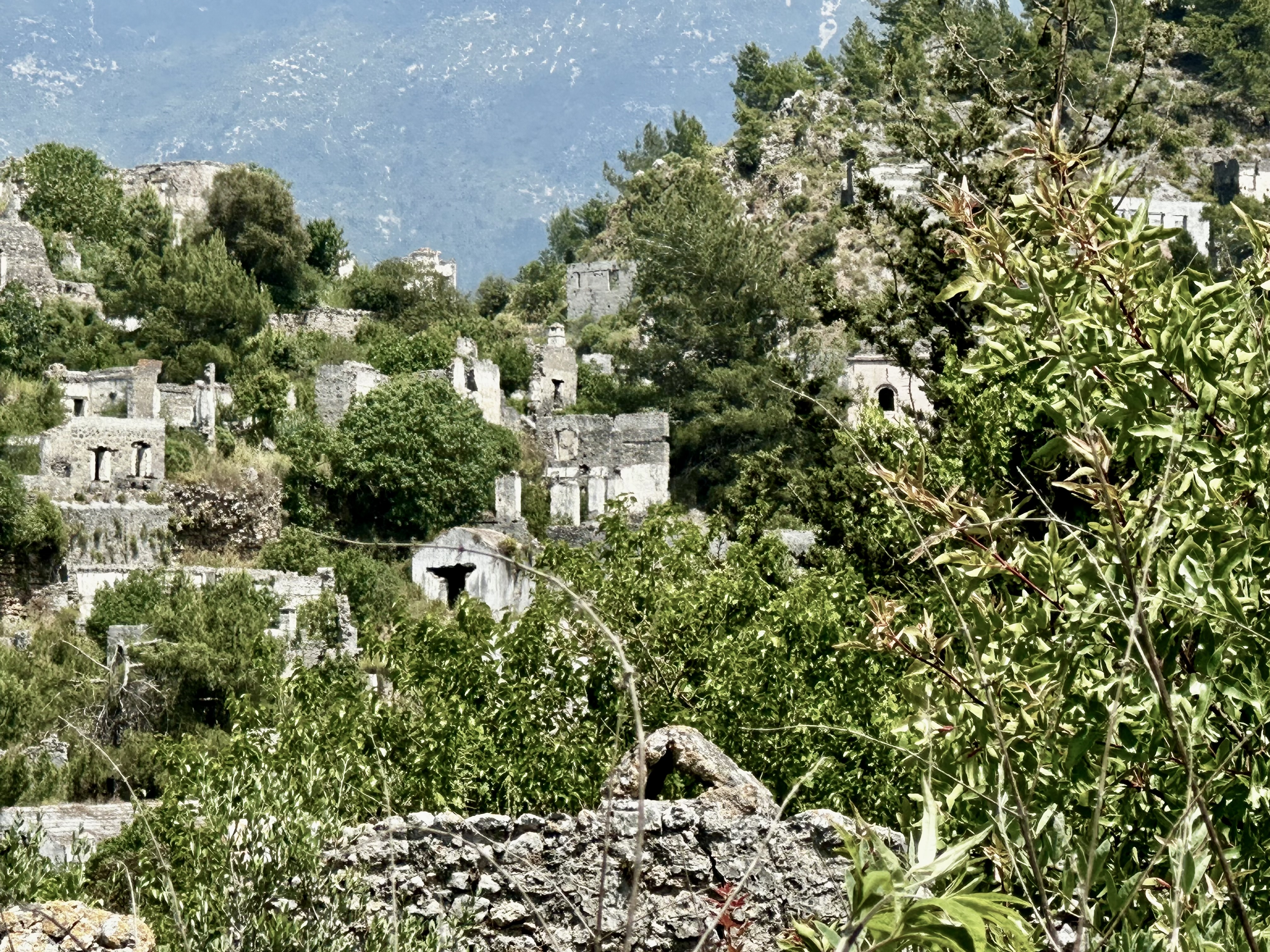
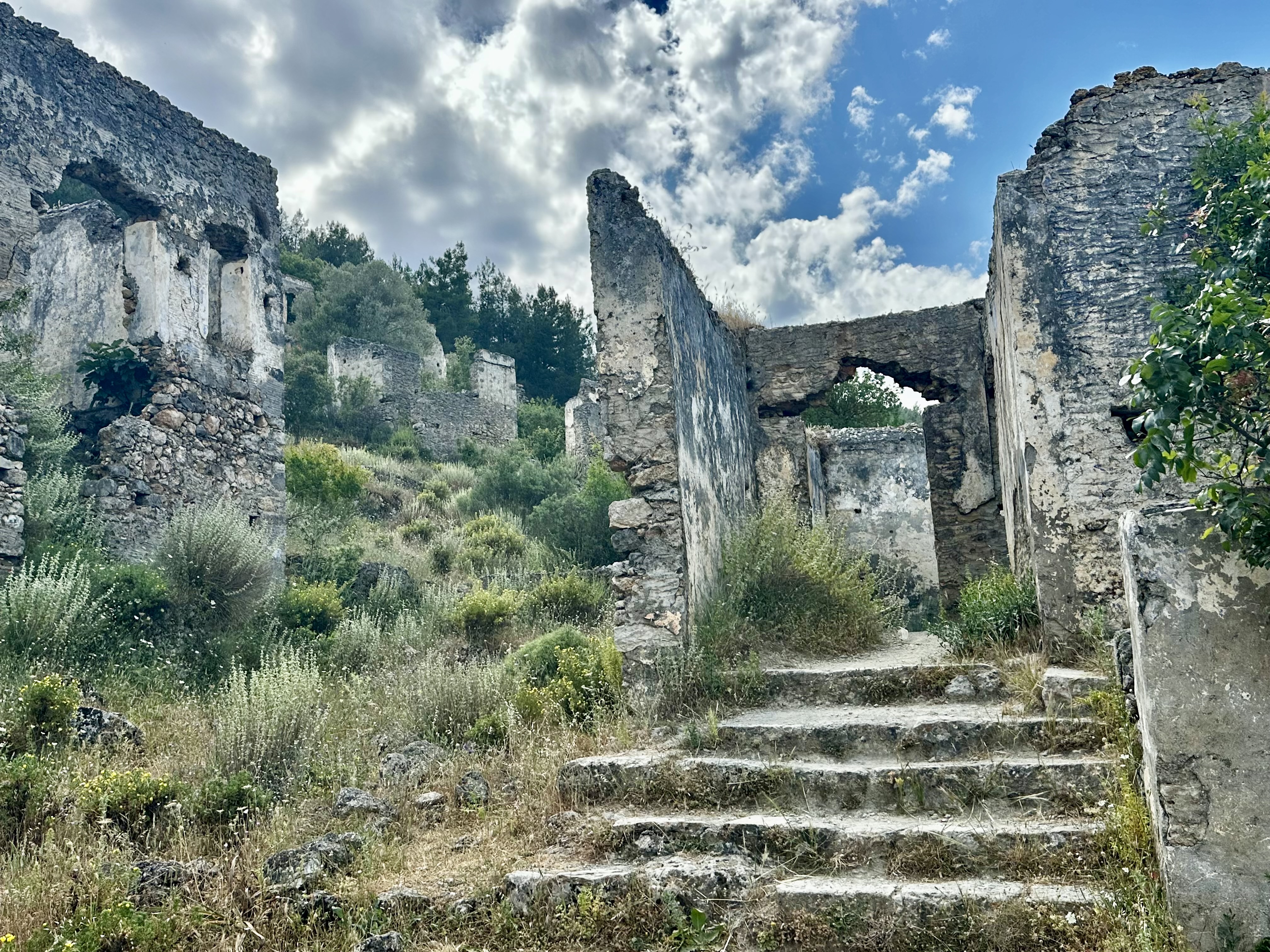
One afternoon we went to a “ghost town” The Ghost Town Kayakoy village in Turkey stretches along the hillside. In the XVIII century Greeks arrived here from Dodecanese Islands and founded a town here , it’s name was Levissi. In this quite a large town with about 3.500 homes the Greeks lived for centuries. In 1923 when the city had about 6,000 Greeks the “population exchange” was started between Greece and Turkey the Greeks were forced to leave the town. Kaykoy Ghost Town in Turkey was recognized as one of the World TOP 10 Ghost Towns according to National Geographic – a world leader in geography, cartography and exploration.

Following the Kayakoy history after the departure of the Greeks the Levissi city was renamed in a Kayakoy by name of a nearby valley – Kaya Cukuru (pothole from Turkish) and vacant houses were populated with Muslims that came from Macedonia. However the Macedonians did not like Kayakoy Turkey and they left the village – Kayakoy village became the largest abandoned Greek village of Asia Minor and it is called Kayakoy Ghost Town or Kayakoy Village.

Now Kayakoy Ghost Town in Turkey is open-air museum with about 500 preserved houses and three churches

Kayykoy

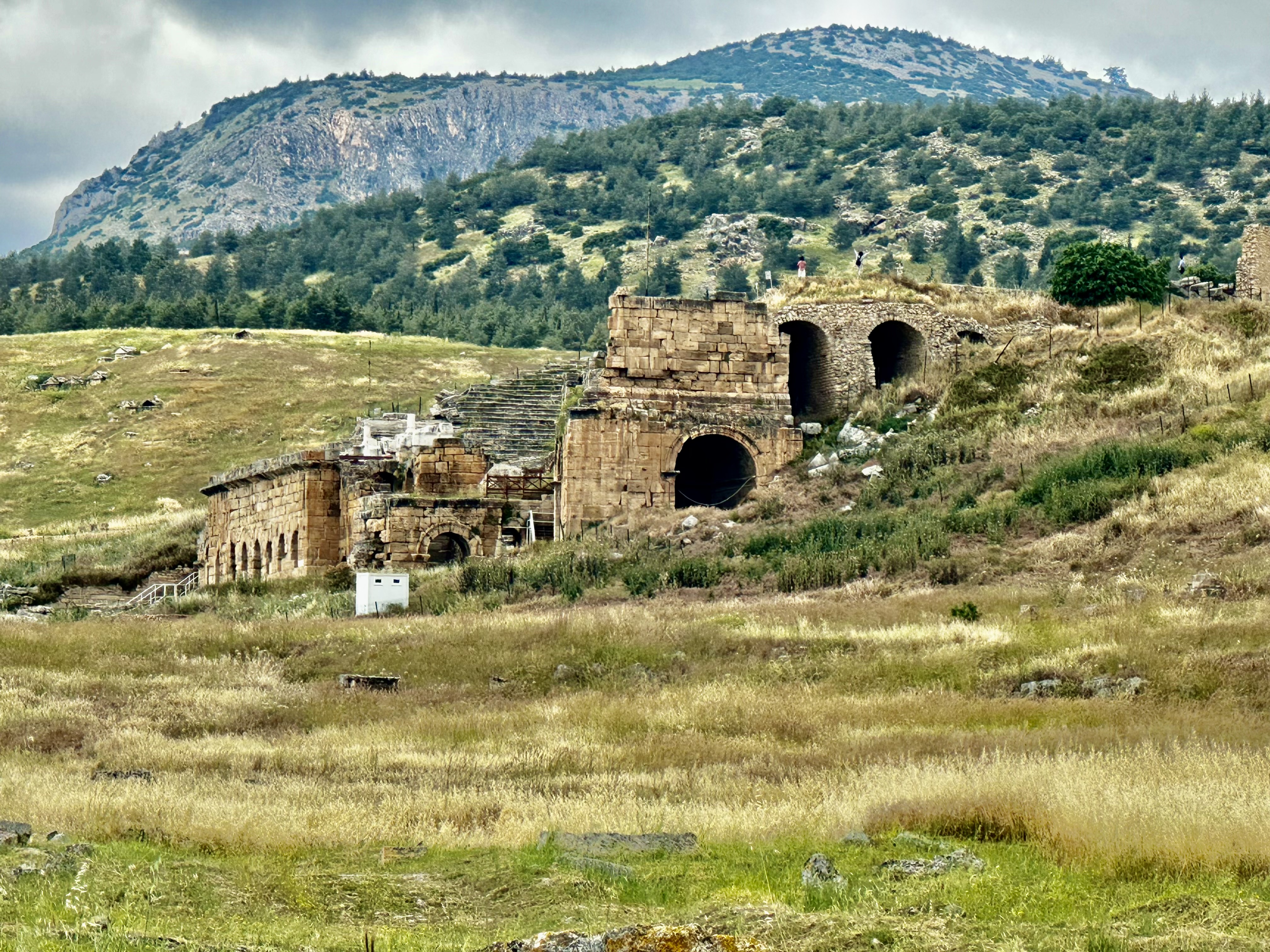
Upon Arrival in Kas we had a chance to see a small Hellenistic theater. Antiphellos was a small settlement and the port for Phellos, the much larger Lycian town further north in the hills. The small Hellenistic theatre, 500m west of Kaş’ main square, could seat 4000 spectators and is in good condition. It was built in the 1st century BC and restored 300 years later, probably after the great 141 AD earthquake. There’s a good view of Kaş from the top tier of seating.

Finally we had a full day on the water. After a beautiful drive through the mountains we arrived at a small village on the Mediterranean Sea. We boarded a boat and went to explore more ruins and go swimming in the most beautiufl blue water I ahve yet to see.

This area also had the ruins of a city that sunk into the sea after several earthquakes.

Located along Turkey’s stunning Mediterranean coast, the Sunken City of Kekova offers a unique glimpse into the past, where history and nature beautifully intertwine. Originally built on Kekova Island, this ancient city was a thriving harbor town before it met a tragic fate. Earthquakes and invasions led to the submersion of much of the city, leaving behind a fascinating underwater site.
Dolchiste: A Glimpse into the Past
Once a modestly bustling harbor town, Dolchiste was home to shipbuilders, merchants, and fish sauce producers. In the 2nd century, a massive earthquake struck, submerging much of the town into the sea. Though the city was rebuilt, it was abandoned after Arab invasions. What remains today is a fascinating blend of submerged and terrestrial ruins, collectively known as the Sunken City of Kekova.
The Sunken City Today

The day ended with a climb to a castle, where the view was stunning. There were tombs and sarcophagi scattered among the hills

Simena Castle, also known by its Turkish name ‘Kalekoy’ meaning ‘castle village’, is located on Turkey’s stunning Mediterranean coast in the Kekova Region between the modern town of Kasand Antalya, the province’s capital city. Once a notable Lycian settlement, the castle remains largely intact upon a hill overlooking the Gokkaya bay. Villagers have made their homes on one side of the ancient site and a handful of local restaurants can be found next to a small harbour, offering the daily seafood catches. It’s an interesting mix of old and new as locals have managed to build their modern lives while still maintaining the rich historical sites. To the west a series of rock-cut tombs are scattered across the slopes of the castle, you can walk down from Simena Castle and take a look inside.

Today I am leaving the coast and we are driving into another area of Turkey, Cappadocia.

I will see you all soon. Next post coming up. Wait for it.

A final pic of the day.

Travelog Continues: A Journey Through Turkey: From Gallipoli to Pamukkale

Two days ago we left Istanbul and began to travel.

First stop was Gallipoli

A peninsula on the European shores of the Dardanelles, the narrow strait that connects to the Bosporus in Istanbul, Turkey. Gallipoli became the site of one of the early battles that turned into the kind of carnage that WW1 later became known for. For the British and their Commonwealth allies, it was a heavy loss, for the Turks a significant victory, albeit a particularly costly one.

The Gallipoli campaign is especially legendary with Australians and New Zealanders who played a major role and suffered bitter casualties (esp. in relation to their total numbers). In modern Turkey’s history, Gallipoli is also important because of the decisive role Atatürk played in it.

Gallipoli

This was an extremely moving memorial. I could have spent days here. There was so much to see here.

But….on a group tour one must move on.

Taking the ferry across the Dardanelles Strait

Troy was repeatedly destroyed and rebuilt during its 4000 years of settlement. As a result, nine archaeological layers have been identified at the site, each corresponding to a city built on the ruins of the previous. Archaeologists refer to these layers using Roman numerals, Troy I being the earliest and Troy IX being the latest. 

Troy was first settled around 3600 BC and grew into a small fortified city around 3000 BC (Troy I). Among the early layers, Troy II is notable for its wealth and imposing architecture. During the Late Bronze Age, Troy was called Wilusa and was a vassal of the Hittite Empire. The final layers (Troy VIII–IX) were Greek and Roman cities which served as tourist attractions and religious centers because of their link to mythic tradition.

The site was excavated by Heinrich Schliermann and Frank Calvert  starting in 1871. Under the ruins of the classical city, they found the remains of numerous earlier settlements. Several of these layers resemble literary depictions of Troy, leading some scholars to conclude that there is a kernel of truth underlying the legends. Subsequent excavations by others have added to the modern understanding of the site, though the exact relationship between myth and reality remains unclear and there is no definitive evidence for a Greek attack on the city.

Troy

After leaving Troy we made our way to Pergamon. To get into these ruins, we had to take a tram. This is still one of my favorite sites on the trip so far.

This site rises high above the Bakirçay Plain in Turkey’s Aegean region. The Acropolis of Pergamon was the capital of the Hellenistic Attalid dynasty, a major centre of learning in the ancient world. Monumental temples, theatres, stoa or porticoes, gymnasium, altar, and library were set into the sloping terrain surrounded by an extensive city wall. The rock-cut Kybele Sanctuary lies to the north-west on another hill, visually linked to the acropolis. Later, the city became the capital of the Roman province of Asia, known for its Asclepieion healing centre. The acropolis crowns a landscape containing burial mounds and remains of the Roman, Byzantine, and Ottoman empires in and around the modern town of Bergama on the lower slopes.

Pergamon

Yesterday, Wednesday, we spent the day exploring another UNESCO site.

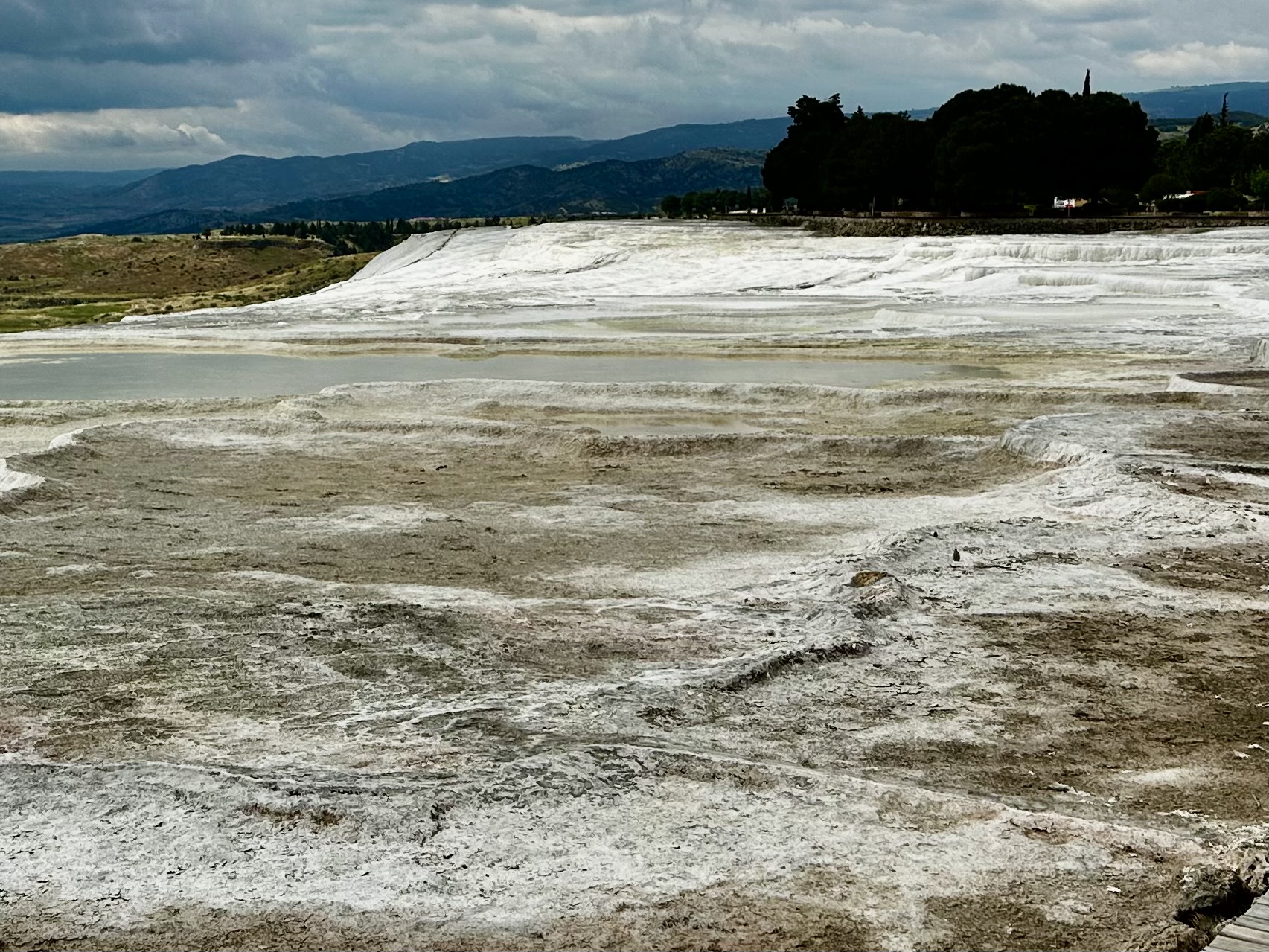
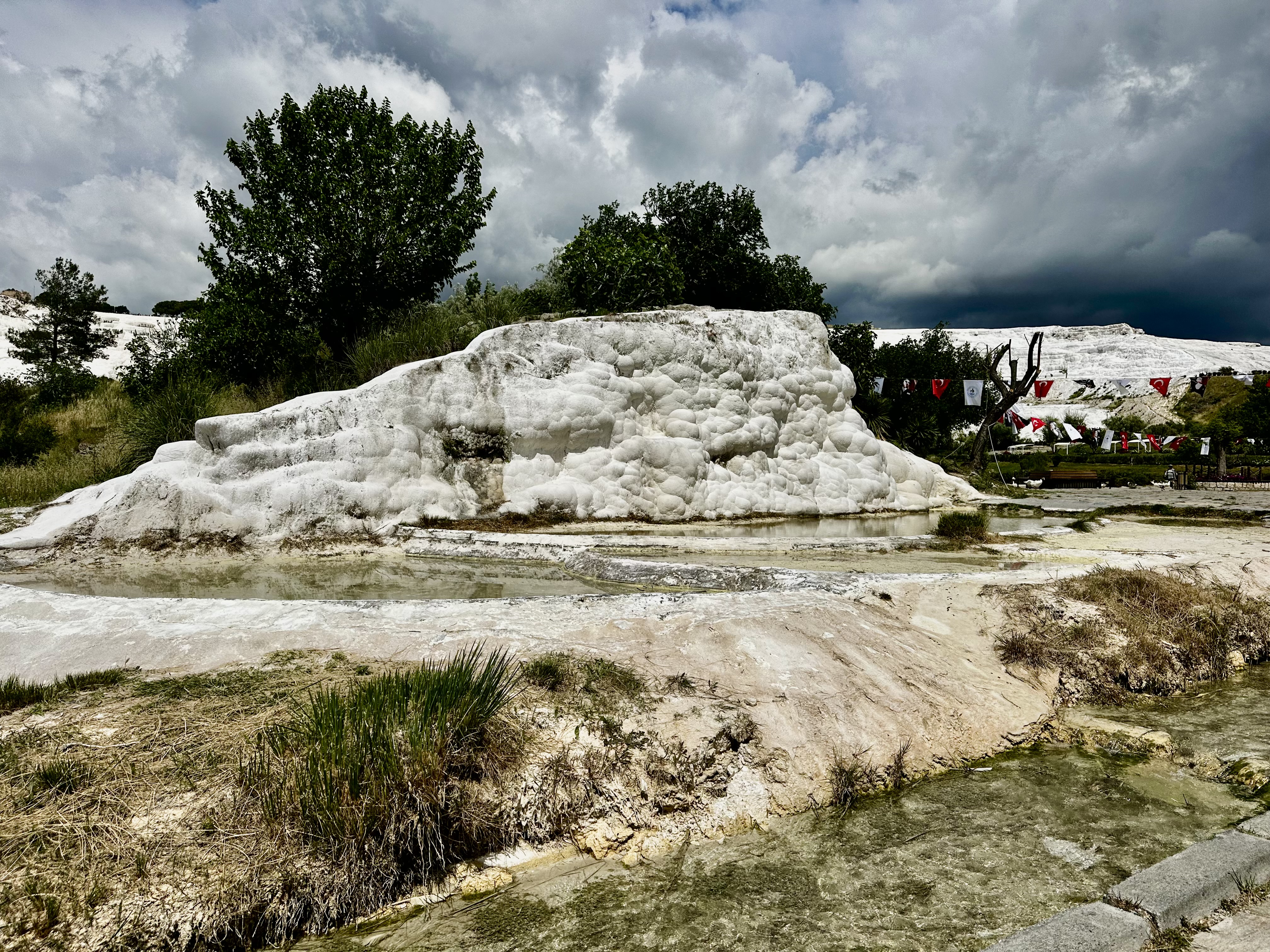
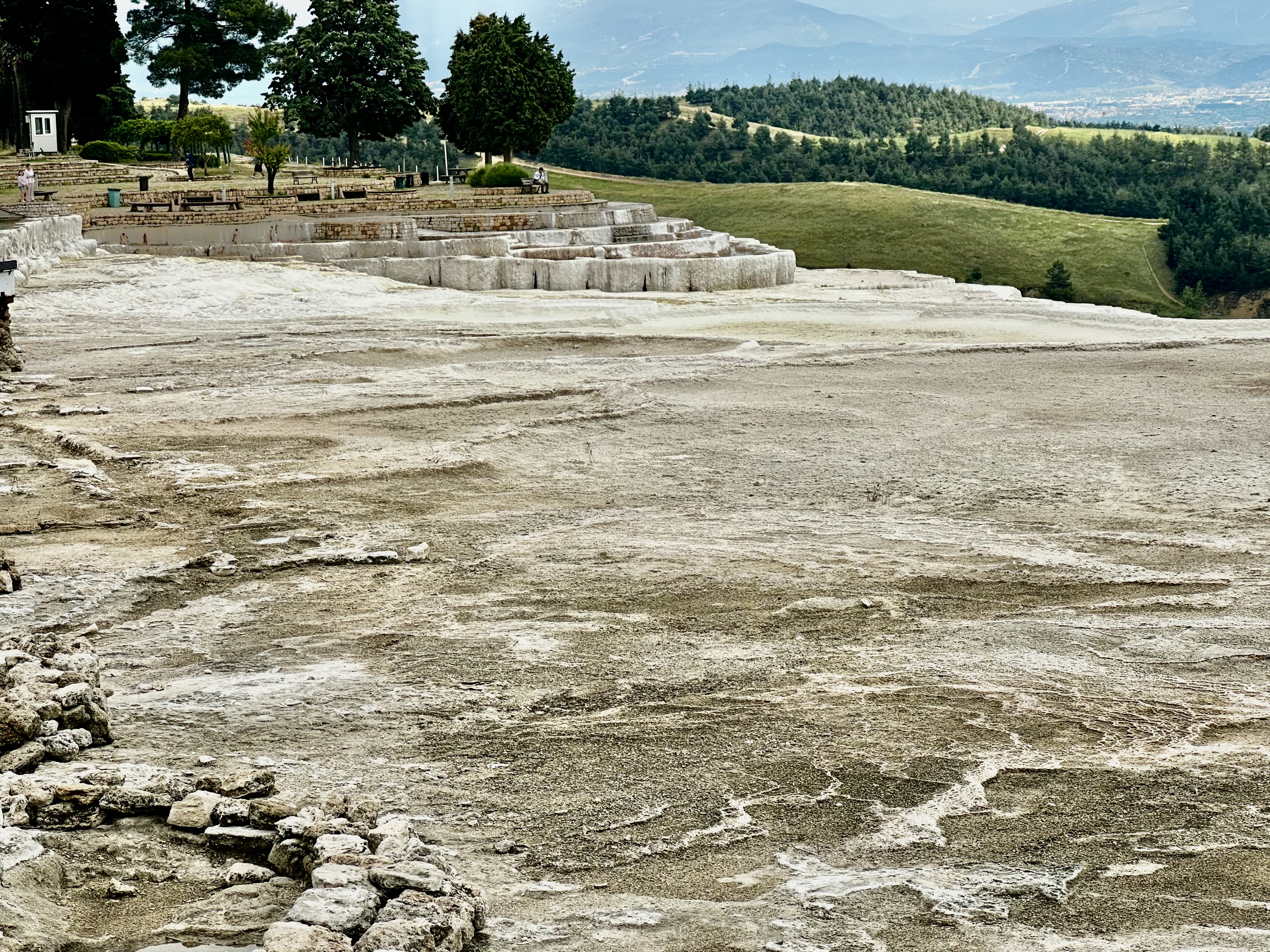
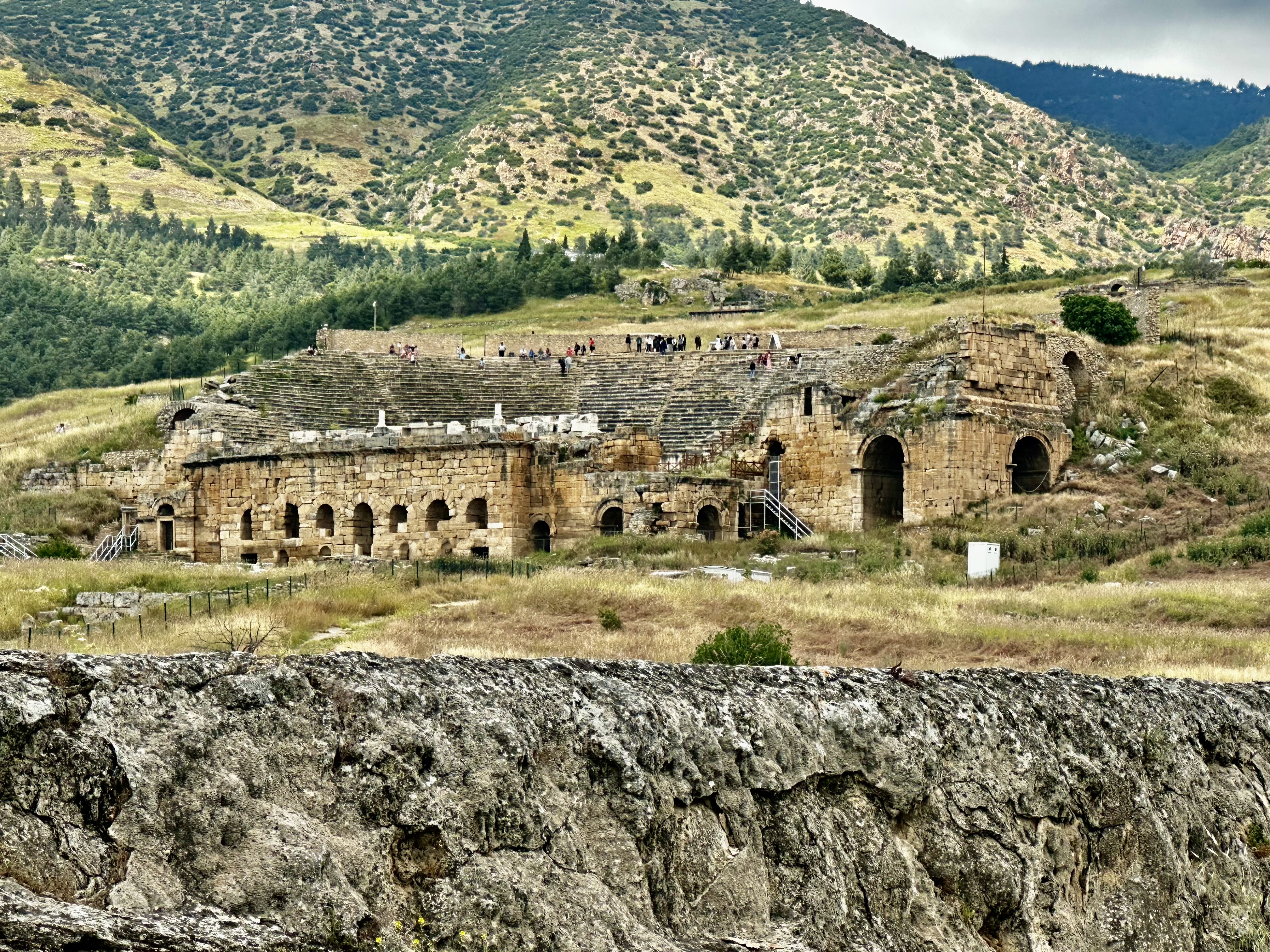
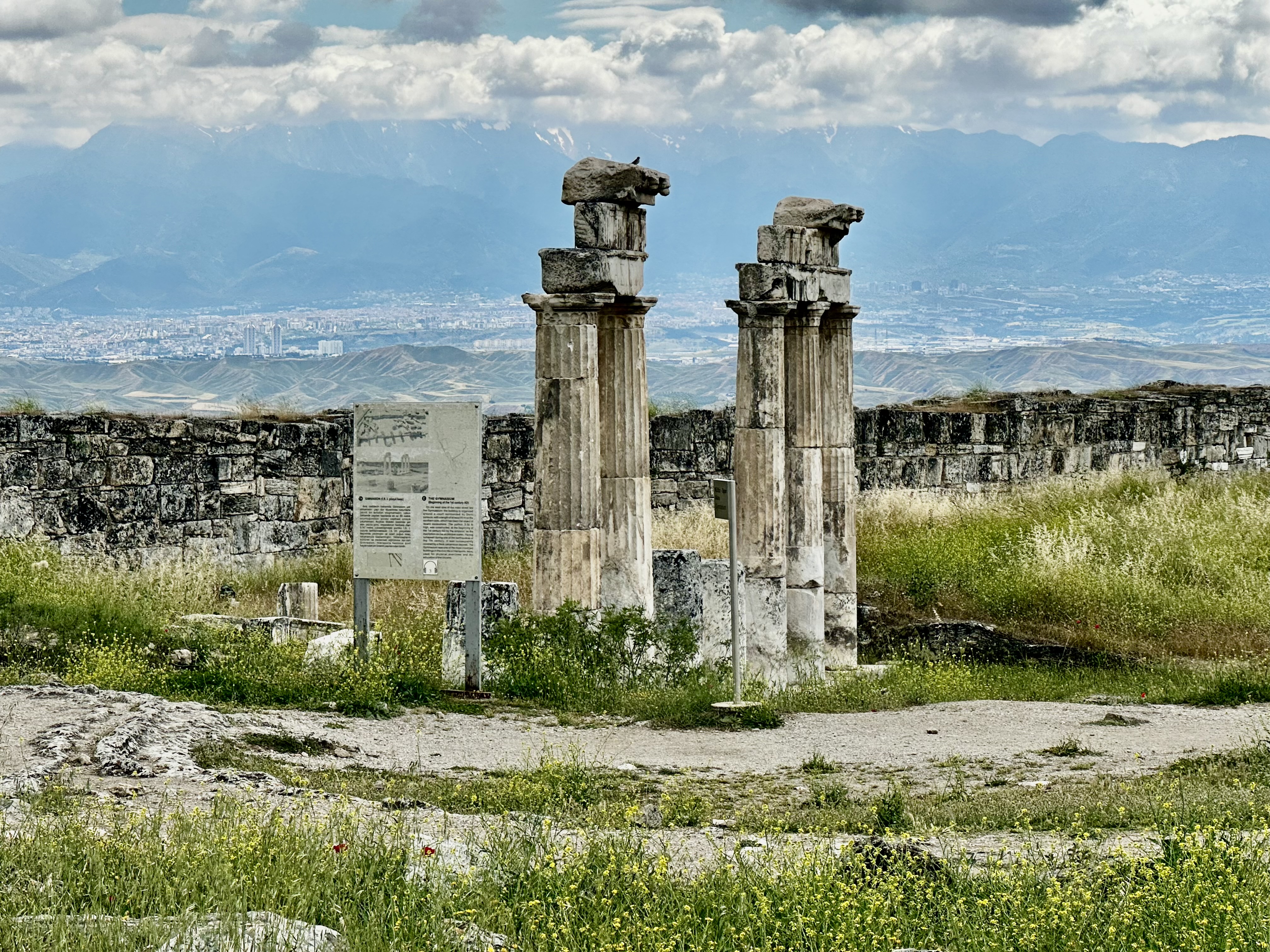
The world-famous travertine pools in Turkey are located in Pamukkale (meaning Cotton Castle) in the Denizli province. This dazzling UNESCO World Heritage site features brilliant white limestone terraces filled with mineral-rich, bright blue thermal waters.

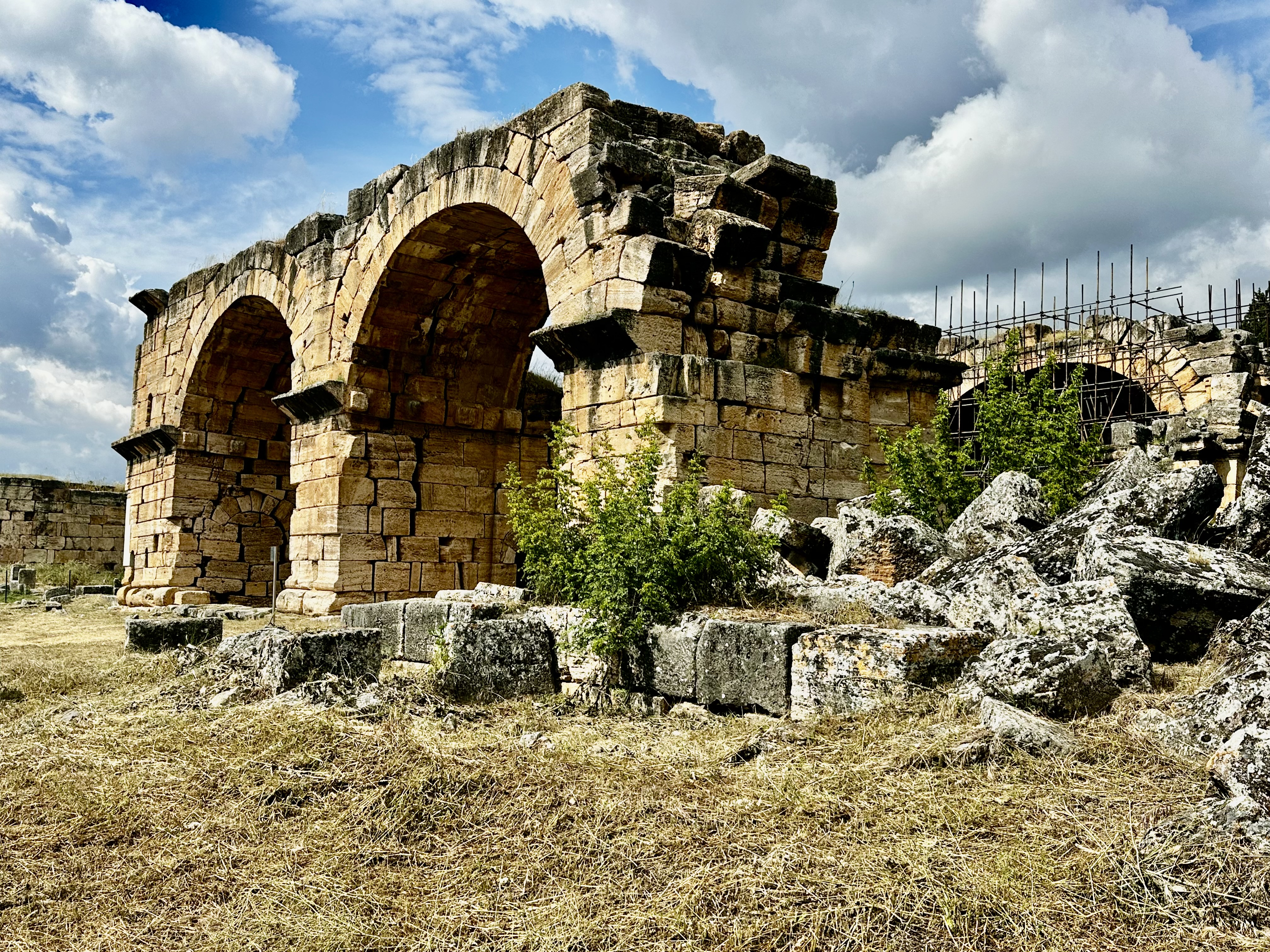
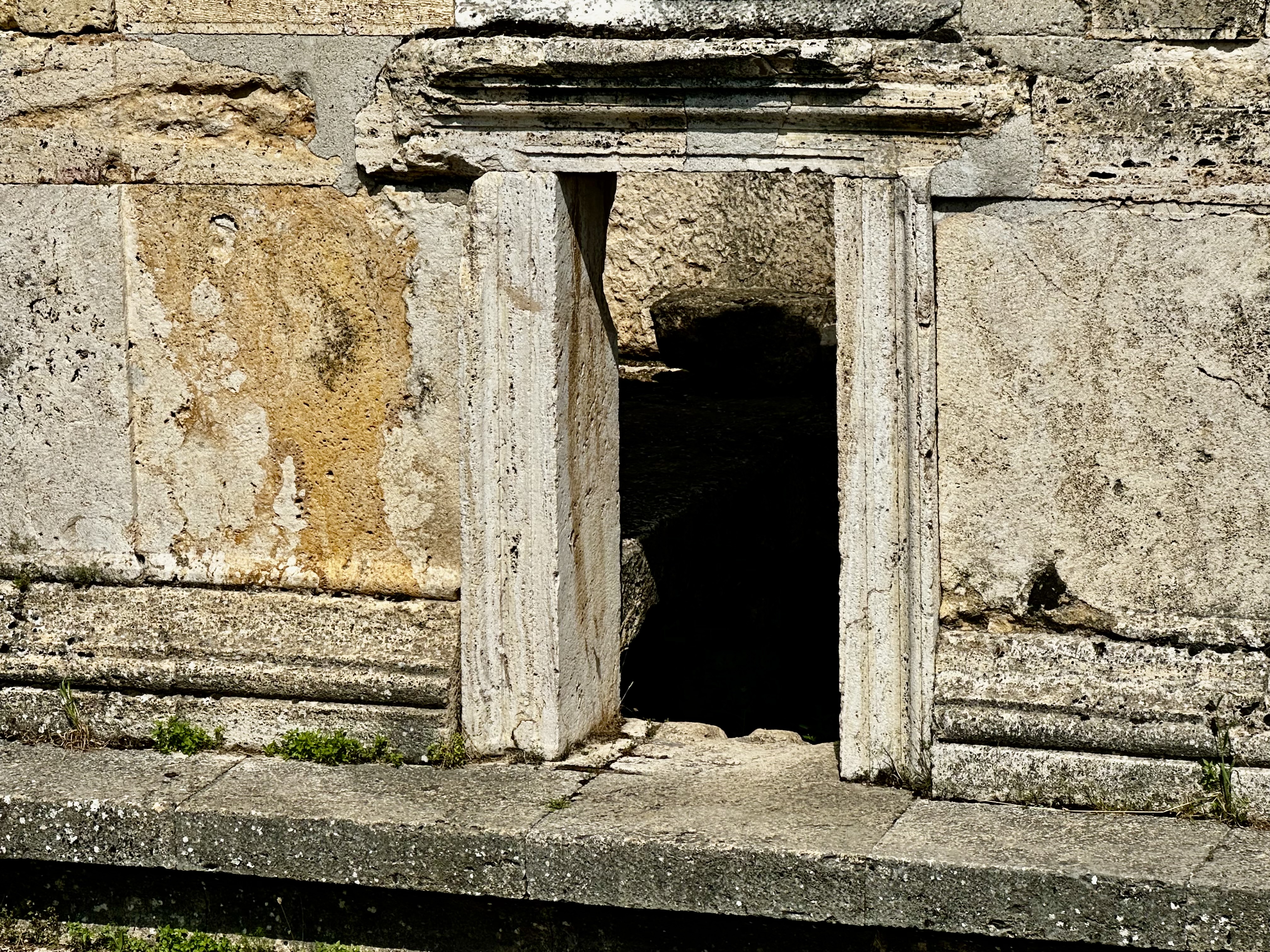
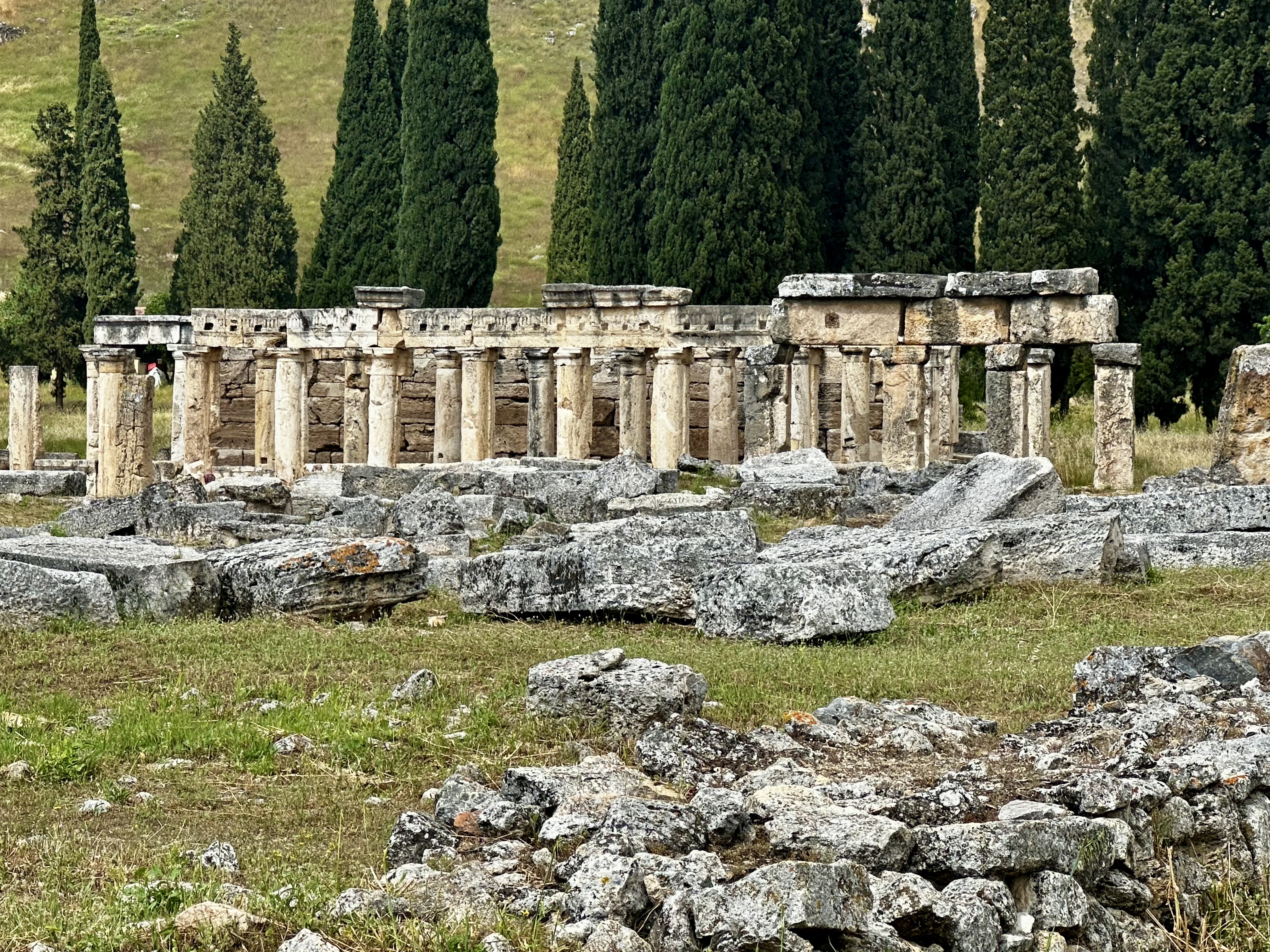
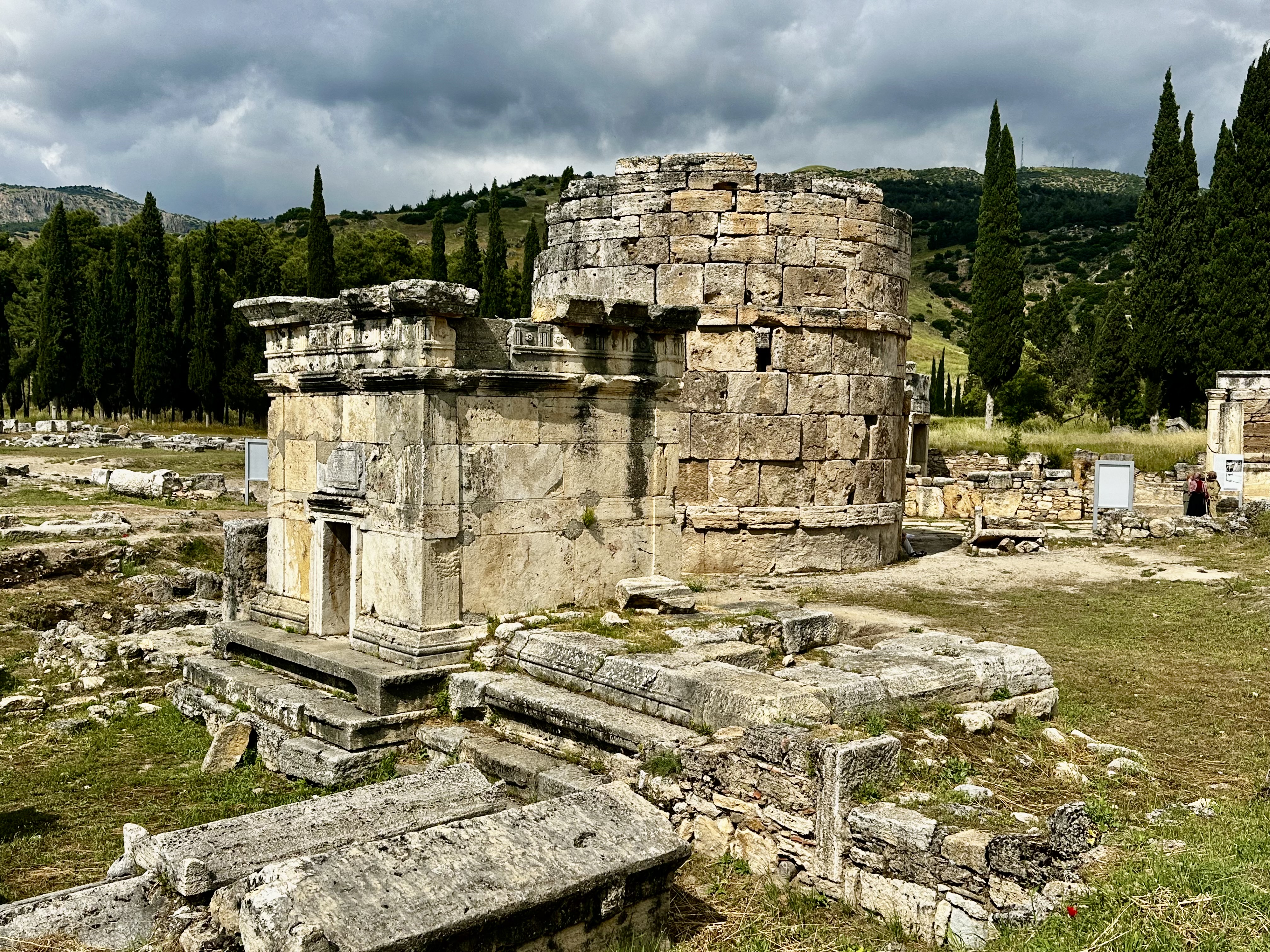
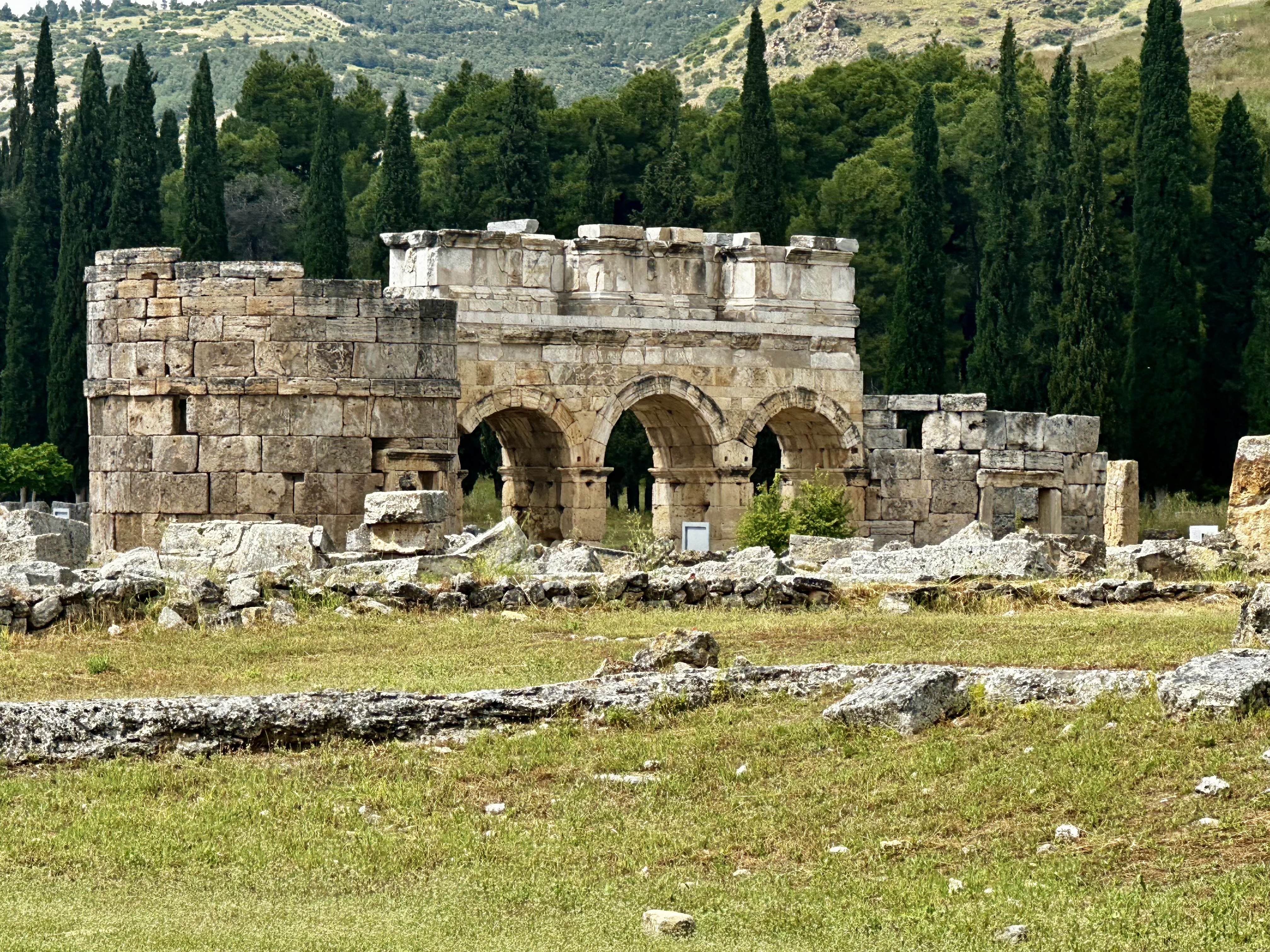
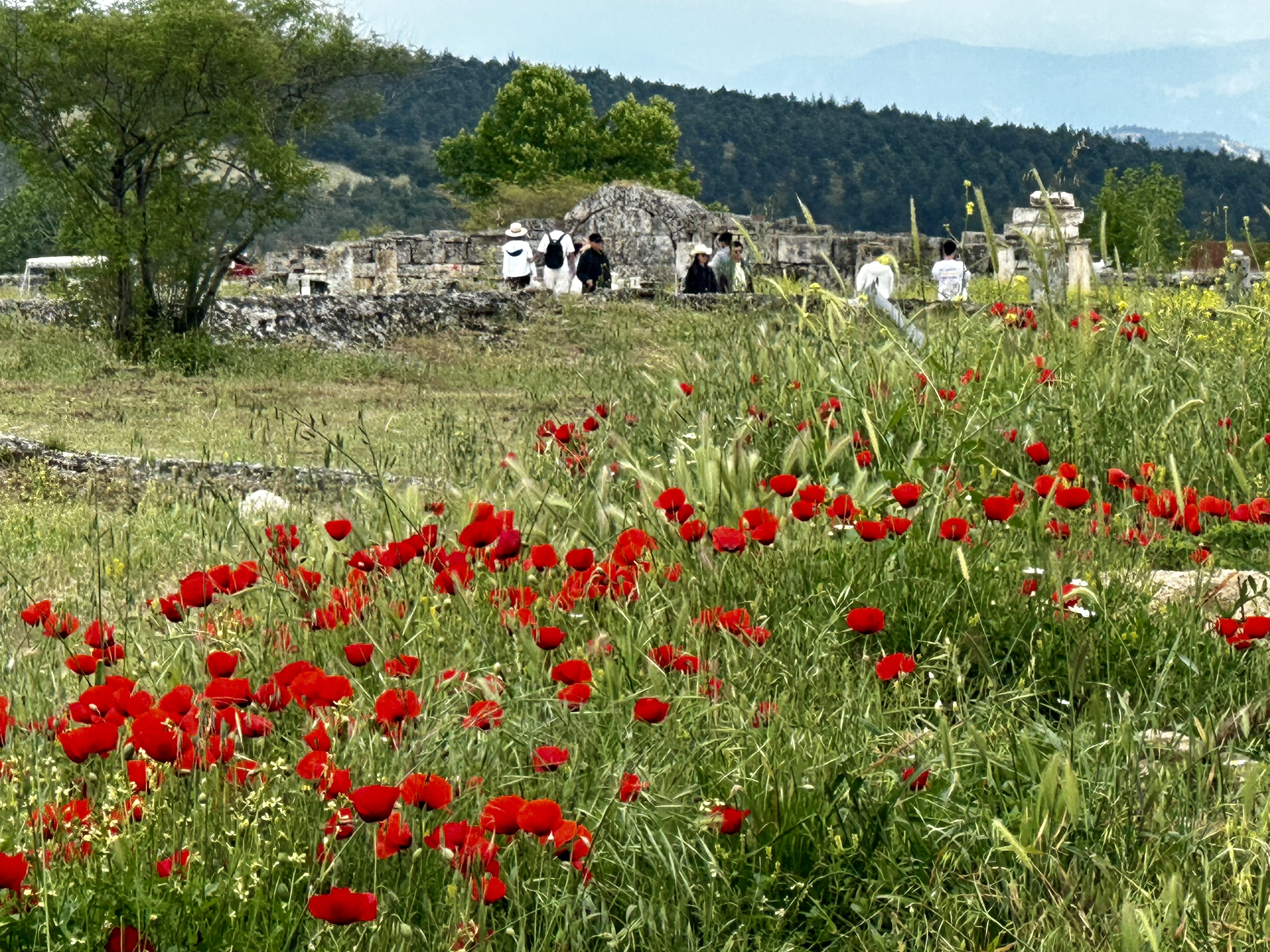
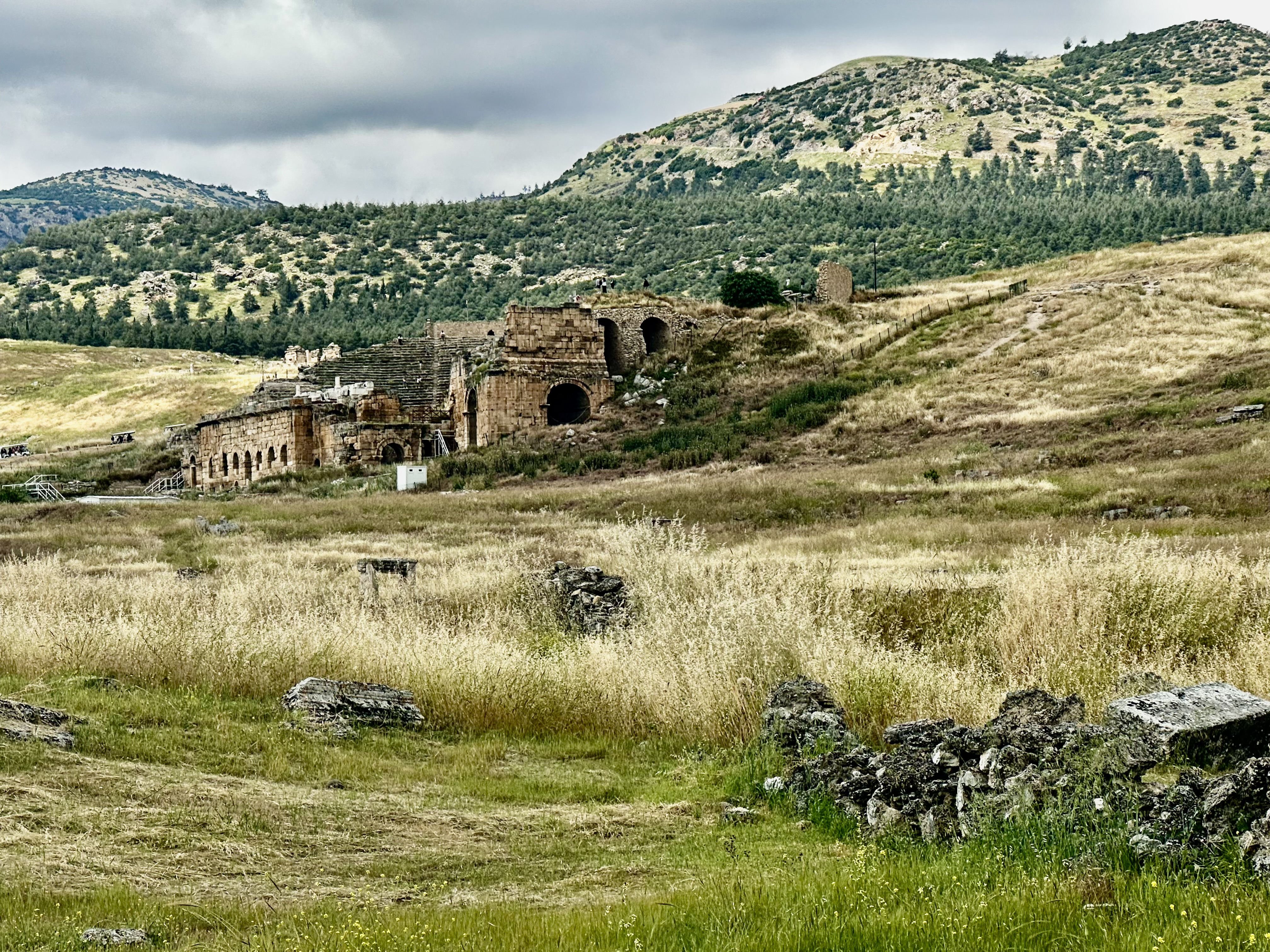
At the end of the 2nd century B.C., the dynasty of the Attalids, the kings of Pergamon, established the thermal spa of Hierapolis. The ruins of the baths, temples, and other Greek monuments can be seen at the site.

And that, my friends, is the end of this post. Whew. Remember that you can click on the individual pics and they will enlarge.

Although we are moving a lot and often, I am enjoying the journey so far. I get a bit peopled out, but there is always room to recoup before I join the group again. For someone who spends most of her time alone, I think I am doing pretty well.

The scenery is beautiful. We drove through the mountains today to return to the coast. The ride was beautiful as we traveled through the Taurus Mts. There was even snow on the peaks.

I will see you in a few days. Traveling On.

From Healing to Adventure: Exploring Turkey and Croatia

In less than one week, I will be taking my healing foot on a new adventure. Next Monday I am going International. A friend of mine, Zee, and I are going to Turkey for two weeks and then on to Croatia for two more. It is time to travel.

Remember the Trojan Horse? Troy is on the itinerary. Ephesus, Istanbul, Cappadocia, all the names out of World History are going to come alive as we travel through Turkey. History will certainly come alive.

After the tour is complete, Zee and I will be moving on to Croatia. tour-free, although we did have help organizing our time. We are going to stay near the water, island-hopping, kayaking, sailing, and more. As I told Zee, no matter what we do, it will be amazing. When I have never seen a place, everything becomes interesting and the best place ever.

Covering Turkey in Two Wee

I always get the pre-travel jitters. I worry about everything imagined or real. This year it began with worrying about what type of suitcase I should take. Should it be small or large, soft or hard sided? What should I take? I worried so much I would stay awake at night. It is amazing what one’s mind can focus on instead of sleep.

Just as I had made a decision about the suitcase, the community page I am on for the Turkey tour, told us to travel light. Back I went to worrying about the darn suitcase again. When a good friend, Phyllis, loaned me her suitcase. I could breathe and feel good about my decision. Although it really was made by Phyllis.

Once the suitcase situation was resolved, on I went to all other matters real or imagined that my sweet brain could build up in the middle of the night. What camera should I take? What clothes should I take? Sunglasses, hat, shoes and on and on. What about this? What about that?

Once I am on the plane and on my way I am good but oh my, the getting there. When Jim, my husband was still here, he could calm me down. Burt now there is no one and I have free reign to imagine and fuss and worry. Oh my goodness I miss him at moments like this.

Mission Trails Regional Park

Each day I continue to move forward trying my best to love myself and find some joy in each day. And even if it is only for a short bit I find my way into nature where I am most content. Today I walked into Mission Trails Regional Park. There was rain during the early hours that left these beautiful clouds and blue sky behind.

How is my heel?, you may ask. A little over three months ago I had surgery to repair a bone spur and Achilles Tendon issue. I am doing well. Am I completely healed? No, yet I am getting there. This time I will take things to help me. Hiking Poles? Yes. Scar Cream? Yes. Compression Socks? Yes. I have worked hard to get to this point and I am proud of my determination, following what was outlined by my doctors, Physical Therapist, Acupuncturist, Chiropractor, Massage Therapist, ART Specialist and Myofascial Release Tech. Oh yes I have been busy healing. I am going on vacation from my regimen.

EmmyLou, my rig is going into storage on Friday. She is going to be put inside and watched and cared for. When I return they will have washed her and gotten her ready for summer travel. Ah, does that sound nice?

The countdown is on. Each day I have a list. If I allow it, my friends in San Diego help divert my attention and keep me on an even keel. Each day I take a deep breath, get ready, do a little yoga and take a walk. I am getting there.

Today I am thankful, for this crazy woman who is me. Today I am thankful for techniques to get me through my own craziness. Today I thankful for the opportunity to explore new places and be amazed.

Today I am Thankful.

Road Trip Chronicles: RV Life and Challenges

My writing has been scattered lately and my posts show it. So…An Update.

I have been in San Diego for two weeks. The first week I was cat sitting for two pretty Tuxedo Kitties, Avril and Pete. They were very different personalities. Pete slept with me while Avril remained aloof. The best part of this sit besides the kitties…A Swimming Pool! On these warm summer days that pool was so refreshing.

I do not usually return to San Diego until November. By that time, the weather has cooled and being in San Diego is good. This year,….It Is HOT!!! Through the Labor Day weekend it is suppose to stay rather warm, even at the beach. Currently I am in Santee which is inland San Diego. It is close to 100 degrees. And, it has been humid. I am not used to this and I long to be back in the Pacific Northwest. Ah, alas, here I am.

I am in San Diego because I have a year long relationship with my dentist. I am having an implant put in and it takes almost a year to finish the process. Bone implant – Heal. Three months later in goes the screw which is really the implant – Heal. Three months later the crown goes on and I am done. This time I had the screw put in. That means in December I get crown on and I am done. Yay!!

Maintenance of my Rig, EmmyLou is important. Without her I have nowhere to live or sleep. On my drive south I met up with my friend Zee, who lives in southern Oregon. We planned a mini-trip to Mt Lassen National Park. On the third day of our camping trip, I tried to start my engine. It made a weird screeching noise, and then it stopped working. My roadside assistance, Coachnet, helped me get her where she needed to go. . She was safely taken to Weed, California. There, she got a new starter.

I was very thankful to have a friend with me. I stress out about Roadtrek issues when I am alone. I am always sure that I am to blame and my life comes to a screeching halt. Zee kept me from chastising myself too much. And I had somewhere to stay while the rig was fixed.

While she got a new starter Zee and I went back to her home. It is so good to have friends who open their homes to me. I am grateful each time this happens. Two days later I picked my rig up and returned to Medford, Oregon so Mercedes could check her out. A day later she was ready to go and I headed south.

Baby Needs New Shoes

Yesterday I spent the afternoon in the Tire Center at Costco because Baby needs new shoes. Michelins are on sale and EmmyLou has been traveling hard. She has 186,000 miles on her and her tires were looking worn. I knew it would take at least two hours. I brought my camp chair in from the rig. Now I am sitting in the air-conditioned tire shop, entertaining myself. It is great people watching.

My Campsite View

It is so common for me to be busy when I arrive in San Diego. I thought it would be a bit slower this time. I don’t even dive into my medical or dental appointments until I arrive in November. I have been busy. Now with Labor Day weekend arriving I am hoping to slow down for the weekend. Maybe I can get the kayak on the water. Maybe I can take a bike ride. Maybe, Maybe, Maybe.

Practicing Yoga free,in Donnelly, Idaho at the top of the Ski lift

There you have it an update. Since May I have been to the Pacific Northwest, Vancouver Island, British Columbia and back to the Pacific NW again. On the way south, I traveled east to Donnelly, Idaho. Where better to attend a free yoga class at the top of the ski lift? After spending a long weekend with good friends I returned to the west coast.

In mid-September, I travel north to Salinas, California (near Monterey). I will house sit for Woody the cat and Rocky the dog for a month. I will also kayak the Elkhorn Slough and bike around Monterey and enjoy my friend, Mandy’s lovely home.

Today I am thankful for my rig. It is good to keep her tuned up and in good working condition. I am truly thankful for air conditioning. I am thankful for good friends who open their homes and hearts to me.

Today I am Thankful.

Discover the Hidden Gem of Point Roberts, WA

Just south of Vancouver BC is a point of land known as Point Roberts. Point Roberts is surrounded on three sides by water. It is bordered by Canada to the north. It is part of Washington state and the United States. The only way to get there is by car crossing the International Border or by private plane or boat.

On a sunny early summer morning I decided to visit Point Roberts. I drove from Richmond (south of Vancouver). I crossed the International Border and spent a late morning and afternoon touring this unique area of the United States.

Point Roberts was created in the mid-19th century. At that time, the United Kingdom and the United States settled the Pacific Northwest American-Canadian border dispute. They resolved the issue with the Oregon Treaty. The two parties agreed that the 49th parallel would define The boundary between their respective territories. The small area that incorporates Point Roberts is south of the 49th parallel.

During the 1858 Fraser gold rush, prospectors from Victoria, BC attempted to avoid tax collection. They briefly settled Point Roberts. Their settlement was called Robert’s Town. It consisted of six wooden buildings, including a store and saloon. It lasted less than a year.

In 1949, there was talk about Point Roberts seceding from the U.S. and joining Canada. In 1973, a drought that caused the wells to run dry created tensions between Point Roberts’s U.S. and Canadian residents. The Americans threatened to cut off the Canadian residents’ water supply. They also hung up signs saying “Canadians Go Home.” This was unless the Canadian municipality of Delta agreed to supply water. An agreement was signed on August 28, 1987. It requires the Point Roberts Water District to buy raw water each year.

During the COVID-19 pandemic, Point Roberts was acclaimed as the “safest place” for avoiding coronavirus. This was due to its isolation from the mainland United States and Canada. The very low case numbers also contributed to this reputation. Limited access to the rest of the United States and Canada was a factor. Additionally, border closures into Canada kept the case numbers very low.

As the pandemic worsened in both countries. In 2020, a study found that Point Roberts had lost 80 percent of its business. It also lost hundreds of seasonal residents. This was a result of the pandemic and border shutdown. The area was described as a “ghost town” by the local chamber of commerce director. It had no confirmed cases of COVID-19 as of September 2020.

The Port of Bellingham set up a temporary ferry in August 2020. It connected Point Roberts to the mainland. The Canadian government waived its mandatory COVID testing requirements for Point Roberts residents in 2021. The decision followed negotiations with Washington state. The border was fully reopened for non-essential travel in August 2021 and the ferry service ceased the same month.

The City of Delta installed a chain-link fence at the end of English Bluff Road in 2025. This was done to deter accidental crossings. An elderly man accidentally walked into Point Roberts. The fence was poorly received by local residents and at least one Delta council member demanded its removal.

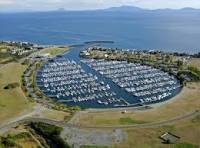
The Marina

Approximately 1300 people live in the 5 square mile area of Point Roberts. The big attraction is the nature and the wildlife. Point Roberts has it all. The community has a golf course, a marina and two restaurants.There are four parks and coastal beaches to explore.

Lighthouse Marine Park is a 21-acre park on the Salish Sea and my first stop. Park amenities include a boardwalk, picnic areas,playground, trails, boat launch, and 30 campsites for weekend of camping. I chose to walk the beach trail to gaze out on the water. I hoped for whales but a seal was all I saw.

Mt Baker from Lighthouse Park

On a beautiful day I saw Mt Baker on the mainland, in Washington State. The beaches are like the beaches in Washington, Plenty of drift wood was scattered along the beach. The beaches are rocky and wild.

Monumet Park

This park is known for “Border Marker Number One”. It is the western most border marker between the U.S. and Canada. The park is a canopied forest of cedar and fir trees.

Lily Point Marine Reserve Park

Lily Point Marine Reserve spans 275 acres of forested upland and beaches. It is known for its towering sandstone bluffs. When beach-side, pilings can be seen running out into Boundary Bay. These pilings are remains from the Alaska Packers Association cannery. This cannery once operated here in the late 1800s.

Maple Beach

This beach is a popular spot for beach combing and swimming. It sits on the northeastern corner of Point Roberts. It is known for its sandy beaches and tidelands. At low-tide the tidelands stretch for a mile or more.

After a morning and early afternoon exploring I stopped for lunch at Kiniski’s Reef Tavern. The food was good and the view from outdoor seating was exceptional as I looked out over the Salish Sea.

Somewhere along my travels I read about Ollie-Otter’s Baker Box. I decided I needed to go find this interesting local landmark. There is a cottage bakery there Ollie-Otter’s Bakery is in a cottage behind the bakers box on the curb side. There were wonderful goodies waiting to be bought.

The Hungry Hound Barkary had a small box next to the street side bake box. This business is owned by Ollie Friedman. Ollie may have some growing to do but he has big dreams.

This is what is written on the sign in the photo.

“Hi I am Ollie. I own the Hungry Hound Barkary. Yep I’m 11 but I have BIG dreams. Someday I want to be an astronaut and work for NASA. To make that happen I need coding classes. So to raise money I’m taking over the dog treat business. Thanks for stopping and supporting my dream. I hope your pup enjoys the retreats.”

If you would like to support Ollie’s Dreams here is the link to his Go Fund Me Page. Ollie’s Path to NASA. I believe, much like my husband did, that it is important to support these young people no matter their dreams.

After a lovely morning and afternoon, I approached the International Border. I crossed back into Canada for a few more nights. Before I made my way back to the United States.

I enjoy exploring the unknown. I definitely would return to Point Roberts again. I could easily see camping there and taking a leisurely tour of the area.

I am grateful for my friends. They guide me to unusual places. This year I can add Point Roberts to places that are unique.

Today, as every Day I am Thankful.

.

.

The World of Stanley and Sitka: A Cat’s Perspective

Meow, Meow

Hi. Today we found Janet’s computer and decided we wanted to say hi.

We are Stanley, the Orange One and Sitka the “Water Boy”.

We live in a house with our friends. We are Canadian Kitties. One day a long time ago (or so it seems) our friends disappeared and Janet showed up. We don’t know where they went and we don’t know where Janet came from. Just like that, there was a change of people. This change was made to guarantee that our lives go as uninterrupted as possible. And, we are good with that.

I am Stanley. I am an orange boy. I have heard people say that I am different because of my color. I would like you to know that I am different because that is how I was made. I am a mush. I like to be petted and skritched. Sometimes I follow Janet around. This way, I can be sure to get enough of everything I need at any given moment.

Janet appears bothered when I try to chew on this machine. This also happens with other machines that she has around. I know I wouldn’t chew on them if she paid more and more attention to me. Today she had a serious talk with me about my chewing on her hands and arms. I laid there and looked at her with defiance in my eyes. Ha, I will show her. (I do like her….just don’t tell her that). Excuse me but I have to go curl up next to her.

Oh, one more thing, I have the best whiskers. They are long and curly and strong. It is one of my best features well, except my belly and my color. I am a handsome boy.

I am Sitka and I am a White Water Boy. I love water. I really, really, really love water. I like it in the sink, shower and toilet and anywhere else I can think of finding it. Water is my life blood. When Janet turns the sprinklers on outside, I go and sit under the spray. I stay there until I am wet all over. I really love water. Janet told me the other day that she had to ring my tail out before I can come in side. Hee Hee.

My coat is always clean and white and I bet you know why. Water. It keeps me so clean and fresh. When one is a white kitty this is important.

I like being aloof and independent. I will never be like Stanley, he grovels way too much. For the first several days I let Janet let me in and out. I even let her pick me up to come into the house. I don’t like to come in when I am outside. Other than that I stay out of her way because I am aloof. I am a kitty.

Now that Janet has been here for a while I am warming up to her. She is actually pretty nice. I found out that if I lay on my back on the sidewalk she will rub my belly. It feels really good so now I let her do that more often. I also like when she talks to me in her kind and soft voice. OK so she is not the bad. One day she brought us treats from the Farmers Market. Even though I usually don’t like treats, I found that I like those treats. Janet is not that bad to have around.

I like to walk the neighborhood. It consists of three houses and a walkway to the beach. Everywhere I go I meet up with water. I am glad I live next to the ocean.I love water. Sometimes if I wander too far the crows find me and harass me until I get back to my house. They can be such a bother.

From both of us…we are pleased to meet you and tell you a little about our life in the north country. Janet tells us our friends that live here all the time will be back soon. That will be fun to see them again. In the meantime, it is nice to have Janet here. She ensures we are loved. We are also taken care of in the manner to which we are accustomed.

We are after all, Cats.

The Importance of Community During Tragic and Unsettling Moments

I am sitting in my lovely VRBO this morning, thinking about the last week.

FIRE

The Los Angeles fires were horrific. So many people lost their homes, their livelihoods, and so much more. What saddens me is hearing people say that because some who lost their homes were wealthy, they can just replace what has been lost. If only it was that easy.

Emotionally, no one’s life is the same after a horror like this. Money or no money, the emotional toll remains for most.

Did you know that many organizations in Los Angeles are helping their own and those further abroad? When I began exploring how to help those in need, I found organizations I did not even know or think about.

How The Arts & Entertainment Industry Is Supporting Los Angeles Fire Relief

Alt Comedy All-Stars 2025

On Jan. 31, Alt Comedy All-Stars 2025 will occur at the Fonda Theatre at 8 p.m. The benefit show for Comedy Gives Back will raise funds for comedians affected by the wildfires. The talent lineup includes Patton Oswalt, Zach Galifianakis, Bob Odenkirk, John Ennis, Jill Talley, and more.

Celebrity Donations & Volunteers

An abundance of the Hollywood elite has taken to Instagram, donation drives and more to help rebuild Los Angeles. Paris Hilton, whose Malibu home was destroyed by the Palisades Fire, launched an emergency fund through her foundation, 11:11 Media Impact, to aid displaced families with young children. She urged Instagram followers to donate and kicked off the fundraiser by committing to match the first $100K raised and contributing another $100K.  Beyonce’s foundation, Beygood, also announced a $2.5 million LA Fire Relief Fund to aid families in the Altadena/Pasadena area, during the week after the fires began (Jan. 13 to 17). As confirmed by People, Meghan Markle and Prince Harry have taken in friends who were forced to evacuate to their homes and have plans to take action through their Archwell Foundation. Eva Longoria was among volunteers cleaning up the streets of Pasadena. She also pledged $1 million to support relief efforts and urged followers on Instagram to support The California Community Foundation and The Latino Community Foundation.  

Getty’s L.A. Arts Community Fire Relief Fund

The J. Paul Getty Trust has teamed up with the Mohn Art Collective (Hammer Museum, LACMA, MOCA), East West Bank, Mellon Foundation, TheBroad Art Foundation, Helen Frankenthaler Foundation, The Andy Warhol Foundation for the Visual Arts, Qatar Museums and Ford Foundation to establish the $12 million L.A. Arts Community Fire Relief Fund. Administered by the Center for Cultural Innovation, the emergency fund will support artists and arts workers in all disciplines who have lost residences, studios or livelihoods or have otherwise been affected by the wildfires. Applications open on Jan. 20. 

Hollywood Pantages Theatre

The Hollywood Pantages Theatre donated $125,000 to five organizations: the Los Angeles Firefighters Foundation, the Los Angeles Police Foundation, the Entertainment Community Fund, Project Angel Food and Broadway Cares/ Equity Fights Aids. “Our hearts go out to everyone affected by the devastating fires impacting Los Angeles and our surrounding communities,” said Jeff Loeb, president of The Hollywood Pantages Theatre. “We are deeply grateful for the heroic efforts of our firefighters, first responders, and the countless neighbors who have stepped up to lend a helping hand during this difficult time. Your courage, resilience, and compassion inspire us all.”

LA Gives Back Fire Relief

On Jan. 29, The Bellwether will host LA Gives Back, and 100 percent of proceeds will benefit charities that support the community, firefighters, and animals affected by the wildfires.

Netflix

The streaming titan donated $10 million to the Los Angeles Fire Department Foundation, California Community Fund Wildfire Recovery Fund, World Central Kitchen, Motion Picture and Television Fund, and Entertainment Community Fund. “For many people who aren’t familiar with it, Los Angeles conjures images of palm trees and red carpets; mansions and movie stars,” co-CEO Ted Sarandos said in a statement. “But for those of us lucky enough to call this city home, Los Angeles is far more than that. It’s a family — one made up of extraordinarily talented, hardworking people from all over the world and all walks of life, many of whom came here chasing a dream.”

The Producers Guild of America

The Producers Guild of America and the Entertainment Community Fund have established a fund to support film, television, and emerging media producers affected by the fires. Producers can apply online for financial assistance, and those seeking help can donate through the Entertainment Community’s website. Already, $300,000 has been raised. 

Universal Music Group

Leading the way for the overhaul of Grammy week, Universal Music Group canceled all of its Grammy-related events on Jan. 13. Instead, it will redirect the resources it would have used for the events to assist those affected by the wildfires. “L.A. is home to so many of us,” UMG said in a statement. “We are committed to helping and supporting the music community, our artists, our teams, and the people of Los Angeles get through this horrific episode.” 

Warner Bros. Discovery

Alongside setting up an emergency relief center on its studio lot, Warner Bros. Discover pledged $15 million to immediate response and rebuilding efforts. “Our studio has called Burbank home for more than 100 years, and we are focused on what needs to be done to help those impacted rebound from this disaster and rebuild in the weeks, months, and years ahead.”

YouTube x Google

YouTube teamed up with Google and Google.org to donate $15 million to organizations offering immediate relief in Los Angeles, including Emergency Network Los Angeles, the American Red Cross, the Center for Disaster Philanthropy, and the Institute for Nonprofit News. “Los Angeles is the heart of entertainment and storytelling and has an impact on culture all over the world,” YouTube CEO Neal Mohan said in a blog post. “It’s also where many YouTube creators, artists, partners, and our employees call home. Like so many, we’ve been heartbroken by the devastation from the wildfires and want to do our part to support the community as it rebuilds.”

And these efforts are just an example of how Los Angeles and those further away are helping everyone recover from this life-changing event.

Loss on a Local Level

The North Shore community has been suffering a tragedy for the past four days. Over the weekend, there have been big waves, up to a forty-foot face on some waves. Two local teens disappeared after a date at Sharks Cove on Friday night. Sharks Cove is a well-known snorkeling spot.

When they didn’t return home, the girl’s mother notified the authorities. They found their clothes and car on a beach north of the cove. The Coast Guard, the Life Guards, and local organizations got involved. Over the weekend, they dove, snorkeled, flew helicopters over the site, and used jet skis to transport all the searchers. The family sat on the shore and looked out to sea. As of today, they have not been found. Slowly, the energy returns to normal, yet losing these two young lives will forever affect the community.

It makes me aware that no one is on permanent vacation or holiday. Reality has a way of shaking me out of my comfort zone. What can I do? For now, I can donate money to the victims of fires. I can help in the best way that I can. I can hold them in my thoughts and give prayer.

It is more complicated with the local community here on the North Shore. When they asked everyone to keep an eye on the water, I did. I noticed others walking among the lava rocks on the rocky coast. Everyone was looking. For a brief moment, the community, locals, and visitors alike searched the best way they could while not getting in the way of the Coast Guard and Searchers. Now, through breath and prayer, we can hold these families of such tragic loss in light, in prayer, or however you individually honor those in need of loving, non-judgemental, emotional support.

As my world gets thrown asunder, for a moment, a day, or longer, I will continue to find ways to lovingly support those in need. I can do this physically, financially, or through prayer. I can identify when making an unsound judgment on others, take a breath, and release the judgment so those unfounded feelings are not released into my universe or the universe. These are not the times for personal judgment. This is not about me; it is about others and me stepping out of the way so those in need will find unconditional love and support.

Today, I breathe deeply and send what I can to those in need. I hope that my breath will wrap around all of them, and maybe I will create one little spark of love and hope in a world that needs it so desperately now.

Today I am Thankful.

Exploring Washington State: Nature, Friends, Growth and Adventure

I have been traveling in Washington state since the end of May. It is still chilly here. The sun is now out more than it rains and the daylight hours are extensive. Sunset is close to 10 pm.

Friends

I have been in the country, on the lower end of the Olympic Peninsula, and in Seattle. Wild things draw me to the wild places. Friends draw me to the city. Once I am in the city, I discover there are delightfully wild places to keep this nature-loving lady happy. I am happy to visit with good friends, and I am happy to launch my kayak or take a bike ride and discover the wildness within the city boundaries.

I camped in a field. My neighbor was a beautiful paint horse, a few deer, and, of course, birds. I walked, biked, and visited this little island. I found a community labyrinth among the pines, attended the Strawberry Ice Cream Social, and stopped at the General Store.

Hanging on the wall of the general store was a poster, “How to Build Community.” I stopped and read it.

Loneliness is something I contend with at times, living this lifestyle. I love visiting with my friends and chatting with new people, yet much of my life is spent alone.

Reading this poster challenged me to pick one topic and attempt to include it in my day, every day.

I particularly like the statement “look up.” Like many of us, I look down at my phone often, more often than I should, more often than I think is healthy. Today, as I was returning from a hike, I saw a lovely young woman walking on the beach. I looked up and said hello. We spoke for a few moments and shared the treasures we had found. And just like that, my day became richer for this brief encounter.

One positive experience makes me willing to try something else on this list. Which one are you willing to try?

Today I am thankful for my sense of adventure. Today I am thankful for posters that catch my eye and just like that, help me to grow. Today I am thankful.

Alaska Out – Pacific Northwest & Canada In

LIFE IS WHAT HAPPENS TO YOU WHILE YOU’RE BUSY MAKING OTHER PLANS

You may remember I had plans to travel to Alaska this summer. I started to plan and tell my friends, family, and those who follow my blog that I was heading out on another journey. Alaska, here I come.

Things have changed. I have had some minor health issues this past late winter. It has made me ponder the wisdom of adventuring off into the backcountry, where access to health care may be a bit more limited.

After much pondering, I decided that I needed to make a decision. Decisions can always be changed, yet if I am going to plan my spring and summer, a decision needs to be made.

Those who know me know that I am not the best decision-maker. I hate to commit. I mean, what if something better came along? I want to somewhat firm up my spring and summer, so I am developing an alternative plan.

What am I going to do instead? I decided to explore the Northwestern part of the United States and venture into British Columbia. It is an change for me, and I am now adjusting to changing plans. It is not as easy as it sounds. Even if I have a vague plan, I am more comfortable with it than with no plan at all.

My friends are chiming in. I am so thankful for them. Some want to visit from further away. My friend, Leslie, from Alaska, may join me at a British Columbia retreat center workshop in July. I have been invited to fly to Anchorage to join her adventures. A good friend from Chicago may be coming to meet up with me in June. And then there are the local Northwest friends who will join up with me from time to time. It is so good to feel wanted and loved. I really do enjoy traveling with others. It feels good to discuss the day’s adventures with someone.

I have been in Oregon and now Washington for the past few weeks. I needed to get some work done on EmmyLou. That took me to Edmonds, WA. I love being back near Puget Sound after a two-year absence.

Currently, I am returning to Oregon. My Medford friend and I are planning some birding and hiking adventures. It is time to explore more of Oregon. With Mary as my guide, I will have a readily available resource for all things Oregon.

As the weather warms up I will be back in Washington and British Columbia for the summer. It is time to research on the fly and get my exploration cap on.

Please join me if you will. I definitely will be attempting to find the extraordinary in my every day travels. And of course there will be the photos.

Today I am thankful. Thankful for friends who love and support me. Thankful for this big wide open country that offers a chance to explore. Thankful for my health.

Today I am Thankful.