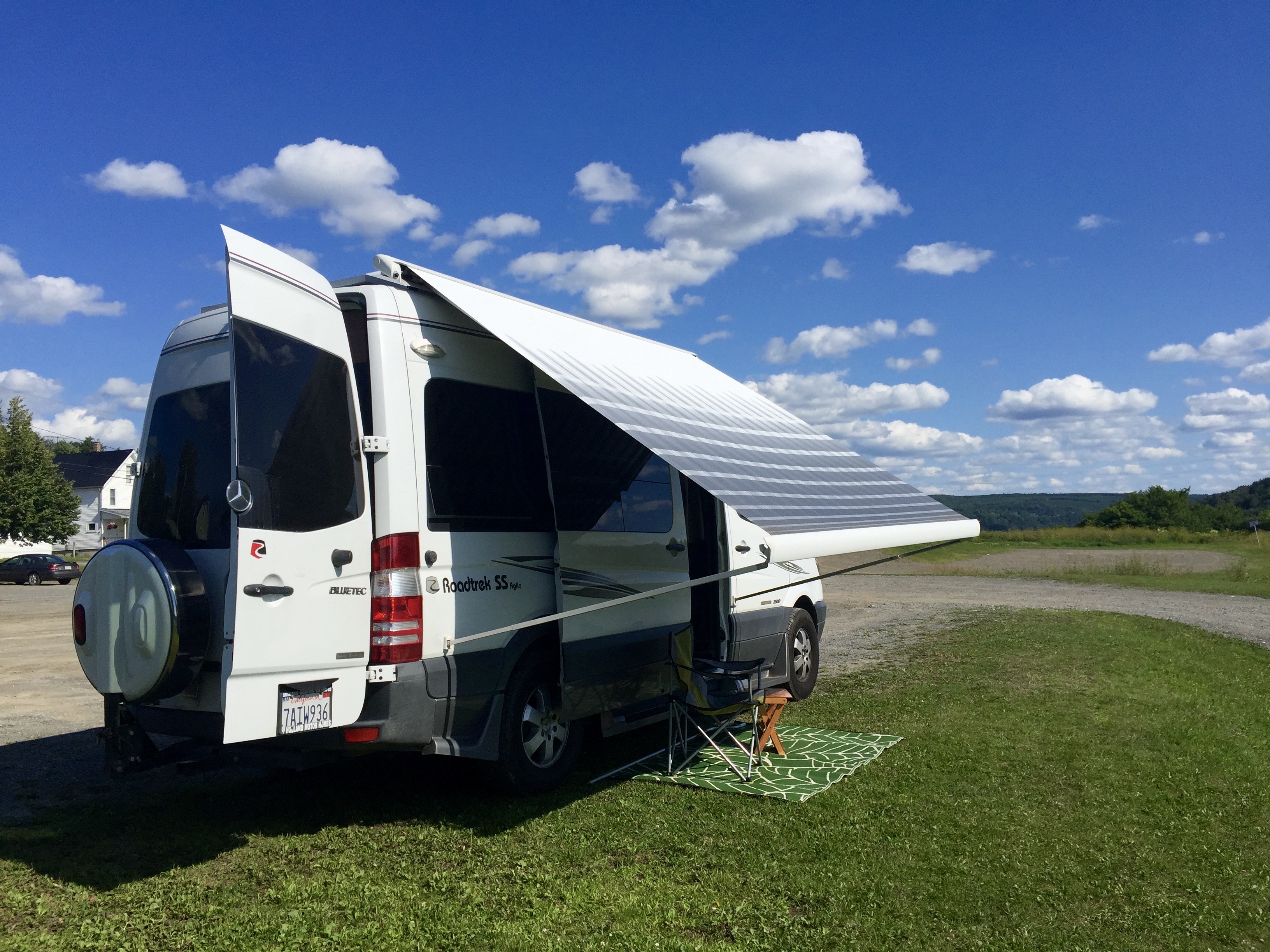
Returning to San Diego in mid-June has created an odd start to summer. Usually by June, I am somewhere to the north of Southern California. This year I left San Diego at the end of June, still heading north but much later than normal.
I have felt unsettled and not sure which direction I wanted to take my travels. I had thought about heading east to visit family, yet summer is not my favorite time to visit the East Coast. It is hot and sticky. It is somewhere I would rather visit during the shoulder seasons.
Why am I unsettled? I wish I knew the answer to this question. If I knew, then I could fix it or move in the right direction. The uncertainty of the answer is hard for me to understand, emotionally and spiritually. It is about depression, sadness, and loneliness. There is more, and that is undefined to me.
After spending the winter with Drew (healing from surgery) and a whole month with other people during my trip abroad, it is hard to be solidly solo again. It has been nice to visit friends and then spend time alone and then visit friends again. It is the best of all worlds.
I decided to head north. I love the Pacific Northwest with its beautiful long days. The water, the forests, and friends. I love to visit my friends and catch up on the last year. I especially feel so welcome when friends (The Gold Beach and Whidbey Island friends) get excited about me coming and make me feel loved and supported.
As I was trying to figure out where to go, my good friends who live in Boise, Idaho, helped me decide on my summer. They were looking for a cat and a house sitter while they traveled to Europe to visit their son and explore new territory.
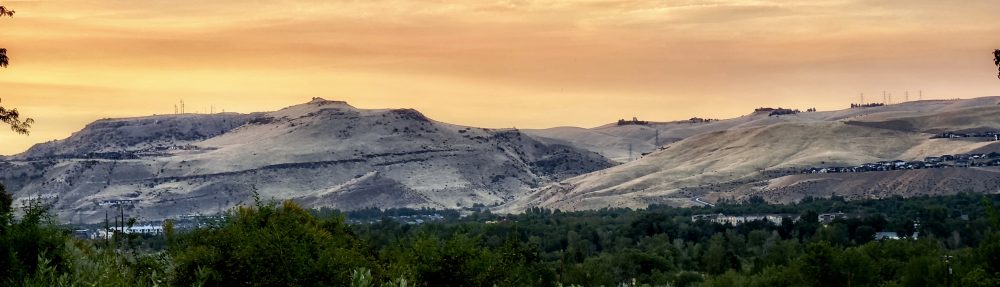
I spent a week in Donnelly, Idaho, about 100 miles north of Boise (still in Idaho). I have been to this small town in the mountains before. I really enjoy spending time in the higher mountain country. This year was different. There was so much smoke from the fires in the Pacific Northwest that it made the sun hard to find. It also limited what I wanted to do. I did manage to take the tram up the mountain to attend a free yoga class. I thought if I could get high enough, maybe it would be less smoky.
I have spent most of August in Boise. Misty the kitty has become a joy to be with. I am so glad to be getting an animal fix. It is also interesting to have more time to explore the Boise area.
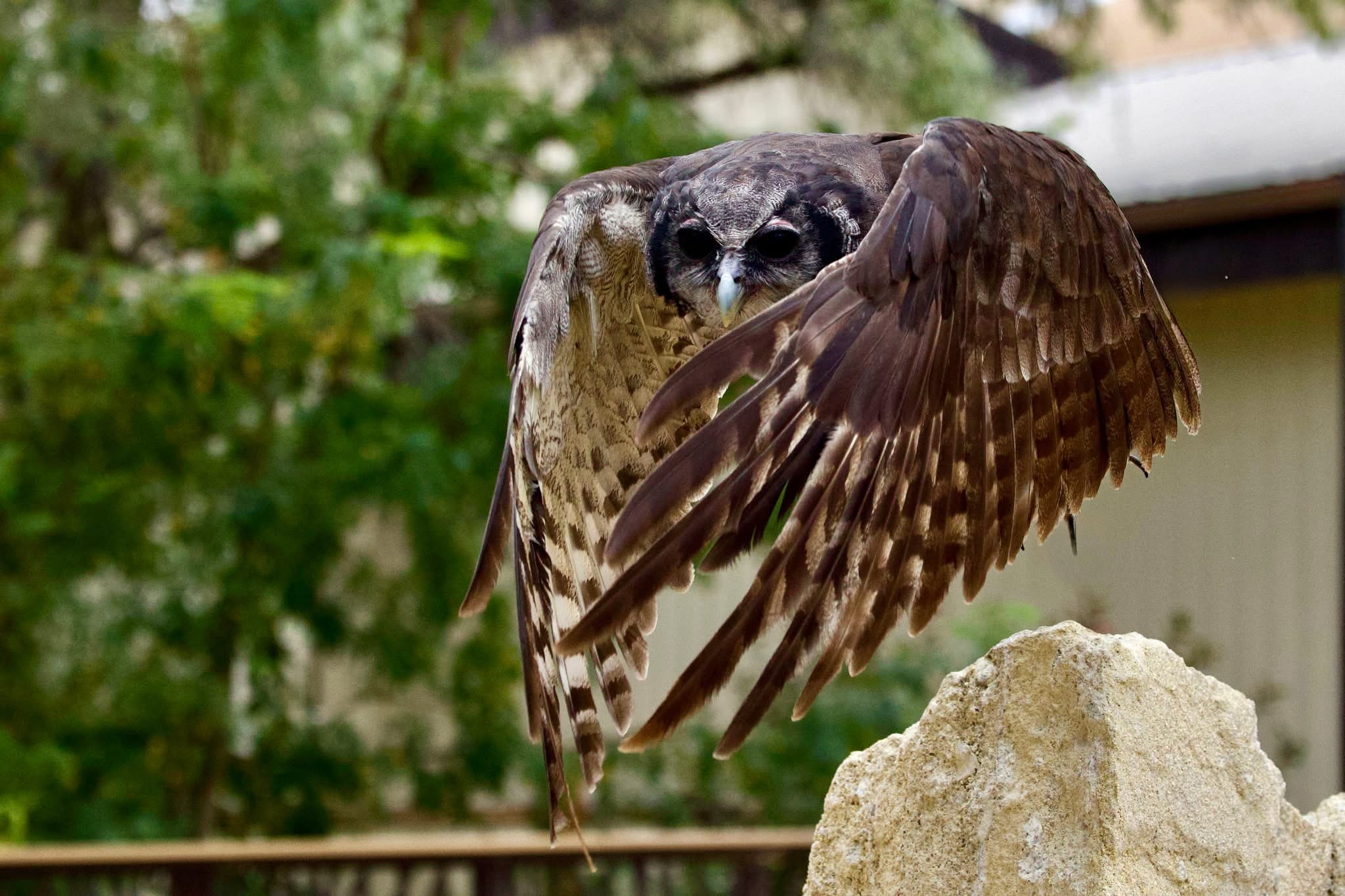
“I realized before I even arrived that I needed to make myself get out and do things. So what did I do? I found places to explore in the Boise area. One day I went to the Peregrine Fund. For over 50 years, The Peregrine Fund has worked to conserve birds of prey.
Oliver the Owl
“We repopulated a continent with Peregrine Falcons in just 30 years, doubled the population of Critically EndangeredRidgway’ss Hawks in the Dominican Republic, and identified and addressed the cause of the Asian Vulture Crisis in the mid-2000s. Today, we work across five continents on behalf of all 561 raptor species.”
Female Harpy Eagle India Ink Etching by CC Wari
I was able to meet up close with an Eagle Owl. I got there just in time for the one o’clock introduction of Oliver the Owl. Not only did they have birds of prey, but some of the local artwork within the facility was also amazing.
I realized that I needed some people contact. I looked online at the public library, and each Wednesday there is a group of crafters that meets for two hours. I took my crocheting and decided to give this a chance. I joined them and made a friend. This past Friday Eleanor and I went to the Western Idaho State Fair. It is good to have someone to hang out with.
Karen, a neighbor and friend fo Linda’s, also got in contact with me. We have visited and shared meals out. Breakfast is my favorite meal of the day. It is nice to have Karen up the street, I can walk over for a quick visit.
I have been biking and walking usually each day. When I am in need of life encouragement, being outside helps so much. I met the nicest family while cycling when I stopped at Barber Park to get a drink.
Tomorrow I am officially off cat-sitting duty. My friends arrive home from a trip to Switzerland. Misty the Not-So-Invisible Cat gets to reunite with her peeps. All will be right with the world.
It has taken Misty almost the full three weeks to decide that I am an OK person. Now she follows me around asking for pets and skritches. Cats!
Where am I going from Idaho? I am once again heading west towards the Oregon coast. I have eleven days to arrive in Salinas, CA. My next kitty sitting job awaits. Woody the Cat will need no break in period. He and I have met several times before and he is a love bug.
Elkhorn Slough
It will be nice to be back near the Elkhorn Slough. The kayak is going to get busy. Migratory season is starting so who knows what I will find out there. I love birds, and I love nature. I enjoy exploring the Monterey County area.
As I have begun to mention to others my feelings of dis-settlement and yes a mild depression, I have heard from others that I am not alone. So much is changing in my country. I try to keep politics to a minimum on this site, but there are many things that are happening beyond my control. I know the changes have a lot to do with it, yet I feel the biggest factor is the insensitivity and anger so many seem to carry around with them all the time. It generates a saddness in me that is hard to shake. Sigh.
As the season change, I am getting ready for change too. On Tuesday me and EmmyLou will be rolling west, looking for birds and other wildlife. And I will remain thankful.
Today I am thankful for Misty the Not-So-Invisible Cat. I am thankful for this big wide open country that I call home. I am thankful for all my friends who continue to love and support me as I explore my world.
Time on the islands of Croatia never feels long enough. With the warm sunny days and the beautiful blue Adriatic Sea, it feels like I could spend more time on each of the islands I have visited. But wait…there are more islands to visit. I guess I will have to return.
A true hedonism has been present on the island of Hvar, ever since the time of sumptuous Roman villas, springing from the walls of Renaissance summer houses, and, despite all the challenges of island life, it slips even today into the reveries of modern nomads who enjoy the splendor of Hvar, where, 157 years ago, organized European tourism began.
As one would expect on an island, the history of Hvar has been broadly shaped by outsiders, each invading force leaving its mark, resulting in a rich cultural, archaeological, and architectural legacy.
The earliest signs of civilization on Hvar date back to Neolithic times and the so-called Hvar Culture of 3500 – 2500 BC.
Given its prominent position on a busy sea route, it is perhaps surprising that the island was not settled earlier than 384 BC, when the Ancient Greeks founded the settlement of Pharos (modern-day Stari Grad). The Ionian Greeks, the Parans, were in search of a base for military and trade expansion, and the deep bay at Pharos offered the best protection.
The first recorded naval battle in the Adriatic took place just off Hvar, with the Greeks successfully taking on the native Illyrian tribe of the Liburni.
With the decline of the Syracuse Empire, Pharos enjoyed a brief period of local rule under Demetrius of Hvar, who kept the Romans at bay until they finally smashed the walls of Pharos in 229 BC. The Romans used the island as a strategic and logistical base, keeping their boats in the protected bays of the Scedro and the Pakleni Islands. Roman holiday houses sprang up in the bays close to fresh water, most notably in Hvar, Stari Grad and Jelsa. Archaeological finds confirm that the islanders were engaged in wine growing, fishing, and trade.
There is little recorded about Hvar after Roman rule, but the island, along with the surrounding islands, was under the Croatian state of the Neretljani in the early Middle Ages before being briefly occupied by Venice in 1147. This was only temporary, however, as Croatian-Hungarian King Bela III managed to bring Dalmatia under his rule.
The Venetians were back in 1278, having been invited back by the islanders looking for protection from the pirates of Omis. One of the early changes the Venetians introduced was moving the central administration from Stari Grad to Hvar, and the new center became a regional administrative center for Hvar, Vis, and Brač. A plan to build walls around the town and monastery was initiated in 1292.
Venice’s rule was far from secure, and the island’s noblemen rebelled in 1310. Hvar’s rulers changed several times (Croatian-Hungarian kingdom, Bosnian kingdom, and Dubrovnik) before, along with the rest of Dalmatia, a more protracted period of Venetian rule from 1420 to 1797.
Hvar became the main Venetian port in the eastern Adriatic, but was under constant threat of attack from the Turkish fleet, which controlled the mainland near Makarska. A devastating Turkish naval attack in 1571 under Algerian commander Uluz Ali in 1571 laid waste to Vrboska, Stari Grad and Hvar.
Hvar prospered under Venetian rule and was known for wine, lavender, olives, rosemary, fishing, and boatbuilding. More than three centuries of Venetian rule came to an end in 1797, when the Austrians briefly took over before being themselves usurped by the French. The Russians bombarded Hvar in 1807 in a period of general instability and warfare in Europe, until the Austrians retook control in 1813, a rule that lasted into the 20th Century.
Austrian rule was stable and brought prosperity, most notably in the development of health tourism on the island, with the founding of the Hvar Hygienic Society in 1868. The oldest meteorological station in Croatia was also established in 1858. Austrian rule also brought infrastructure improvements to the island, including the rebuilding of all the ports, the construction of new lighthouses, the reclamation of malaria-infested marshland, and the construction of a road connecting Jelsa to Pitve and Vrisnik in 1907.
The Italians were back in November 1919, occupying Hvar once more after fierce fighting, an occupation which lasted until the 1921 Treaty of Rapallo consigned the island to membership of the Kingdom of Serbs, Croats and Slovenes, later the first Yugoslavia and then the Socialist Federal Republic of Yugoslavia.
Hvar’s latest (and one would hope permanent) change of master occurred on January 15, 1992, when Croatia was recognized as an independent state.
The former Yugoslav army (JNA) attacked Croatia in July 1991, and Hvar was blockaded the following month. The main effects of the blockade were shortages of foodstuffs normally brought from the mainland, such as flour, and a lack of access to hospitals and other medical services.
A ceasefire was signed, and the navy left Sucuraj territorial waters on December 3, 1991.
St Stephens Square
The situation on the ground in the mainland was dire, with large tracts of Croatia occupied. A steady stream of refugees had to be housed, and a logical supplier of beds was Hvar, devoid of tourists due to the conflict. Refugees, particularly from the front-line town of Vukovar, began to arrive by boat.
The refugee situation deteriorated in 1992 as Croatia took in numerous refugees from the brutal war in Bosnia and Hercegovina. The effect of traumatized refugees replacing affluent tourists was twofold: a severe reduction in revenue and a severe increase in wear and tear in the hotels.
A UN fact-finding mission in August 1992 found that there were 624 displaced persons and 3,727 refugees on Hvar, of whom 1,323 were in private accommodation, the rest in hotels. Usually closed in winter, most of the hotels had no heating installations, which caused problems for the new temporary residents.
With the demographic balance upset in both directions – an increased population during the winter and a decrease in the summer due to a lack of tourists – the hotels were full year-round, which had a negative impact on the condition of the buildings.
The absence of many paying visitors had a devastating effect on the island’s economy, leading to the closure of many cafes and restaurants.
The cafes & restaurants closed due to a lack of electricity (from the occupation of the Peruca dam, the source of hydroelectric power) and difficulties obtaining necessary goods such as coffee, milk, etc., from the mainland. Many of Hvar’s male population were drafted into the defense forces on the front line near Zadar, where one man from Stari Grad was killed, and many more returned suffering from PTSD.
Thankfully, both Hvar and Croatia have recovered well from those dark days. A highly successful marketing campaign under the slogan, Croatia, the Mediterranean as It Once Was, proved very effective, and a new generation of tourists joined the returning older generation to discover the magic of the Adriatic. Hvar was named one of the 10 most beautiful islands in the world by Condé Nast readers back in 1997, and it has never looked back. Major investments in the town’s hotels and the upgrading of cultural treasures such as the Arsenal and the oldest public theatre in Europe has meant that Hvar is once more a major luxury tourism destination on the Croatian coast.
HvarThe FortressFortress on the Hill & HvarSt Stephen’s square
A trail from Hvar leads to Napoleon’s fortress, built in 1812 on top of a 230-meter-high hill above the town of Hvar. Today, Napoleon’s Fortress is home to the Hvar Observatory. The research office is dedicated to astrophysics and has the largest star telescope in Croatia with a one-meter mirror. The trail from Hvar leads along a narrow, steep path through a beautiful pine forest to Napoleon’s Fortress. The fort offers a beautiful view of the town of Hvar and many nearby islands, such as the Pakleni Islands, Vis, Brač, and Solta.
We did not have time to visit this fortress while we were there. The stairs looked daunting, and we had excursions while on the island. I would go back just to explore this Fortress.
The first evening included a sunset sail and swim. The water was not as warm as I expected. Our captain told us to give it a few more weeks, and it would be warming up for the influx of tourists in the busy season, July and August.
Our first full day, we took a high-speed boat tour to the outer islands, including the island and town of Vis.
In 397 BC, Dionysius the Elder, ruler of Syracuse, founded the colony of Issa, known today as Vis.
And like many other posts on my blog since my arrival to Turkyie the history of Vis is of the rise and fall of empires.
Much like the surrounding islands and area, Vis fell to French and then Austrian control. However, following the Battle of Lissa in 1811 (between the British, the French, and the Venetians), British bases were established on the island, including George’s Fortress. As part of the Austrian Empire, Vis became a naval base and was strategically important in a sea battle between the Austrians and Italians in 1866 (with Croatians making up a large number of the sailors on Austrian ships).
Look at that Blue WaterThe Town of VisChurch of Our Lady of the Pirates
During World War II, Vis was the hiding place of partisan/resistance leader Josip Broz Tito, who became leader of Yugoslavia after WWII. During this war, Vis was also a major base for British and Allied troops – there is a British military cemetery on the island. Allied fighter planes were also based there.
A sign in front of a cave on Vis marking the fact that Tito – leader of the Yugoslav Partizan resistance movement during World War II – stayed and worked here in 1944
After 1945, Vis was closed to tourism by the Yugoslav army as it was used as a major naval base. The pictures below show bunkers on the island. They also had a hidden water bunker for any captured submarines.
It was reopened to foreigners only in 1989 and was part of Croatia, which gained independence in 1991. All the navy/military buildings on the island were abandoned at that time, although many of them can be visited today – including the cave in which Tito ‘hid’ in during World War II.
It was a full day of traveling and swimming. I took time in the evening to do what so many others do in Hvar. I walked the waterfront, and people watched. Hvar felt very much like a Mediterranean seaside resort. Don’t misunderstand me, there was so much history here to unravel and understand. But sitting in the main square and on the walkways on a Saturday night was truly a fashion extravaganza. Women were dressed in long luxurious summery gowns, and the men were in full suits. It was such a parade. I enjoyed strolling, sitting, and watching as the parade of people unfolded before me.
The last full day on the island, Zee and I went on a guided kayaking tour. Crossing the main channel from Hvar to the Pakslinski Islands was rough. Waves were coming in one direction, and the wind was blowing from the opposite direction. Big ferries and boats came zipping past. I was pretty exhausted by the time we arrived back in Hvar later in the day. It was quite the ride. Once again, we had this knowledgeable young guide with us who knew so much about Croatia’s history.
Our Day Kayaking the Pakslinski Islands
After a busy time on this island, we had to say farewell. There was so much to see here and the time felt short. But wait…There are more islands to visit, so sadly we had to say farewell to this island and the people who made it so special.
I realized today that in each place we have visited in Croatia, I have met the nicest people. They are from all over the world. It has helped that most have spoken English. Most people in Croatia begin learning English in grade school.
Enjoy the travel log; as my trip comes to a close, there will be only a few more posts. I hope that you have enjoyed the photos and stories of this trip.
I am sitting in the Mercedes Benz waiting area in Medford, Oregon. I pulled up my WordPress Dashboard and discovered I have not posted since the third week in July.
I realized I needed a break from posting on my blog. I wanted to just enjoy my travels and visits with friends. Yet it feels like it is time to catch up. I will create several posts over the next few weeks. I will share with you some of the interesting places I visited. These include Vancouver Island, The Sunshine Coast, British Columbia, and the Pacific Northwest.
Kayaking Secret Beach
I have been on the move. I left my house sitting gig at Qualicum Bay behind. I moved to the west side of the island and the Pacific Ocean. I spent three days kayaking out of Secret Beach near Ucluelet. It was rainy and misty and very quiet.
Ucluelet Aquarium
The Uclulet Aquarium was my next destination, to explore a small but mighty Collect and Release Aquarium.
Ucluelet Aquarium
In 2004, the Ucluelet Mini Aquarium was opened as a pilot project on the Ucluelet waterfront. Philip Bruecker conceived it as an alternative to large modern public aquaria. Its focus was solely on local species, interactivity, and open display of infrastructure. Most importantly, it employed a “collect-and-release” model. This approach released specimens back to their home habitats each autumn. This pilot project proved popular and the not-for-profit Ucluelet Aquarium Society was formed to oversee and grow the aquarium.
The new Ucluelet Aquarium opened its doors in May of 2012. Designed by Blue Sky Architecture and built by local tradespeople, the aquarium has proved popular with residents and visitors alike. The aquarium now attracts international attention.
Collect-And-Release: How it works
1. Application for a Permit
Before we begin collecting, we must first apply for a collection permit from the Department of Fisheries and Oceans Canada (DFO). The permit dictates which animals we are allowed to collect, how many, and where from.
2. Collection
Our exhibits are recreations of habitats from Barkley and Clayoquot Sounds. We collect with a mix of scuba diving, seine nets, traps (crab, prawn), snorkeling, and low-tide gathering. Weather can be pretty unpredictable in February so collecting can take anywhere from a couple of weeks to over a month. The GPS location, species, water conditions, and weather conditions are all recorded so that we can return the animals to the right place when it’s time to release them.
3. Transportation and Acclimation
A major benefit of collecting locally is that the transportation time from the collection site to the aquarium is minimal. Once at the aquarium our staff compare the water conditions from the collection site to the conditions at the aquarium and make sure that the animals are properly acclimated.
4. A Brief Visit
Most of the animals in the aquarium visit for around 9 months. Others, like our giant pacific octopus, spend 3-4 months. Still others, like most of our perch species, stay for roughly a full calendar year. The time spent in the aquarium varies between species depending on their unique needs, seasonal migrations, and growth patterns.
5. Veterinary Inspection
Before any of the animals can be returned to the wild they need to be inspected by our veterinarian and declared healthy. And it’s not just the fish that get a check-up – crabs, urchins, sea stars, even scallops get inspected too!
6. Release Permit and Release
A special permit from DFO is required before we can let any animals go back into the wild. Once approved, we take the animals, rocks, sediment, and seaweeds back to their collection sites.
Flow-Through System
The water in our exhibits is drawn from right outside. This makes the transition to and from the aquarium easier for the animals. Any changes in oxygen, temperature and salinity that happen outside will be happening in the aquarium as well.
The water pumped through the aquarium is full of life. From microscopic algae to sea slugs and baby crabs, these tiny animals are a key part of the aquarium. Some of this life (plankton) feeds our filter feeders (barnacles, scallops, plumose anemones and more) and some of it settles in our tanks and grows. These settlers include urchins, scallops, hermit crabs, shore crabs, tunicates, anemones, tube worms, and so much more. At then end of the year our release list is much longer than our collection lists.
This was an amazing stop on an interesting summer. There was a Giant Octopus in the Aquarium. It had been in the aquarium for four months and had tripled in size during its stay. I visited on a Friday and they were planning its release the following Sunday. The water in the Bay and the Aquarium tanks would slowly become too warm for this cold water creature.
The staff both volunteers and paid staff were amazing. Their wealth of knowledge and their willingness to share it with the public was amazing. I will never see barnacles or rock fish the same again. I learned so much about the sea life while I was there. The enthusiasm of everyone there made me want to return again and again.
I enjoy the discovery of the unique and unusual. I really like visiting museums and aquariums. The Ucluelet Aquarium surpassed all my expectations. The next trip to Vancouver Island will give me the opportunity to visit this aquarium again. Each visit will be different as the release and collect each year. How fun.
Today I am thankful for good friends that live in beautiful places in this world. I really enjoy the local recommendations and this one did not fail to meet expectations. Today I am thankful for the wild oceans. I am thankful for all the large and small things. These things keep our world a lively and wonderful place to learn.
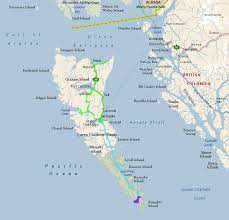
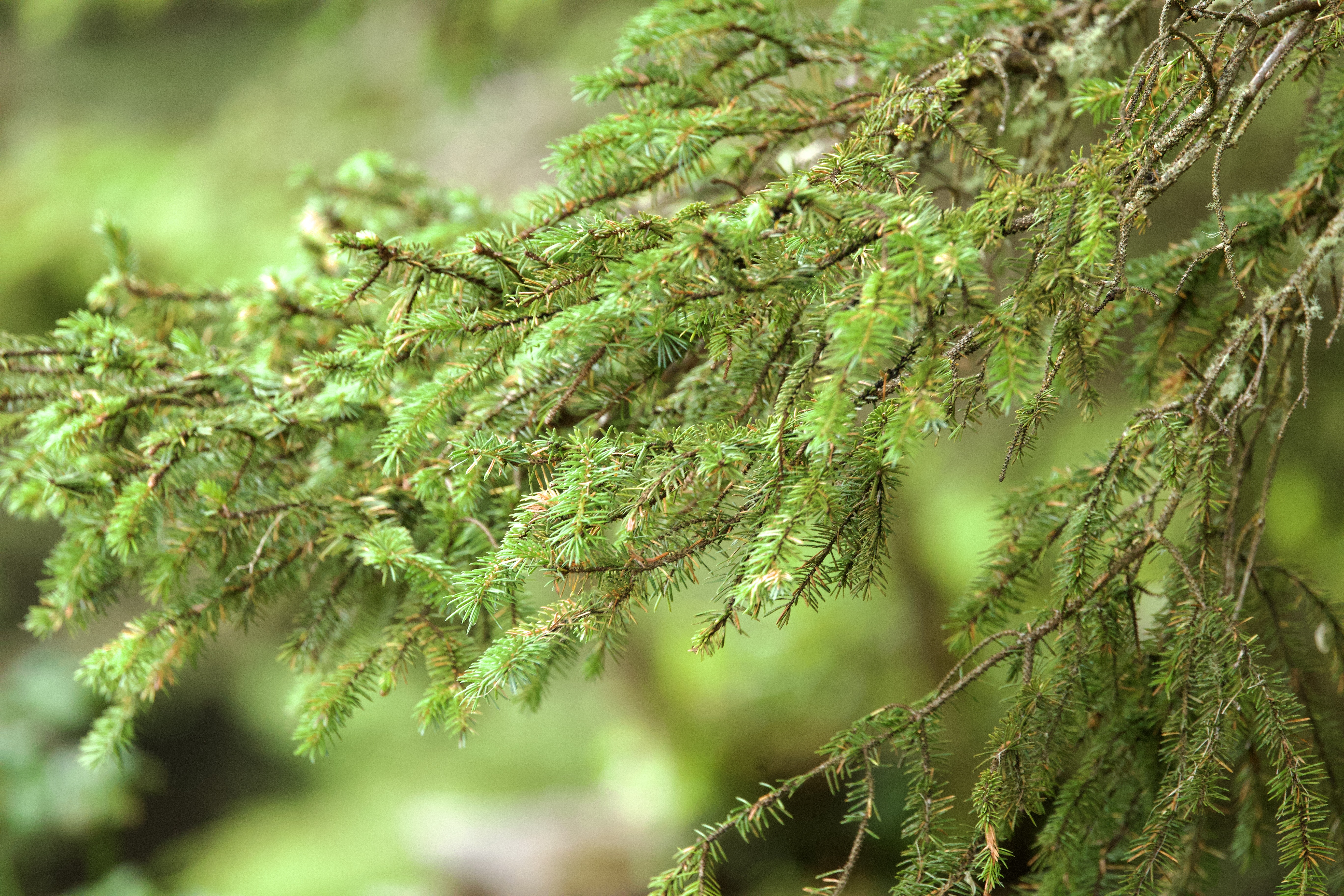
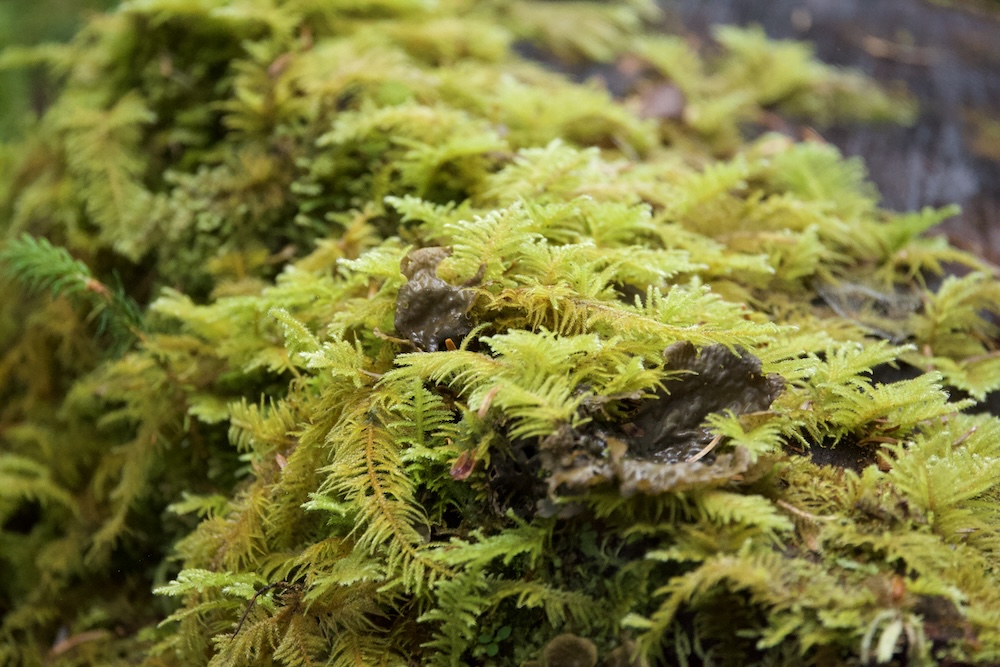
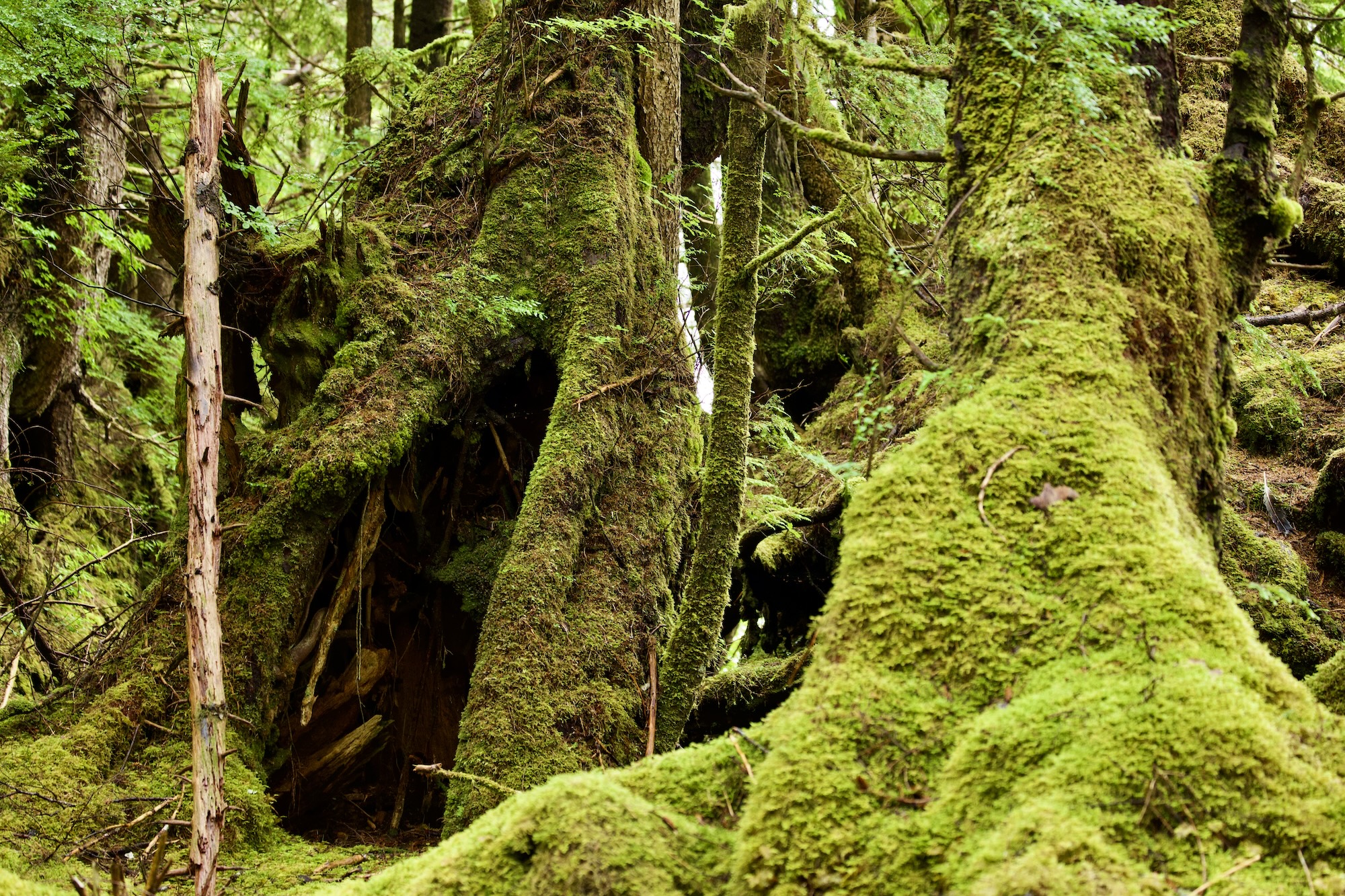
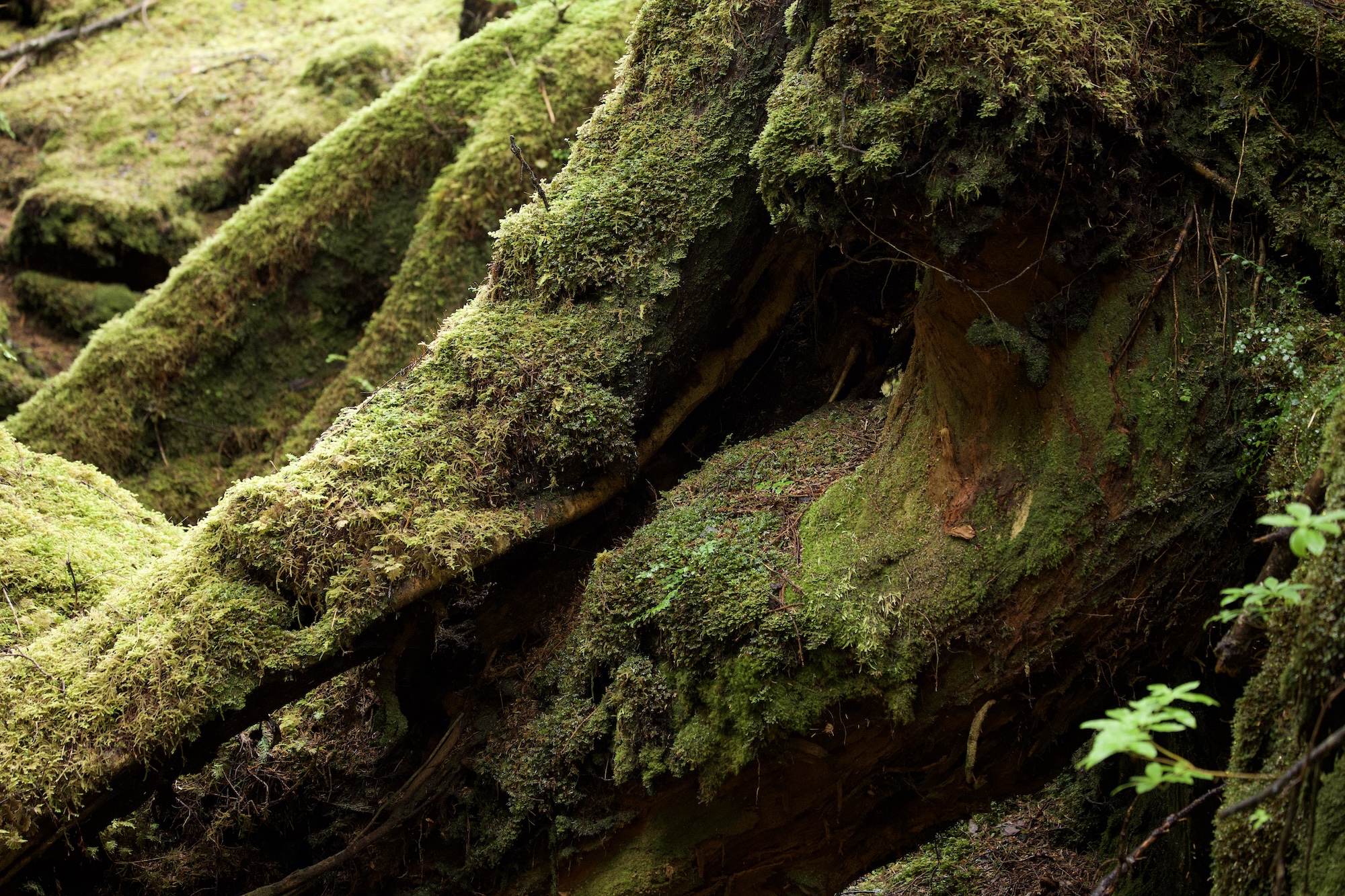
I have been in the wettest rainforest that I have yet to experience. I am on the Island of Haida Gwaii in British Columbia. It is west into the Pacific Ocean, further west than the Continental United States. And…it is wet!!! They experience approximately one hundred days of sunshine each year. It is wet! In case you don’t yet know, it is moist here. One day, when rain was expected, the sun came out instead. The people on the Island said they had a bonus day.
The Rian Forest
First known by the Haida as Xhaaidlagha Gwaayaai or “Islands at the Boundary of the World,” these islands are more commonly known as Haida Gwaii, or “Land of the Haida.” The area represents more than 3,600 islands in all, with an oral history that can be traced back 7,000 years.
“Haida territory encompasses parts of southern Alaska, the archipelago of Haida Gwaii, and its surrounding waters. The pre-contact population of Haida was in the tens of thousands in several dozen towns dispersed throughout the islands. During the time of contact, the Haida population fell to about 600 due to introduced diseases, including measles, typhoid, and smallpox. Today, Haida comprises over half the 4200 people living on the islands.”
In 2018, I spent a month on Vancouver Island, exploring Vancouver Island in depth. While there, several people asked if I was going to Haida Gwaii. I told them no. The idea of a trip to Haida Gwaii began to percolate, and now, six years later, here I am.
Why come to Haida? It is remote and rugged, surrounded by water and a rainforest. I wanted to learn the history of the First Nations People who live here. I came to see totem poles. Hiking in the Rainforest is magic. The people are welcoming and kind. Since canceling my trip to Alaska, I wanted an interesting destination in place, so I did not regret the un-trip to Alaska. And….I love to ride ferries (it took three long rides to arrive here).
The poles are carved from the logs of giant local cedar trees and then painted. Different totem poles include clan crest poles, mortuary or memorial poles, and potlatch poles; totems are ready from the bottom to thetop.. These are the remains of the totems of Haida Gwaii. They are left to decompose naturally. Only after the mortuary poles fall can the spirit of the chief be free.
I arrived on July twenty-first and will depart on August first. I have been on two tours to visit the remains of villages, learn about the First Nations’ way of life, and learn about the significance of totems. The tours were more inclusive than I realized. On the return trip from the last tour, we stopped to check fishing lines and crab traps. The natural food sources are very plentiful. More than once, the guides said it is only the individual’s fault if they starve on Haida Gwaii.
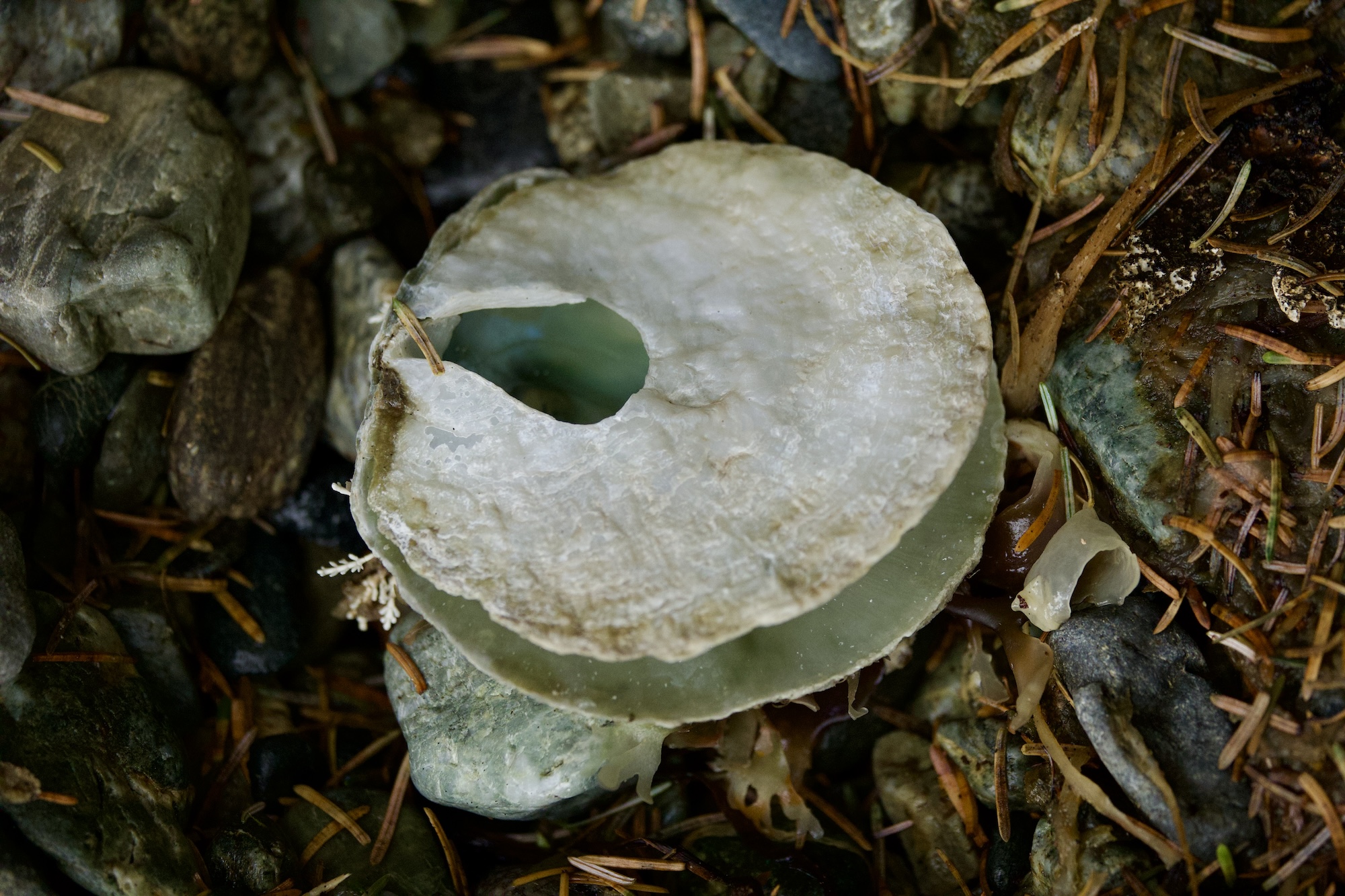
I have hiked and watched for birds, wandered beaches, picked up shells, and taken photos. I have met so many lovely people through the tours and in the campgrounds. The longer I stay at one campground, the more information the owners have given me regarding places to explore and hike.
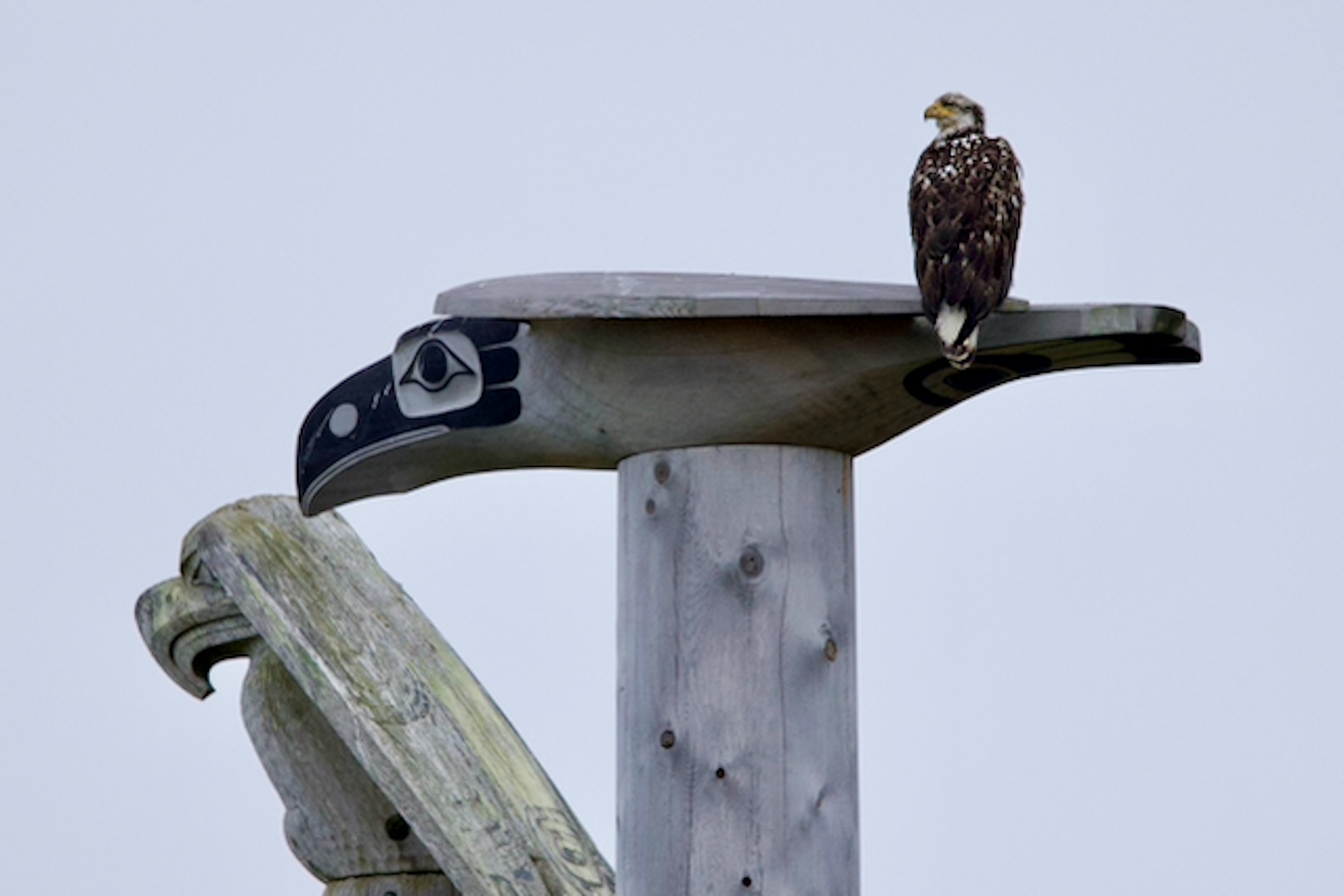
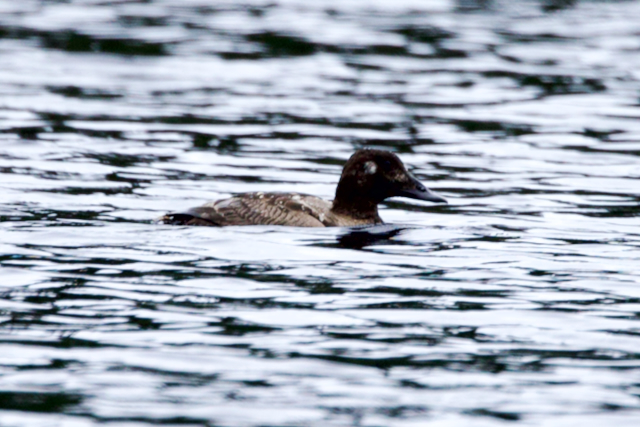
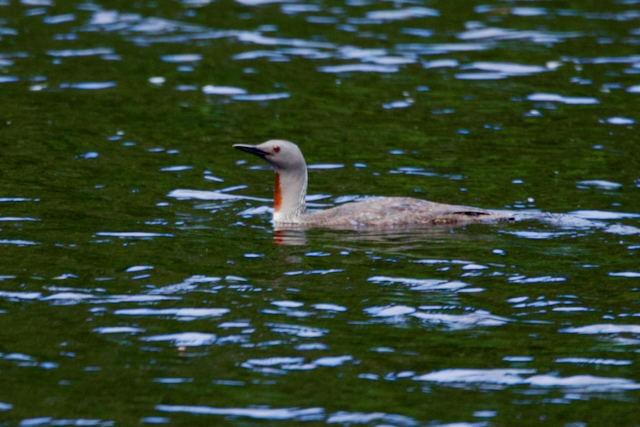
Bald EagleWhite Winged ScoterRed Throated LoonBirds of Haida Gwaii
While I was here, I took a kayak tour. We kayaked for six-plus hours. It was a long day. I saw starfish, anemones, sea cucumbers, and other sea life. The water is cold, clear, and teaming with life. Being out on the bay and exploring from the water was fun. The hardest thing for me was getting out of the kayaks. I have short legs. Here in Haida Gwaii, they call them canoers legs.
Shells Along the Coast
It has been a successful trip. I would like to return and take a multiple-day tour to Gwaii Hanas National Park. “Gwaii Haanas National Park Reserve, National Marine Conservation Area Reserve, and Haida Heritage Site is a wild place. With no road access, stores, cell phone coverage and little signage, it is a true wilderness experience.
Gwaii Haanas is home to a plethora of unique subspecies and environments, it is also home to Haida. Today the Council of the Haida Nation and the Government of Canada manage Gwaii Haanas through a cooperative agreement. They work together through the Archipelago Management Board (AMB), which protects Gwaii Haanas from sea floor to mountain peak.”
I have enjoyed my time here. I have stayed longer than most visitors. Three to four days is the usual stay. I am glad I stayed longer so I could experience more of the Island and its culture. The more the local people get to know you the more they open up and share their knowledge. It was nice not to rush.
I leave Haida Gwaii on August 1. It is time for another ferry ride back to Prince Rupert on the mainland. After two more ferry rides, I will travel through British Columbia to the Untied States. I am sure there is more adventure to come. Please come and join me.
Today, I am thankful, for my sense of adventure, and, traveling off the beaten path. I am grateful for the people who have encouraged and supported an unusual lifestyle. Today, I am thankful for the beauty that surrounds me.
LIFE IS WHAT HAPPENS TO YOU WHILE YOU’RE BUSY MAKING OTHER PLANS
You may remember I had plans to travel to Alaska this summer. I started to plan and tell my friends, family, and those who follow my blog that I was heading out on another journey. Alaska, here I come.
Things have changed. I have had some minor health issues this past late winter. It has made me ponder the wisdom of adventuring off into the backcountry, where access to health care may be a bit more limited.
After much pondering, I decided that I needed to make a decision. Decisions can always be changed, yet if I am going to plan my spring and summer, a decision needs to be made.
Those who know me know that I am not the best decision-maker. I hate to commit. I mean, what if something better came along? I want to somewhat firm up my spring and summer, so I am developing an alternative plan.
What am I going to do instead? I decided to explore the Northwestern part of the United States and venture into British Columbia. It is an change for me, and I am now adjusting to changing plans. It is not as easy as it sounds. Even if I have a vague plan, I am more comfortable with it than with no plan at all.
My friends are chiming in. I am so thankful for them. Some want to visit from further away. My friend, Leslie, from Alaska, may join me at a British Columbia retreat center workshop in July. I have been invited to fly to Anchorage to join her adventures. A good friend from Chicago may be coming to meet up with me in June. And then there are the local Northwest friends who will join up with me from time to time. It is so good to feel wanted and loved. I really do enjoy traveling with others. It feels good to discuss the day’s adventures with someone.
I have been in Oregon and now Washington for the past few weeks. I needed to get some work done on EmmyLou. That took me to Edmonds, WA. I love being back near Puget Sound after a two-year absence.
Currently, I am returning to Oregon. My Medford friend and I are planning some birding and hiking adventures. It is time to explore more of Oregon. With Mary as my guide, I will have a readily available resource for all things Oregon.
As the weather warms up I will be back in Washington and British Columbia for the summer. It is time to research on the fly and get my exploration cap on.
Please join me if you will. I definitely will be attempting to find the extraordinary in my every day travels. And of course there will be the photos.
Today I am thankful. Thankful for friends who love and support me. Thankful for this big wide open country that offers a chance to explore. Thankful for my health.
In 2015 I stepped into the smartphone world. Since I already had other Apple products, it seemed like a natural progression to continue with another product. I purchased an iPhone 6 and began my education in Smartphone technology.
I love adventure. I like to explore parts of my world that are sometimes hard to get to. I love the Southwest. I really like Zion National Park. I am so fortunate to have good friends that live outside the park. There is a section of the park called the Subway. From the top down one needs ropes and knowledge that there is rappeling into cold river water, more than once.
The Subway from the Bottom Up
One can also hike the Subway from the bottom up. This trail also presents its own set of challenges. There really is no trail, it is a set of social trails that progresses down a steep slope to the river. Then you follow the river for three miles to arrive at the beginning of the subway. It is not an easy hike. It is a great visual hike.
In 2017 I hiked the Subway from the bottom up. I just arrived at the Subway part of the hike, when I fell off a log into the river along with my day pack that held my iPhone 6. Oh no, what was I to do. The phone was wet and I was a long way from help. I dried the phone off the best I could and continued with my hike. Nine hours later I returned to my friends exhausted and happy. I took my phone apart, yep you could do that, and dried it out. The next day it worked although it had developed a dark side. The right upper side of the phone was black, it worked and so I kept it for a few more years until the dark side began to cover more of the screen. I decided to upgrade to an iPhone 8.
I was happily using my new phone with no issues until…..I met another River. 2021-I was kayaking on the Provo River near Utah Lake in the state of Utah. It is a very silty river and a beautiful place to kayak. I stopped to fix something on my kayak and before I could stop it my phone in its waterproof container disappeared into the river. That river is definitely deeper than it looked. I tried for over an hour to rescue my iPhone 8 without success. Each time I tried to reach it with my kayak paddle the silt would stir up and I would lose sight of it. Other kayakers tried their hand at rescuing it, without success. I had to admit defeat and off I went to the Verizon Store to ask for help. I also called a good friend, Melissa, to mourn my loss. It is good to have friends.
First Photo from my iPhone 12
My iPhone 12 stayed with me until two weeks ago when I met another river up close and personal. On my current trip to the east coast of the United States, I spent three weeks with friends in Florida. We camped and biked and kayaked on the rivers and springs of northern Florida. The last river was the Juniper River. It was a quick, shallow river through a beautiful area. There were alligators, one giant one, and one rapid.
As you may know, I am a photographer. After I am safely on the water I often take my cell phone out of its waterproof case so I can take photos. After successfully managing the rapid, I got caught in an eddy. As I tried to push off the kayak tipped and there went cell phone number three. I got wet, it got wet and the kayak had its first experience of flipping. I worried about my cell phone. My friend Missy was concerned about my camera that was safely inside a dry bag. I kept thinking about that giant alligator up the river. Needless to say, I got out of that river in record time.
Initially, the phone worked fine and I thought all was good. The next morning the phone would not wake up. Oh sigh. Once again the river won. I am now an owner of an iPhone 14.
First Photo on the iPhone 14
When one does not lead a dull life these things happen. When one leads any kind of life these things happen. I feel personally responsible for my phone so I have mourned the passing of each one. I have to talk myself out of deciding I am a bad phone owner and recognize that these things happen not just to me but to many others as well. I am sure we all have phone stories to tell.
In three weeks I am flying to the Amazon in Brazil for two weeks. Oh no, another river! A mighty river. Hopefully, I will be able to keep hold of my new phone so the river does not take it away. No matter what me and my phone will venture south to enjoy an adventure on the Amazon.
Today I am grateful for coming clean and admitting to my cell phone debacle. I have always wanted to be truthful in these blog posts. I want to show my humanity. Today I am grateful for truth and for revealing my humanness.
A week ago I arrived in Florida. I have never spent much time in this state. I am enjoying exploring a new area of the United States. with good friends. I have moved out of my rig for a few weeks to visit with Missy and Dan. I have a bed and my own private refrigerator. Mostly though I have company. I am enjoying that to the utmost.
2017 was the last year Missy and I met in person. I stay west and she stays east in this very large country. We have “zoomed”, texted, and talked on the phone. Oh, and there has also been the occasional e-mail. In this modern world, there are many ways to stay in touch and maintain long-distance friendships. Yet, there is still nothing better than being physically present with a friend.
And…I have my own personal tour guide showing me Florida. We have camped at Myakka State Park, biked (rather hot and hard mountain biking through sand), and walked. Still in the plans are kayaking and more. I am enjoying getting to know this state.
Myakka State Park
The other great joy of being with Missy is that we are both photographers so we are exploring the natural places in this part of the state, the southwest area of Florida with our cameras. It is fun to be with another photographer. It helps me to learn and grow in this craft that I enjoy so much. Missy, being a professional photographer, has much wisdom to share. Click Here to view her website. Her photos are amazing. She also sells Photo Art. Yes indeed, I have a lot to learn from her.
Photo Shoot at the Audobon Rookery
Tiki
The main attraction is a new addition to their household. A week ago Missy and Dan adopted a Ringed Neck Parrot. Tiki is the fascination of the house. We laugh at its antics and celebrate each new step it takes. Any time we are around Tiki the cell phone cameras get busy taking photos. It is no different than having a new baby in the house. Who knew a bird could be so entertaining. And oh my what a pretty bird it is, blues and greens dominate with a pretty red beak.
Endurance-The act, quality, or power of withstanding hardship or stress.
Englewood and the surrounding areas were hit hard by Hurricane Ian. This area remains in recovery mode. My friends and Missy’s parents’ houses were damaged in the storm, although not as bad as others in the community where they live. It is interesting to be here and see the damage that was done. Nature is powerful. It is also interesting to experience the endurance of people. Slowly people are rebuilding. Some have sold their homes. Some are removing the damaged units and replacing them with new homes. Some are repairing. People have lost a lot yet they endure and come back stronger.
After the devastation occurred people in this community showed their caring for each other. They helped each other out. Missy’s brother arrived from Maine to help get his parent’s house back up and in running order. Other people in the community, locally have offered services, supplies, and more. Organizations arrived to offer food, all three meals, while people were without services and busy cleaning up. Others arrived offering drinks. In diversity, the best sides of others often come forward. Humankind wants to help others. I believe that is an inherent trait.
I will remain here for at least another week before I begin the slow trek north to the mid-Atlantic states. It is good for my soul to finally see my east coast family after four years away due to Covid.
Today I am thankful for my friends who love me from a distance and close up. Today I am thankful for friendships that endure. Today I am thankful.
Ah, my adventure into a small section of Mexico is coming to a close. Tomorrow a small group of us will caravan to the United States Border and just like that this trip to Mexico will come to a close and become a memory.
It has been a fine two and a half weeks. I have seen a lot and relaxed even more. I visited two areas of Mexico, San Carlos Guyamas and Alamos.
One, San Carlos, is on the beach and the other is in the Sierra Madre Mountain Range. The beach was a place to have fun, kayaking, walking, and biking, birding, and more importantly, visiting with the people I traveled with.
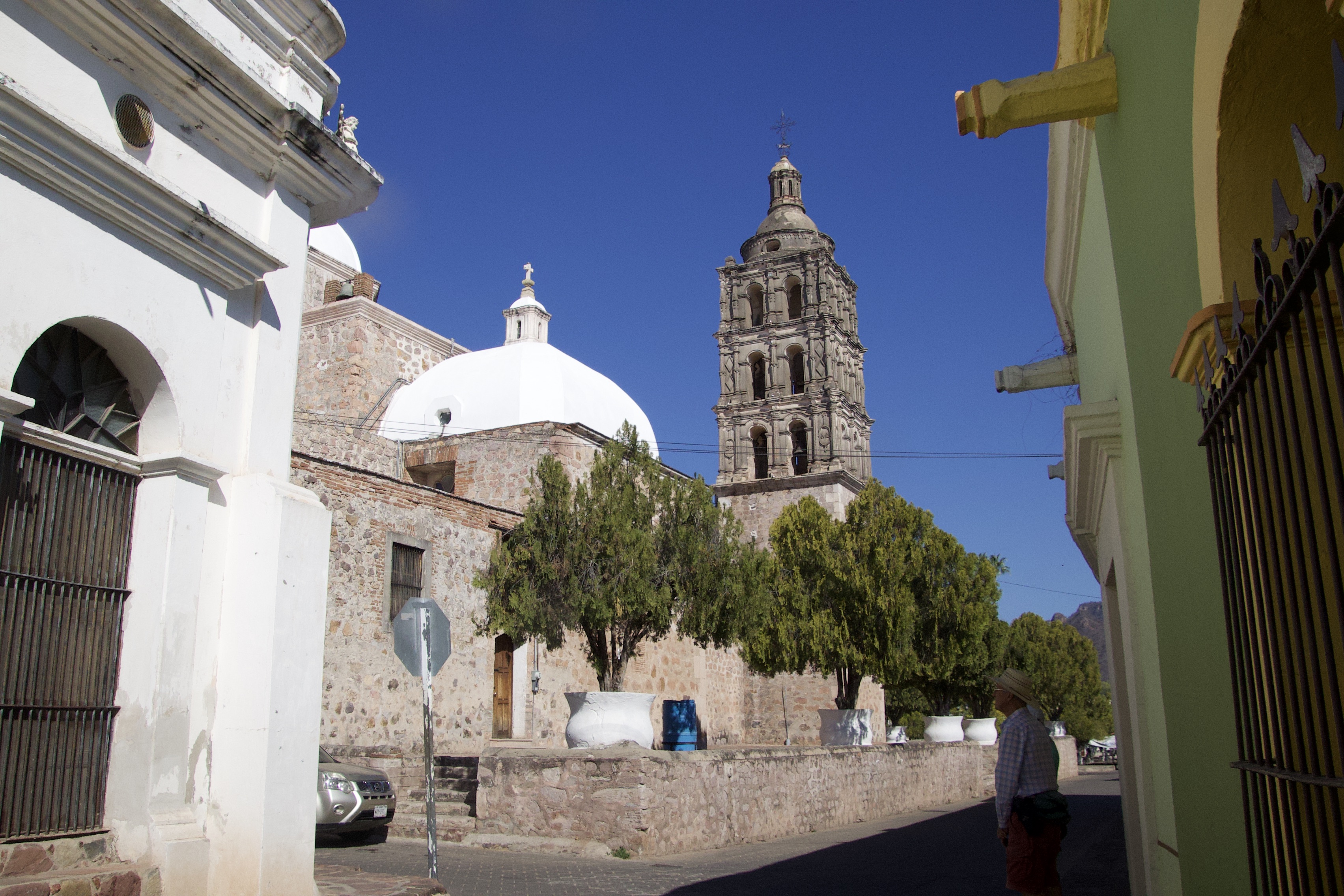
The other town, Alamos took me more into the interior and I got a taste of life in traditional Mexico. The town is old and what I would expect to see in Mexico. There is a lot of art and culture in this place. One night we went to the former actor, Rip Torn’s home for a benefit dinner. The house was fascinating and the food, all vegetarian, was amazing. It was an eight-course meal.
The restaurants in Alamos were delicious and enticing. I was able to experience a more classic Mexican cuisine. In ways, it was similar to what I have tasted in the United States yet there were dishes that I experienced here that I have not experienced in my country.
The eight others I traveled with were a delightful mix of couples and solo travelers. We meshed well. Bobbi was our leader in the arts. We painted rocks, shells, and seed pods. Many became great works of art. There was singing, yoga, and more. As a group, we meshed well. I am leaving richer for meeting and knowing these people.
I have learned that when I need time alone, I take it. Having traveled solo for most of the past ten years, there were moments when I was done being social. My rig and my bike gave me a way to leave for a while so I could return and be social again. This group supported all the members of its community. I like a loosely formed group. I like that others can support each of our independence.
What is next? I am not sure. It is a bit chilly north of the border currently. I am going to try to find a place where I don’t have to winterize my vehicle. Winterizing has to be done when it gets below Thirty degrees Fahrenheit. It is not hard to do but it is time-consuming and I guess I am inherently lazy.
Until tomorrow, I am planning to enjoy my last day “south of the border”. I have already been kayaking-I got up early so I could take advantage of the tide and the wind or the lack thereof. I have been birding. Now it is time to get myself ready to cross the border.
Thursday I will have been in Mexico for a week. Yes, I finally took a deep breath and crossed the southern border of the United States.
The hardest part was crossing the border. I have been across the border before but I have EmmyLou with me this time. I have my home with me. I have to make sure I can take care of her.
It was good to be with others who have done this before. Out of the nine of us, four have been doing this for years. I am thankful for Mary, Mike, Sky, and Bobbi. With their guidance, we made it through the process of entering a different country. I don’t mind a little hand-holding and guidance. First, we crossed over. About twenty-one miles south of the border we stopped to get our Visitor’s Visa and Temporary Import Permit for EmmyLou. It was a process, not quick. Once again I remembered to breathe and be patient. And when it was done I was in Mexico.
We have been staying on the beach along a bay near San Carlos on the Sea of Cortez. This is mainland Mexico. It has been a week of relaxation and fun and community. There is a lagoon nearby so I have had some great kayaking and birding adventures. I am very thankful for my kayaking experience. I was able to go off alone and feel comfortable on the water. Yes, I did have all my safety gear with me. When one travels alone one needs to be prepared.
In the afternoons we have been having fun with art. I have been painting rocks and shells. It is fun to allow my artistic side to come forward. It has been many years since this side of me has come out to play. It is fun to paint with little expectation of the outcome. This is called folk art.
Brown Footed Boobie
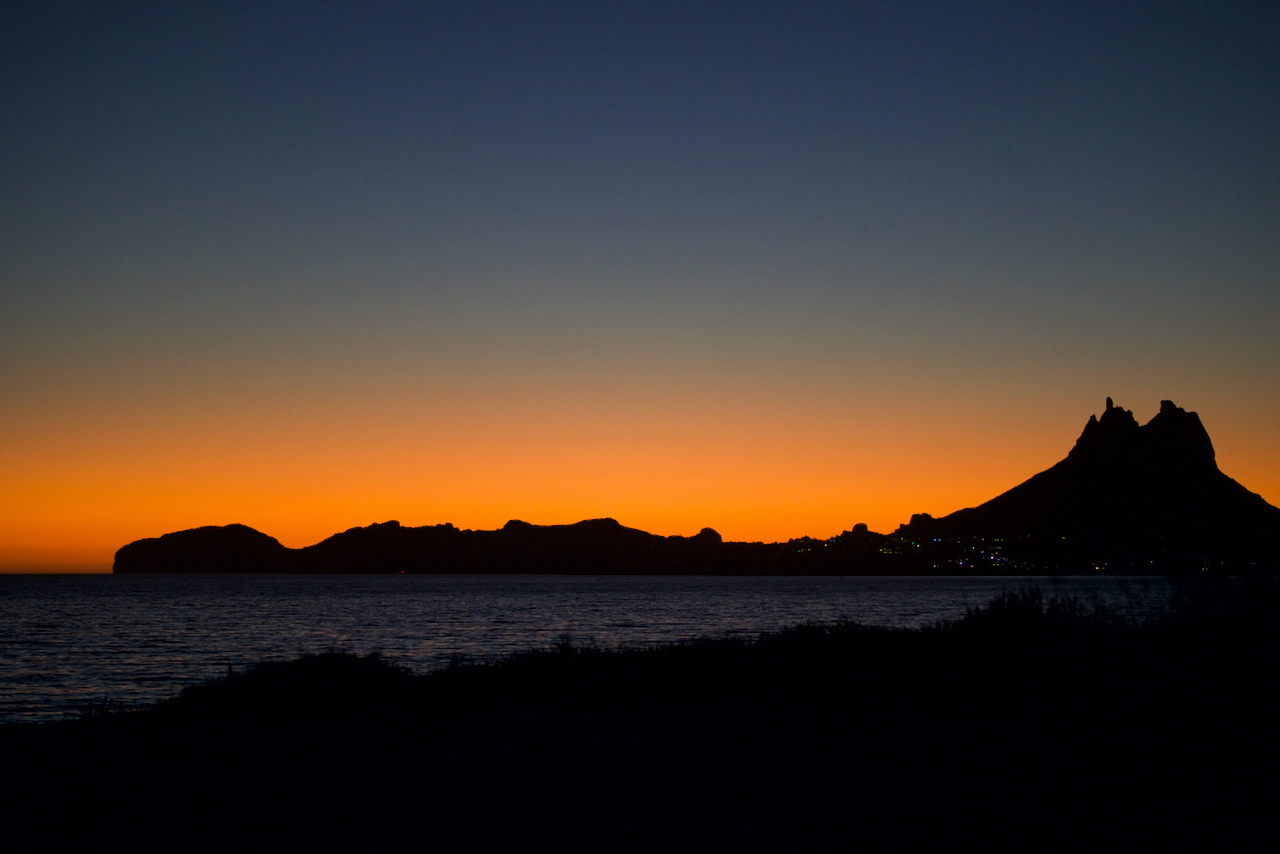
The sunrises have been amazing and the sunsets breathtaking. It is not unusual to see pods of dolphins swim by, close to shore. The birding has been good. There is this island approximately two miles off the shoreline, Isla de Pastel (Cake Island). On a glassy, quiet day on the water, I kayaked to the island to see the birds. It was not disappointing. There were cormorants, pelicans, all types of gulls, and the Brown-Footed Boobie.
The island was interesting as well. There was one cave I could kayak into. The water was spectacularly clear. It was quiet in the cave as sunlight dappled the walls. There were smaller rock outcroppings to explore. I ended up circling the island twice. There was so much to see.
Isla de PastelCaves on the West SideKayaking into a Cave
The people I am traveling with are delightful. Currently, there are nine of us. There are three couples and three are solo. We get along well. This is a very fluid group. People come together to visit and talk. Then some will go off to do something they are interested in. There is little pressure to join in if solo time is what one needs, yet the door remains open if one wants to join in on an adventure or sit on the beach and chat.
Slowing down and relaxing have been good for me. I needed this quiet and peaceful time in my life. I have not been to town. The wilderness and sea have called to me more than exploring town. Tomorrow that will change. Saying farewell to the coast is hard. We are heading to Alamos. I have read about Alamos and have heard much about it from Mary Z. It will be another type of experience. For a while, I will need to say goodbye to the Pacific and the coastline and head inland to experience another side of Mexico.
You are most welcome to come along on this journey with me as I delve deeper into Mexico.
Today I am thankful for a relaxing and peaceful time in my life. Today I am thankful for this beautiful Mexican land and sea. Today I am thankful for those who surround me now. I am thankful for new experiences that open me up and give me the opportunity to continue to grow and explore.
I have been traveling. Woody the cat and I departed company at the end of May. Mandy, his owner, and friend, and Rocky the dog returned home. And, just like that my time in Salinas came to an end.
It was a good month with a lot of kitty time, kayaking “The Slough” and riding my bike. Salinas and Monterey County is such an interesting area. It is the home of Monterey and Carmel, where the views are amazing and wealth abounds. It is also the home of many hard workers. They work planting tending and harvesting the crops of many things that we eat every day. Artichokes-check, cabbage-check, Strawberries-check, Garlic-check, check and check. The soil in this Salinas valley is so rich and something is always growing here.
Memories of Salinas
As a Tour Manager, I remember taking tour groups through this area. We would stop at “The Farm” to learn more about this culturally rich area and the hard-working men and women and children that still harvest the food we eat. One group was even offered to get off the bus and help the workers harvest celery. The driver and I refused as it had been raining and these were seniors. The driver didn’t want to get his bus super muddy and I needed to protect my tour group.
Salinas is Steinbeck Country. It is the home of John Steinbeck and his family. Have you read The Grapes of Wrath, Of Mice and Men or Cannery Row, and many of his other books? Steinbeck wrote often of these hard-working people and the perils of the working man. Salinas has a museum, library, and more dedicated to John Steinbeck. You can even have a meal in his childhood home.
My trip north was a good trip. I found State Recreation sites and State Parks to camp in. All of them are on my list for a return visit. One was on the Salinas River in northern California and the other was on the Willamette River in Oregon. I may be kayaking on the Willamette on a return visit.
The most memorable part of the trip north was visiting with friends. Mary and I were able to catch up, in-person in southern Oregon where she lives. She is getting ready to raft a few rivers. That is her June activity. I had the opportunity to swamp for her on the North Fork of the Flathead River several years ago. It was work and it was fun. We are planning a trip in the fall into the southwest, not involving rivers and rafting.
On June first I met up with Pat another Roadtreking friend. We had made plans to meet at Scenic Beach State Park near Seabeck, Washington about nine months ago. Why? Great Blue Herons and Eagles feeding on Midshipmen Fish that come in the spring to breed among the oyster beds, and an opportunity to see nature happening close up. I also had the opportunity to photograph all the action.
Now I am on Whidbey Island, arriving just less than a week ago, to house sit for another summer in the same lovely home I was in last year. Ooooh, more amazing sunsets. It has to become summer first. People who live here tell me they are still waiting for spring and summer to arrive. It has been raining, a bit.
And…guess who was here to greet me? Birdy Boy? If you have followed my blog from last year you will remember the posts about my relationship with a sweet little Song Sparrow. He is still here and is back to sitting on my arms and legs and singing up a storm. It is so fun that he remembers me. I have been enjoying the low tides this week while waiting for spring and summer to arrive.