Hi, I am Woody the Cat. I have gotten used to telling my on going story on Janet’s Blog. I am not sure what that is but she says people like to read about me. Well of course they do. I am the Cat.
A long time ago my friend, Mandy and the dog, Rocky left the house. I have no idea where they went. Janet says they will be back. My concept of time is rather limited. It feels like forever since they left.
Janet has been here before. Janet comes, Mandy leaves. Mandy comes back. Janet leaves. It seems like the natural order of things. Sometimes Janet is “coming through” the area and stays for a few days. Before I know it, she is gone again. Where does everyone keep going?
I am an older kitty now. My health is good, well, except for my kidneys. I am on special food now and special treats. Yum! I love treats. Yum! Do you like treats too?
Have you ever heard of fleas? I am not real fond of them. They make me itch and scratch and lick, a lot. I don’t know where they come from but they showed up at my house just before Mandy left. Janet and I have been trying to get on top if this infestation. Mostly Janet is on top of it. I get treated.
The day after Janet found fleas, she spent a day cleaning the house. She took blankets, bedding and everything else she could find, and put them in the washer. The bigger things required a trip to the laundromat. Then the wicked vacuum cleaner came out.
I do like the comb. It feels so good to have my body scritched. It is one of the joys of my life, having someone pet me and love me.
I now wear this thing around my neck, called a collar. I have never had one of these before. I am glad that it is gray. It goes so much better with my gray fur. Janet combs my fur at least once a day with this itty bitty comb. She says she is keeping me super clean. I don’t know why she doesn’t just lick me. That is how I clean myself.
At night I curl up next to Janet on the bed. I love being close to a human. I love to be loved and have attention showered upon me. I can never get enough.
I may be older, and I may have lost a little weight, but I still have the best tail, and it is still my grandest feature. Everyone could recognize me by my proud, stand-up tail. It suits me—a proud and stand-up kitty.
Returning to San Diego in mid-June has created an odd start to summer. Usually by June, I am somewhere to the north of Southern California. This year I left San Diego at the end of June, still heading north but much later than normal.
I have felt unsettled and not sure which direction I wanted to take my travels. I had thought about heading east to visit family, yet summer is not my favorite time to visit the East Coast. It is hot and sticky. It is somewhere I would rather visit during the shoulder seasons.
Why am I unsettled? I wish I knew the answer to this question. If I knew, then I could fix it or move in the right direction. The uncertainty of the answer is hard for me to understand, emotionally and spiritually. It is about depression, sadness, and loneliness. There is more, and that is undefined to me.
After spending the winter with Drew (healing from surgery) and a whole month with other people during my trip abroad, it is hard to be solidly solo again. It has been nice to visit friends and then spend time alone and then visit friends again. It is the best of all worlds.
I decided to head north. I love the Pacific Northwest with its beautiful long days. The water, the forests, and friends. I love to visit my friends and catch up on the last year. I especially feel so welcome when friends (The Gold Beach and Whidbey Island friends) get excited about me coming and make me feel loved and supported.
As I was trying to figure out where to go, my good friends who live in Boise, Idaho, helped me decide on my summer. They were looking for a cat and a house sitter while they traveled to Europe to visit their son and explore new territory.
I spent a week in Donnelly, Idaho, about 100 miles north of Boise (still in Idaho). I have been to this small town in the mountains before. I really enjoy spending time in the higher mountain country. This year was different. There was so much smoke from the fires in the Pacific Northwest that it made the sun hard to find. It also limited what I wanted to do. I did manage to take the tram up the mountain to attend a free yoga class. I thought if I could get high enough, maybe it would be less smoky.
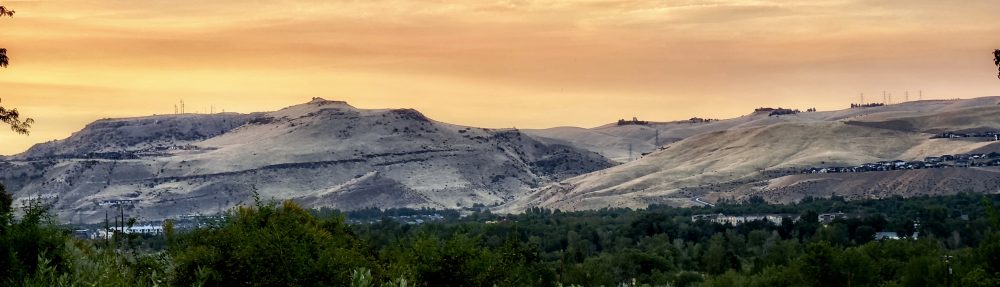
I have spent most of August in Boise. Misty the kitty has become a joy to be with. I am so glad to be getting an animal fix. It is also interesting to have more time to explore the Boise area.
“I realized before I even arrived that I needed to make myself get out and do things. So what did I do? I found places to explore in the Boise area. One day I went to the Peregrine Fund. For over 50 years, The Peregrine Fund has worked to conserve birds of prey.
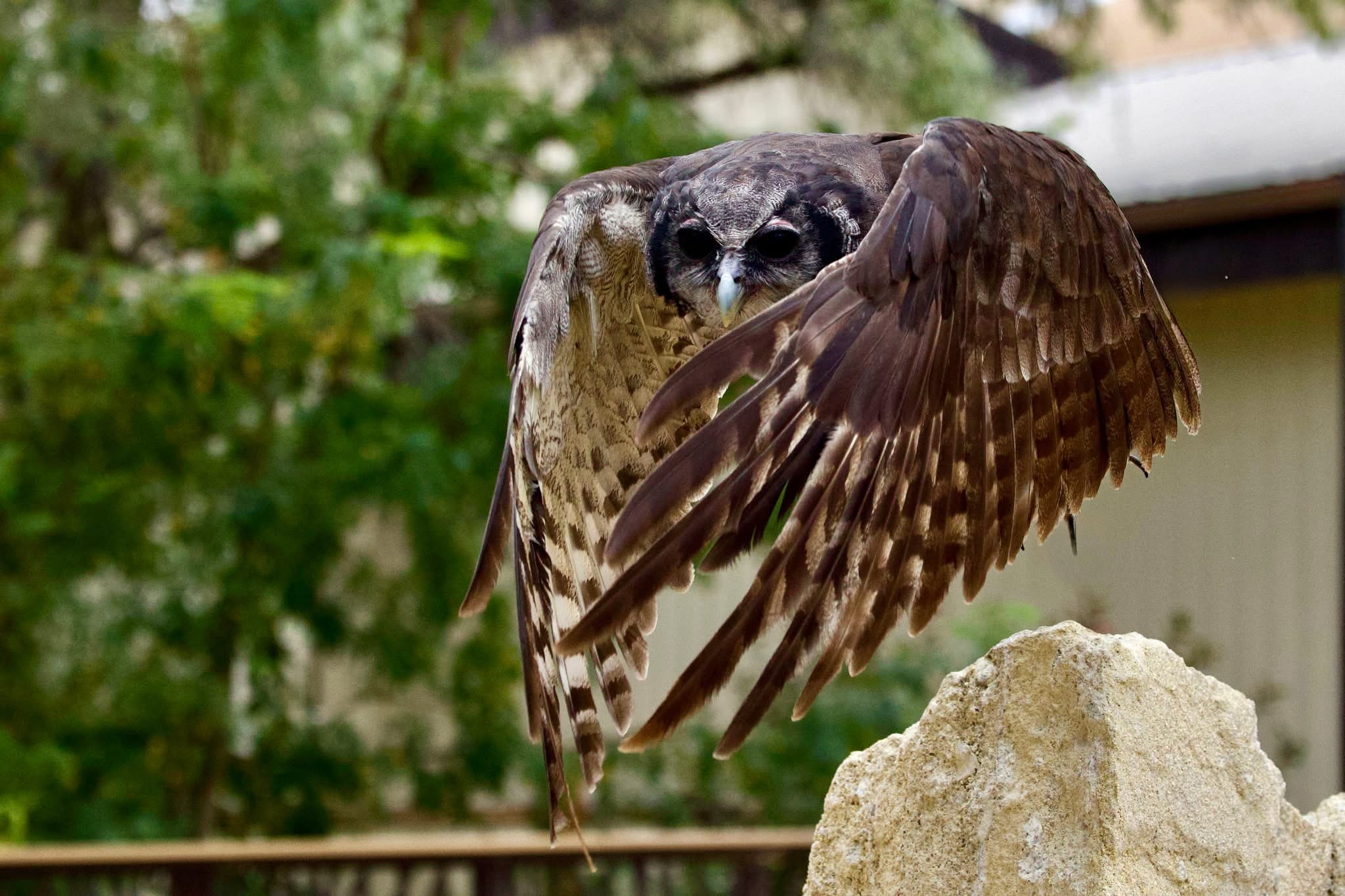
Oliver the Owl
“We repopulated a continent with Peregrine Falcons in just 30 years, doubled the population of Critically EndangeredRidgway’ss Hawks in the Dominican Republic, and identified and addressed the cause of the Asian Vulture Crisis in the mid-2000s. Today, we work across five continents on behalf of all 561 raptor species.”
Female Harpy Eagle India Ink Etching by CC Wari
I was able to meet up close with an Eagle Owl. I got there just in time for the one o’clock introduction of Oliver the Owl. Not only did they have birds of prey, but some of the local artwork within the facility was also amazing.
I realized that I needed some people contact. I looked online at the public library, and each Wednesday there is a group of crafters that meets for two hours. I took my crocheting and decided to give this a chance. I joined them and made a friend. This past Friday Eleanor and I went to the Western Idaho State Fair. It is good to have someone to hang out with.
Karen, a neighbor and friend fo Linda’s, also got in contact with me. We have visited and shared meals out. Breakfast is my favorite meal of the day. It is nice to have Karen up the street, I can walk over for a quick visit.
I have been biking and walking usually each day. When I am in need of life encouragement, being outside helps so much. I met the nicest family while cycling when I stopped at Barber Park to get a drink.
Tomorrow I am officially off cat-sitting duty. My friends arrive home from a trip to Switzerland. Misty the Not-So-Invisible Cat gets to reunite with her peeps. All will be right with the world.
It has taken Misty almost the full three weeks to decide that I am an OK person. Now she follows me around asking for pets and skritches. Cats!
Where am I going from Idaho? I am once again heading west towards the Oregon coast. I have eleven days to arrive in Salinas, CA. My next kitty sitting job awaits. Woody the Cat will need no break in period. He and I have met several times before and he is a love bug.
Elkhorn Slough
It will be nice to be back near the Elkhorn Slough. The kayak is going to get busy. Migratory season is starting so who knows what I will find out there. I love birds, and I love nature. I enjoy exploring the Monterey County area.
As I have begun to mention to others my feelings of dis-settlement and yes a mild depression, I have heard from others that I am not alone. So much is changing in my country. I try to keep politics to a minimum on this site, but there are many things that are happening beyond my control. I know the changes have a lot to do with it, yet I feel the biggest factor is the insensitivity and anger so many seem to carry around with them all the time. It generates a saddness in me that is hard to shake. Sigh.
As the season change, I am getting ready for change too. On Tuesday me and EmmyLou will be rolling west, looking for birds and other wildlife. And I will remain thankful.
Today I am thankful for Misty the Not-So-Invisible Cat. I am thankful for this big wide open country that I call home. I am thankful for all my friends who continue to love and support me as I explore my world.
When I was in Turkey and posting my photos on social media, one of my friends asked me how it felt to be there. How does it feel to be there and in these ancient places?
I have continued to ponder that question as I have been driving north for the summer.
TurkyieCroatia
Each day was filled with emotions, awe, and wonder. I was surprised how much I remembered from books I read and from my school education, regarding ancient world history. I didn’t know that those educational memories were still in my file cabinet (my brain). Wonders never cease.
When our guide would tell us that we were standing on ruins that were built in the year 300 AD, it was hard to even grasp that date except with amazement. There was wonder when I was told that I was walking on the Roman Road. “The Roman Road”?!? Oh, and lest I forget, the Roman Aqueduct. And then there was the whole story of the Trojan Horse and Troy. The Odyssey Comes Alive.
Biblical and Muslim history followed me throughout the two and a half weeks in Turkey. The Mosques were fascinating. One museum we were in had hair from Mohammed’s beard. His Beard!
I was traveling with a small group of people from around the United States and Canada. Many had traveled together on previous trips. Mary and I were new to this group of wanderers. It was interesting for me to travel with others when I am often alone in my travels. They were an enjoyable group of people. I found I had to adjust to being around people most of the time. It can be a bit overwhelming.
Thankfully, I was traveling with someone (Zee) who also needed time out from all the people and activities. We gave each other space and were able to create opportunities to be alone. It worked out well.
Below is a 12-minute slideshow from my time traveling in Europe. Enjoy.
When we arrived in Croatia, the history was a bit different yet no less fascinating and amazing. It was definitely a summer playground for the many Europeans I encountered in our travels to the islands in the Adriatic Sea.
Castles and walled cities and a wild history of battles and takeovers that dated back thousands of years continued to fascinate me. I had a little more time to explore the natural side of things, spending a day at Krka Falls and e-biking on one of the islands in another National Park. It felt good to be back in the woods and by the water.
There are all the normal words to describe feelings. At times, seeing so many new and ancient things was overwhelming. It is hard to really understand this ancient history in my day-to-day existence on this planet. All this history is included in my history and the history of mankind.. Without all of that historical background, I would not be where I am today. It is about spirit, awe, and wonder. I am so glad I had another trip of a lifetime.
Today I am thankful for the opportunities that come my way. I am thankful to be able to say yes and step out of my comfort zone to explore. I believe that travel wakes me up in an unusual way. I feel more alive, centered, and ready for the moment.
One more Croatian Island to go. After leaving Hvar, we moved on to Korčula, another unique Croatian town and Island. I felt like I had walked into the movie set for The Lord of the Rings. True towers, a drawbridge, battles from the ramparts, pirates, and more.
Compared to Hvar and several other places I visited, Korcula was quiet. There were tourists there, but not in the numbers I had seen in many of the other parts of Croatia.
Korčula has been inhabited since prehistoric times, as evidenced by Stone Age finds from Vela Spila near Vela Luka, now part of the Vela Luka Culture Center’s collection. In the 4th century BC, the Greeks founded a colony on Korčula and called it Korkyra Melaina or Black Korčula. Under their rule, the island was called Korkyra Nigra. The attribute “Melaina” or “Nigra” this beautiful island owes precisely to the lush Mediterranean vegetation, primarily forests of holm oak and pine.
The island of Korčula is almost completely connected to Pelješac by the Pelješac canal. The town of Korčula is among the most beautiful and best preserved medieval towns on the Croatian coast and in all of the Mediterranean, and is justly referred to as “Little Dubrovnik.” It still has the appearance it had at the turn of the 16th century – the same stone towers, walls, and the same fishbone structure of the streets.
Korčula’s town planners took into consideration both functionality and perfect harmony with nature – the streets are lined so that the refreshing wind from the west can pass, while the cold winter winds from the northeast (called bura) are blocked.
We started our exploration of Korcula with a walking tour of the “Old Town”. Old town, of course, means within the fortress walls. Our guide was very informative. The creation of this town was planned well.
The steps are a later creation. There used to be a drawbridge where the steps are today. If the enemy came, they drew up the bridge. If you enlarge the photo by clicking on it, you can see the holes in the tower where the ropes were for the drawbridge.
The streets of Korčula’s Old Town are designed in a brilliant geometric herringbone pattern. Built in the Middle Ages by the Venetians, this layout acts like natural air conditioning, controlling the wind and the sun to keep the town comfortable.
How the Herringbone Design Works
Central Spine: A single main street divides the old town, running straight along the top of the island’s ridge.
Western Streets: The streets on the town’s western side are laid out in straight lines. This lets the refreshing summer breeze, called the maestral, blow straight through the town and cool the houses.
Eastern Streets: The streets on the eastern side are slightly curved. This curve blocks the fierce, cold winter winds, known as the bura, from rushing through the city and freezing the homes.
Other unique features of this town are included below.
Hidden Plumbing: The houses are built in long, parallel blocks. The fronts of the houses face the streets, while the backyards and wastewater canals were cleverly hidden in the middle of the blocks.
Narrow and Shaded: The side alleys are incredibly narrow. This provides deep shade during the hot summer months, ensuring the sun never hits the ground directly.
Stepped Alleys: Because the town sits on a small hill, almost all the side streets use steps to help you climb up and down easily.
Arches Across the Alleys: You owned a small home. If you wanted to expand and acquired the home across the street, an arch was built to connect the kitchens.
The Kitchens & Bathrooms: To prevent fires, the kitchens were on the top floor. The bathrooms were on the first floor.
The Street of Thoughts: There is one notable street running along the southeastern wall, without any steps. Local history says it was called the “Street of Thoughts” because walkers did not have to stare at their feet to watch for stairs.
Korcula Old Town, Within the Walls
Unique in its design, the system still had some flaws. The town was once home to close to 1,000 residents. They lived there for protection and community. Today, approximately 300 live within the city walls. Why? Look how narrow the streets are. No cars can come into these streets. That means you have to carry everything in and out of the walled city. There are steps everywhere; only one street has no steps.
While we were exploring the old city, we climbed the bell tower at the Korcula Cathedral. The stairs were not for the weak of heart. The view from the top was breathtaking. I hoped the bells did not ring while I was up there.
Climbing the Cathedral Tower.
The StairsMary Going Down
One evening we went to the west side of the walled city to have dinner and see the sunset. People seem to do that a lot here. It was not disappointing.
Sunset View
On the second full day, we took the ferry, a 35-minute ride, to the island of Mljet. One of Croatia’s National Parks is on the island. With a bit of trepidation, along with Mary, I rented an E-bike to bike the park. After a few practice runs up and down the main street, I was ready to go.
Mljet National Park is a large area that borders two saltwater lakes. The Lakes stretch for about 4 kilometers. Right in the middle of the Large Lake, there is a small island/islet, Melita (Sveta Marija), with a large building of the former Benedictine monastery, erected there in the 12th century. The monastery’s building is now a café/restaurant. The small island is connected by boats that sail there from both sides of the Lake.
Miljet National Park.
Old World SwallowtailCommon Brimstone Butterfly
The Benedictine Monastery is now a restaurant. You flag them from the mainland, and they send a boat over to pick you up. It was early, so we pushed on.
There was a small steep bridge we needed to cross with our bikes. Up, Up. Down, Down. Have I told you how heavy E-bikes are? Our very own angels showed up. They easily lifted the bikes up and down while Zee and I followed behind.
The bridge is fairly new. At one point, Tito moved to the island with the Monastery. He tore down the original bridge to gain full access to the ocean and bring in supplies. After he left, the new bridge was built.
The National Park was cool, quiet, and unhurried. It took us about 3 hours to bike the park. I enjoyed stopping and looking at all the Butterflies on the thistle and lavender.
Upon our return to the ferry port, we found a cool place in the shade, met this lovely woman from Switzerland, and chatted until the ferry returned us to Korcula.
Today we say farewell to the islands and return to the mainland. Back to the big city, Dubrovnik. Well, not quite the big city, as Dubrovnik has approximately 40,000 residents. I am not quite done exploring yet. We have two full days to explore before returning to Istanbul and the flight stateside. Oh, what a trip it has been.
Zee and I arrived in Croatia three days ago. It is very different than Türkiye. It is more modern, we don’t see any of the squatty potties we saw throughout Türkiye, more people speak English and it just feels esaier to move around.
For three days we stayed in Split a small town centered around a Palace, the Diocletian Palace. The history of the city of Split is inextricably linked to the Roman emperor Diocletian and his stunning palace which was built for the purpose of his retirement in the year 305.
Diocletian’s palace is one of the best preserved and most impressive monuments of the Roman era in Europe, and it has been on UNESCO’s World Heritage List since 1979. The palace was built to serve several purposes and combined imperial residence, a military fortress, and a fortified town. Even though its original structure changed and altered over the centuries, it is still, even today, the very heart of the city of Split packed with bars, restaurants, shops, and people wandering around, absorbing the vibrations of the streets.
Diocletian was born around the year 243 in Roman Dalmatia, probably somewhere near Salona, with the name Diocles. He began his career as a soldier, defending the distant borders of the Roman Empire and conquering new ones. Diocletian was proclaimed emperor in the year 284 with the title The Emperor Gaius Aurelius Valerius Diocletianus. He ruled for twenty years, which was a relatively long time at that period. He abdicated voluntarily and retired to the palace he had built in his Dalmatian homeland. At that time, the ancient settlement of Aspalathos, Latin Spalatum, was known as a small fishing port and had no possibility of advancement due to the great development of nearby cities, such as Salona and Trogir. The situation changed after Diocletian decided to spend the last days of his life precisely in Spalatum.
It is assumed that the construction of the palace lasted for 10 years. Diocletian’s palace was a very strong fortress that occupied an area of more than 30,000 m². It was constructed with stone transported from the island of Brač, in addition to marble from Italy and Greece, as well as the columns and 12 sphinxes from Egypt. The palace actually contained an entire city with streets, squares and buildings that served different purposes. The southern façade of the palace was located right on the coast. The other three facades were located on land and together with the southern façade closed the rectangular shape of the palace.
Golden Gate
The Palace was divided into four parts by the two main streets intersecting in the middle: the guards and military were situated in the northern, while Diocletian’s residence was in the southern quadrants. Each wall of the palace had a gate at its center, named after a metal: northern Golden Gate, southern Brass Gate, eastern Silver gate, and western Iron Gate. In ancient times, Brass Gate opened straight from the water into the palace basements, enabling goods to be delivered directly from the ships and stored there. Today, Brass Gate is the main entrance into the palace from the Riva.
After Diocletian died, his Palace became imperial property. At the beginning of the 7th century, after the devastation of nearby Salona, Diocletian’s palace provided shelter to the exiled inhabitants who were defending themselves from the invading barbarians. This period also marked the beginning of organized city life inside the Palace. During the following centuries, the area of the city of Spalatum expanded and parts of Diocletian’s palace were destroyed, while other structures were built inside it. The city gradually spread around the Palace and by the 15th century, it doubled in the surface. Today, Split is the largest city in Dalmatia and the second-largest city in Croatia.
The Silvert Gate
The terraine here reminds me very much of southern California. It is a mediterranean climate so it should not surprise me that things look a lot like where I am from. On one of my adventures through town I found a massive Bougainvillea. Many of the flowers are the same as well. What is very different is the very blue Adriatic Sea.
The Second day we signed up for a tour that lasted for most of the day. We visited the UNESCO world heritage site, the town of Trogir and then prceeded to one of Croatia’s National Park, Krka Falls. It was a fascinating day with a bit of diversity in it, from town to nature and back again.
The Historic City of Trogir on the eastern coast of the Adriatic is a remarkable example of urban continuity. The orthogonal street pattern of this island settlement dates back to the Hellenistic period, and it has been embellished by successive rulers with many fine public and domestic buildings and fortifications. Its fine Romanesque churches are complemented by the outstanding Renaissance and Baroque buildings from the Venetian period. Its urban fabric has been conserved to an exceptional degree and with the minimum of modern interventions, in which the trajectory of social and cultural development is clearly visible in every aspect of the townscape.
The ancient town of Tragurion was founded in the 3rd century BC as a trading settlement by Greek colonists on an island at the western end of the bay of Manios between the mainland and one of the Adriatic islands. The town was enclosed by a megalithic wall and its streets were laid out on a grid plan. The town has been in continuous occupation since then. Its contemporary plan reflects the Hellenistic layout in the location, dimension and shapes of its residential blocks. The two ancient main streets, the cardo maximus and the decumanusare still in use.
The development of the ancient town is clearly expressed in the town plans. Ancient Tragurion lies at the eastern end of the islet; this spread out in the earlier medieval period, and the plan of two concentric circles of houses and streets, within the former walls, is still visible. The medieval suburb of Pasike developed to the west on a different alignment, and was enclosed by the later fortifications. The port was located on the south side. Finally, the massive Venetian fortifications incorporated the Genoese fortress known as the Camerlengo. The townscape of Trogir is determined by the pattern of, for the most part, narrow streets. Its homogeneity is stressed by the predominant local limestone, now mellowed by time with a golden patina.
The Krka National Park has held national park status since 1985 and is one of the most popular and well known of Croatia’s many natural attractions.
Being barely spoilt by humanity, this large expanse of 109 square kilometres is wild and attractive, boasting the highest density of wild lavender in Europe and sustains a variety of eco-systems.
Nearly 900 different plant species live within the park, as well as over 200 bird species and 18 different types of fish from trout to the Dalmatian Barbel Gudgeon.
The national park is also home to some of the most impressive waterfalls in the country.
At the end of the day we took a twenty minute boat ride to the town of Skadin before we returned to Split. It was a full day and a good day. As I walked along the boardwalk trails I enjoyed listening to the frogs and birds. It was nice to be in nature for a part of my day. Nature is always so important for my healing self.
Today it has been raining, thunder, lightning included for free. We took the boat to Bol. for two nights and now will be on some of the Croatian Islands before ending the trip in Dubrovnik in about 10 days. Stay tuned there is more to come.
And they are still loved and protected in Croatia. They have been loved and cared for since the plague. It was discoved if you had cats around the rats were killed. No Rats – No Plague. Yay kitties.
Well it has been an action-packed two weeks. When traveling with a tour group, one is on the move. I have seen a lot of Turkyie and reawakened some ancient world history.
Before I get on the plane, I wanted to share some photos of the last places I have been since I last posted.
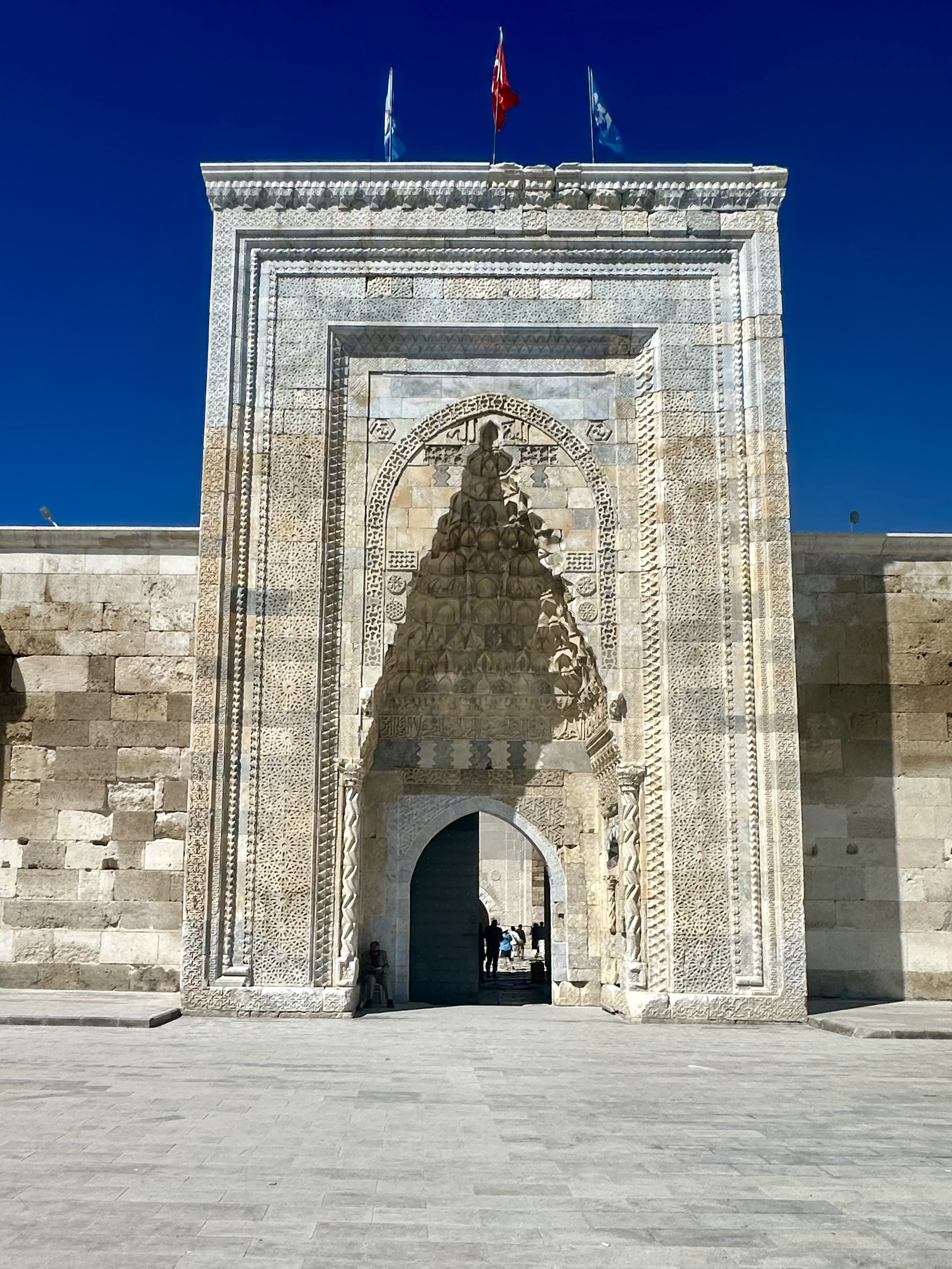
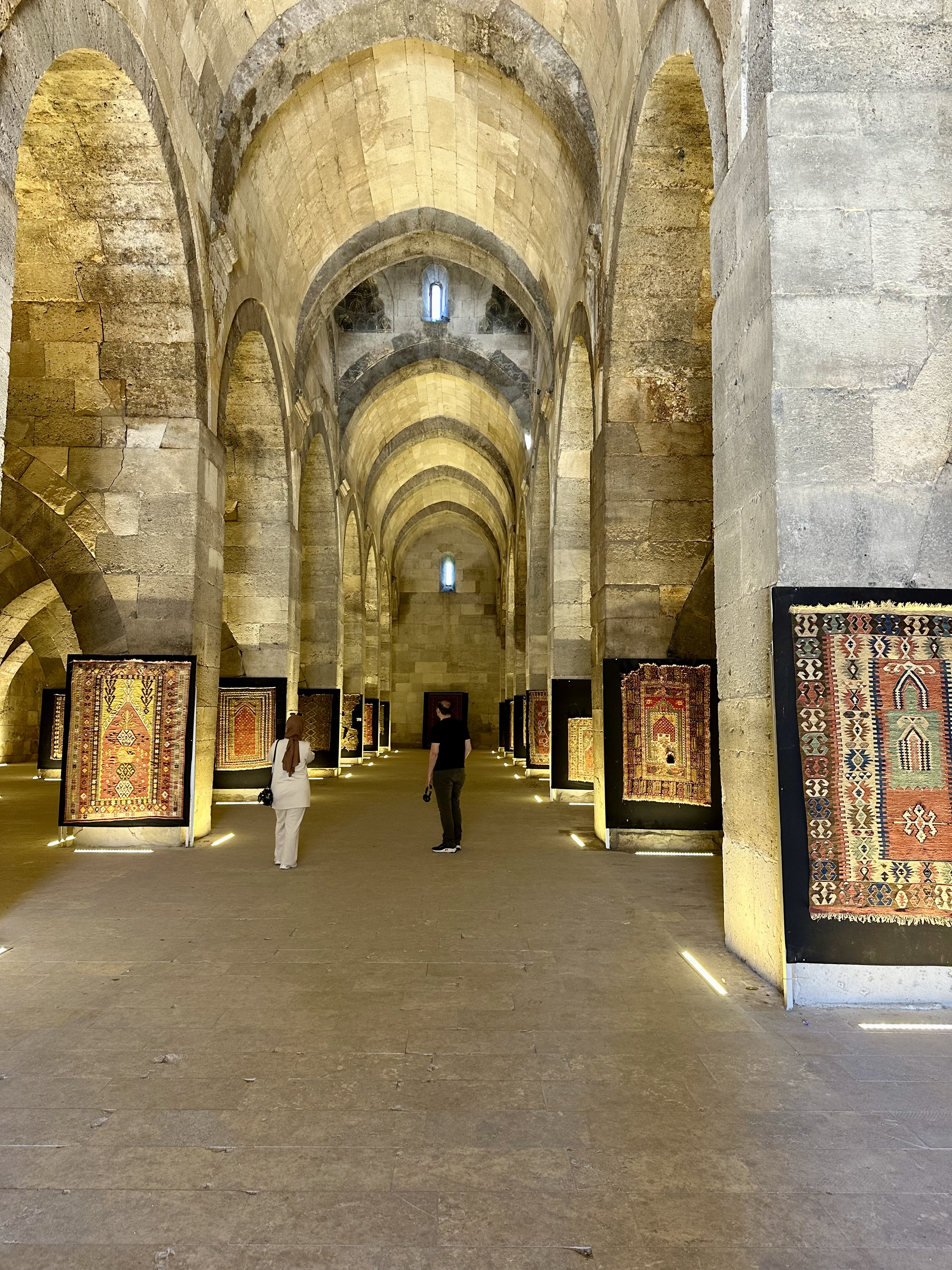
First stop was on the Silk Road at a Caravanserais. Hmmm…What is that?
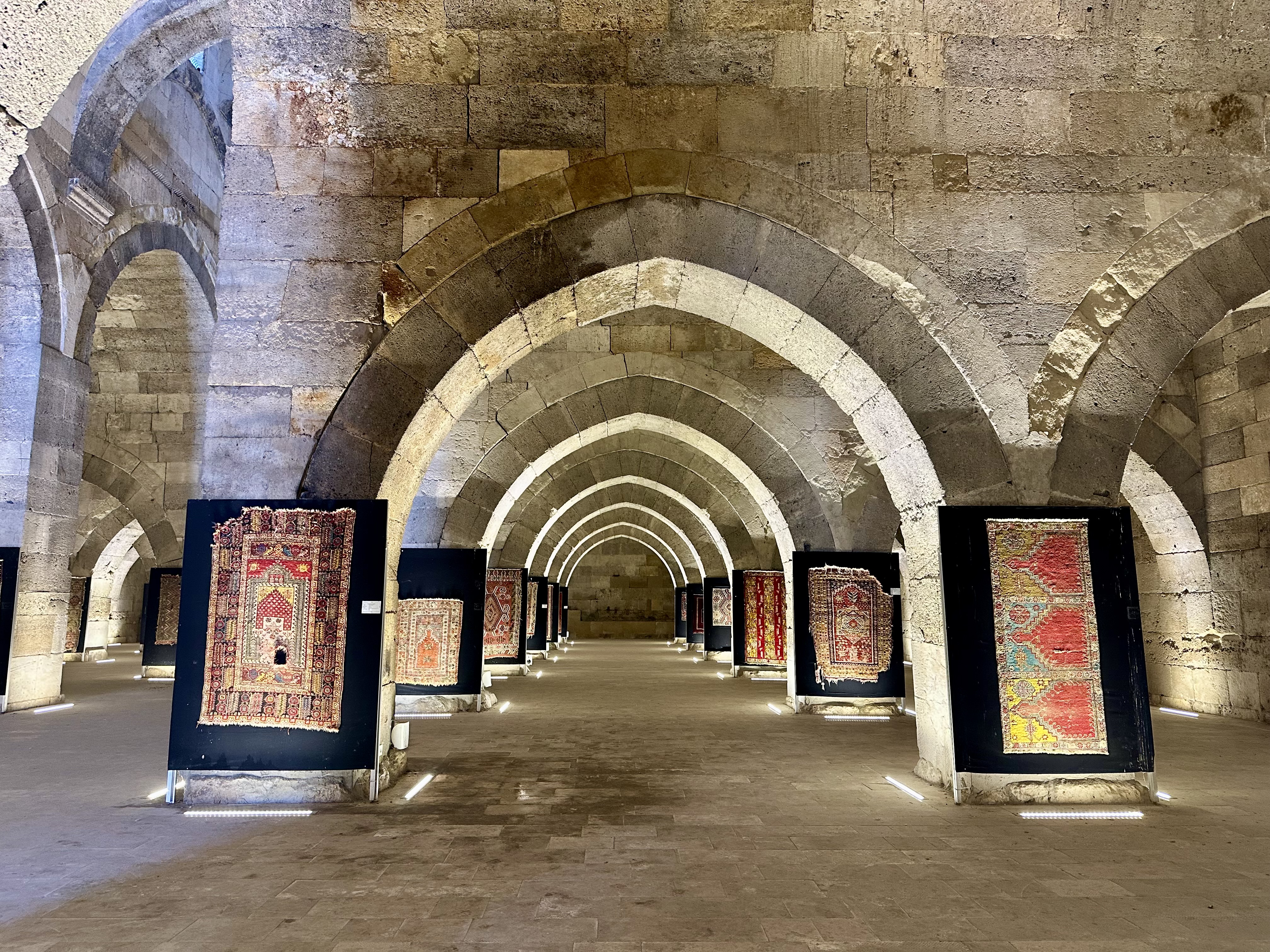
The site, formally known as Sultan Han, is widely regarded as one of the finest surviving examples of Seljuk-era architecture anywhere in the world, and carries the additional distinction of being the largest caravanserai still standing in the entire country — covering approximately 4,900 square metres, which is a considerable amount of 13th-century stonework by anyone’s standards. It was built between 1229 and 1236 on the orders of the Seljuk Sultan Alaeddin Keykubad I, who had apparently decided that the 300-kilometre stretch of road between Konya and Aksaray needed a decent pit stop, and wasn’t going to do things by halves.
The word han translates roughly as “inn” or “hostel,” which rather undersells this place. Caravanserais like this one were the essential infrastructure of the medieval trading world — vital stopping points along the great overland routes of the age, including the Silk Road, that extraordinary network of tracks and paths connecting China and Central Asia to the Mediterranean and beyond. Merchants travelling these routes were shifting silk, spices, ceramics, glassware, and every other commodity you care to mention across thousands of miles of difficult and often dangerous terrain. They needed somewhere to stop, eat, sleep, water their animals, and repair their equipment. Sultan Han provided all of that, and at the Seljuk Sultan’s express instruction, it did so entirely free of charge for the first three days of any traveller’s stay. Three days. Free food, free lodging, free stabling. The medieval equivalent of an extremely generous service station.
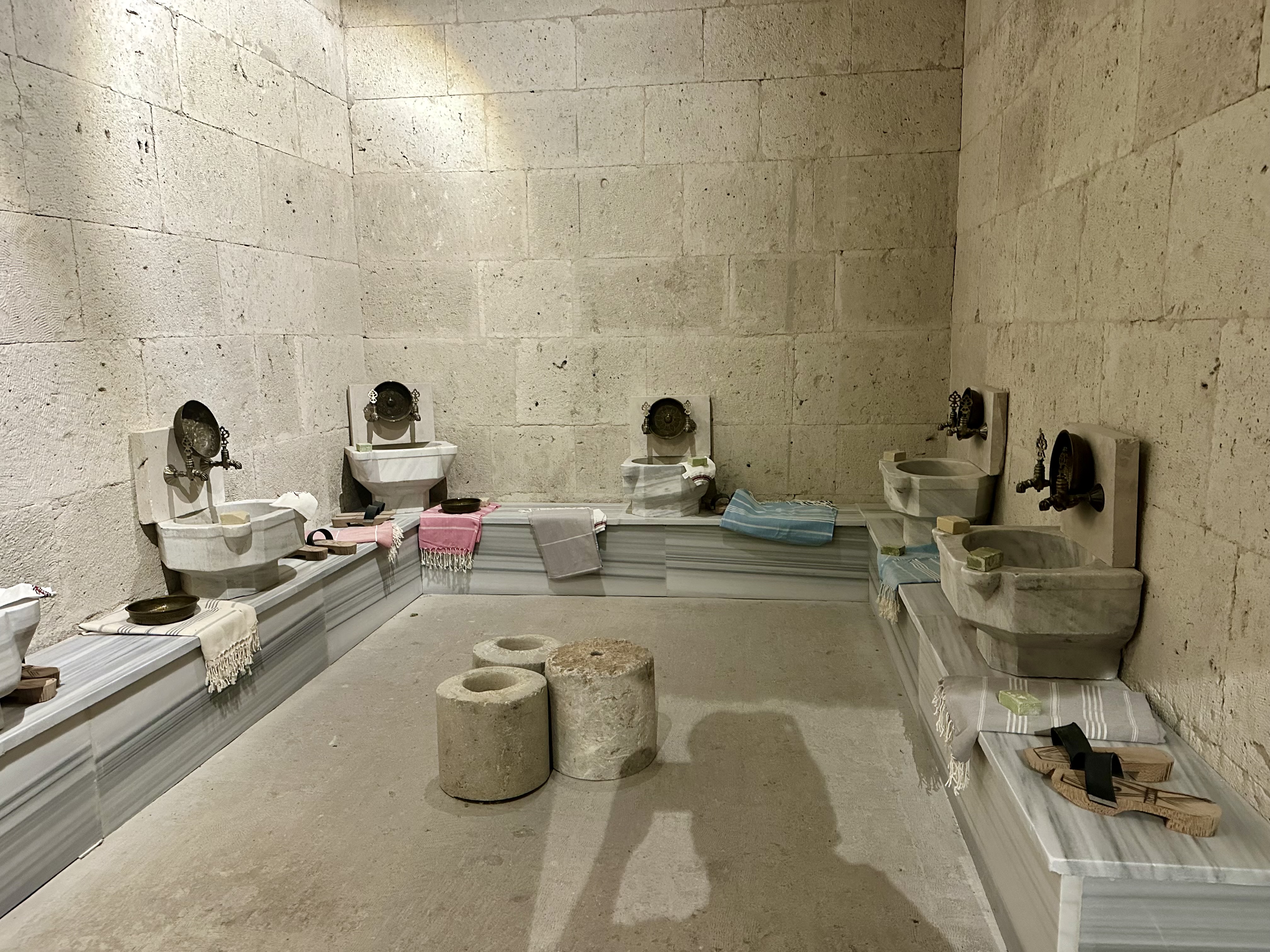
In practical terms, these structures were simultaneously inns, warehouses, stables, bathhouses, mosques, and fortresses. The fortress element was not decorative — travelling merchants were carrying valuable goods through remote and occasionally lawless territory, and the thick stone walls and single heavily guarded entrance were there for very good reason. The Seljuk Sultanate of Rûm, which controlled much of Anatolia during this period, built a string of caravanserais roughly a day’s journey apart — approximately 30 to 40 kilometres (about 25 miles), a camel’s ride length— specifically to encourage and protect trade.
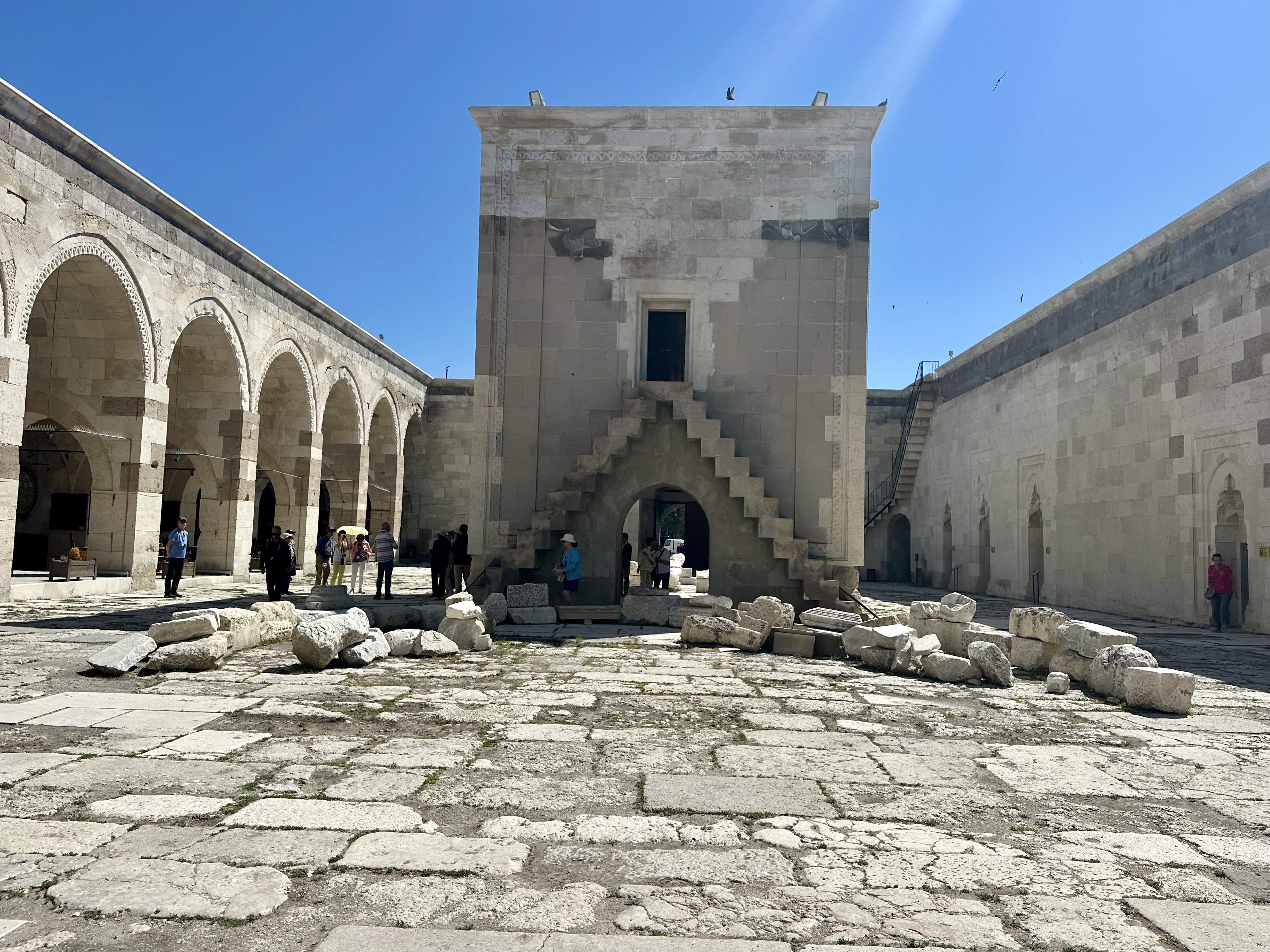
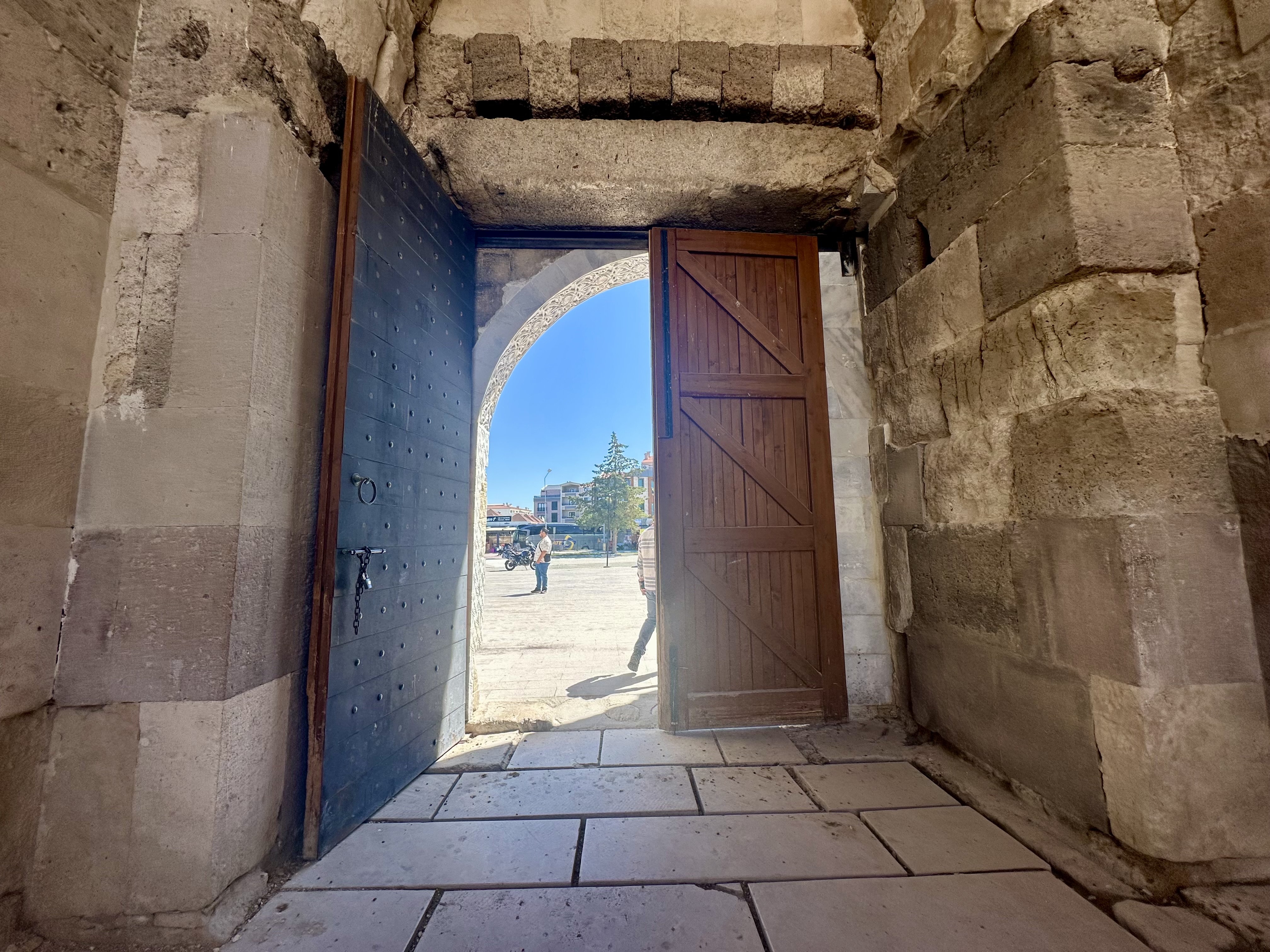
EntranceInterior CourtyardThe Winter RoomSultans RoomTurkish BathReturning to the Outside World
Once through the entrance, this courtyard would have been absolutely heaving with life. During the warmer months, traders arriving along the old caravan routes would have bedded down here alongside their camels, horses, and whatever else they’d dragged across the desert. It wasn’t glamorous, but then neither is a Premier Inn, and at least here you could see the stars.
One side of the courtyard is lined with a covered arcade — a shaded walkway of the kind you find all over the ancient trading world, designed less for aesthetic charm and more for keeping the sun off your head while you argued about the price of silk.
It’s generally believed that this arcade area originally served as stabling for animals or storage for goods — the kind of unglamorous but essential infrastructure that kept the whole trading system ticking. Nobody builds a plaque for the horse stalls, of course, but without them the merchants would have got precisely nowhere. Over the centuries, as the caravans stopped coming and tourism quietly took their place, the space was repurposed. It’s a practical reuse of what was there, and to be fair, it doesn’t feel cynically commercial — more like a sensible acknowledgement that the world moves on and people still need somewhere to sit.
As a reminder of the Caravan Days today next to the site is a small shopping area with a cafe. You can buy many things there but tea and ice cream are still a favoriite.
Next it was on to Cappadocia the place of the Cave Houses and Churches with a history that goes way back.
The cave houses of Cappadocia, carved directly into the soft volcanic tuff of central Anatolia, have been continuously inhabited for thousands of years. Originally adapted by ancient civilizations as basic shelter, they later served as safe havens for persecuted Christians before evolving into today’s sought-after boutique hotels.
Hittites & Phrygians (circa 8th–7th Centuries BC): Early inhabitants of the Anatolian plateau began carving basic structures into the soft volcanic rock for seasonal storage, wineries, and simple dwellings.
Geological Advantage: The landscape’s “fairy chimneys” are made of volcanic tuff, which is remarkably easy to carve with basic tools, yet hardens into a strong, insulating material when exposed to air.The cave houses of Cappadocia, carved directly into the soft volcanic tuff of central Anatolia, have been continuously inhabited for thousands of years. Originally adapted by ancient civilizations as basic shelter, they later served as safe havens for persecuted Christians before evolving into today’s sought-after boutique hotels.
The Origins: Ancient Civilizations
Hittites & Phrygians (circa 8th–7th Centuries BC): Early inhabitants of the Anatolian plateau began carving basic structures into the soft volcanic rock for seasonal storage, wineries, and simple dwellings.
Geological Advantage: The landscape’s “fairy chimneys” are made of volcanic tuff, which is remarkably easy to carve with basic tools, yet hardens into a strong, insulating material when exposed to air.
Kayakapi Premium Caves – Cappadocia
The Byzantine Era: Monasteries and Refuge
Early Christians (4th Century AD onward): During the Roman Empire and subsequent Arab-Byzantine conflicts, Christians facing religious persecution sought refuge in the region.
Underground Cities: Locals expanded the cave systems into massive, multi-level underground cities like Derinkuyu Underground City and Kaymaklı. These subterranean marvels contained living quarters, ventilation shafts, wells, and stables, allowing thousands to hide from invaders for weeks.
Cave Churches: Above ground, monks and ascetics carved intricate churches and monasteries into the cliffs and spires, such as those found in the Göreme Open Air Museum.
The Ottoman Period: Community Living
Expansion (18th & 19th Centuries): Throughout the Ottoman Empire, the rock-cut homes continued to be heavily utilized by the local Turkish and Greek populations.
Architecture: Traditional Cappadocian stone-cutting flourished during this time. Houses were built with arched doorways, stylized ivy motifs, and were often paired with carved dovecotes (pigeon houses) which provided essential agricultural fertilizer.Modern Times: Desertion and Revival
Mid-20th Century Relocation: By the mid-20th century, many residents began abandoning the cave dwellings for modern brick-and-mortar homes, as living in caves was increasingly associated with poverty.
Tourism Boom: In the late 1990s and 2000s, the value of the caves was radically reassessed. Their unparalleled natural insulation—cool in the summer, warm in the winter—and unique aesthetic transformed them into a booming tourism industry.
Today: Many historic cave houses have been beautifully restored into world-famous boutique hotels, preserving an ancient architectural legacy while meeting modern living standards
The Byzantine Era: Monasteries and Refuges
Early Christians (4th Century AD onward): During the Roman Empire and subsequent Arab-Byzantine conflicts, Christians facing religious persecution sought refuge in the region.
Cave Churches: Above ground, monks and ascetics carved intricate churches and monasteries into the cliffs and spires, such as those found in the Göreme Open Air Museum.
The Ottoman Period: Community Living
Expansion (18th & 19th Centuries): Throughout the Ottoman Empire, the rock-cut homes continued to be heavily utilized by the local Turkish and Greek populations.
Architecture: Traditional Cappadocian stone-cutting flourished during this time. Houses were built with arched doorways, stylized ivy motifs, and were often paired with carved dovecotes (pigeon houses) which provided essential agricultural fertilizer.
Modern Times: Desertion and Revival
Mid-20th Century Relocation: By the mid-20th century, many residents began abandoning the cave dwellings for modern brick-and-mortar homes, as living in caves was increasingly associated with poverty.
Tourism Boom: In the late 1990s and 2000s, the value of the caves was radically reassessed. Their unparalleled natural insulation—cool in the summer, warm in the winter—and unique aesthetic transformed them into a booming tourism industry.
Today: Many historic cave houses have been beautifully restored into world-famous boutique hotels, preserving an ancient architectural legacy while meeting modern living standards.
Our accomodations were in one of the cave hotels. It was exotic and stayed a pretty steady temperature without the need for airconditioning. It was a large room. When we first open the door I thought I was looking in a mirror. My bed was in the back and Mary’s to the forward part of the photo.
The last evening we had the opportunity to see the Prayer ceremony featuring the Whirling Dervishes.
A “whirling dervish” refers to a practitioner of the Mevlevi Order of Sufism, a mystical branch of Islam. Founded in the 13th century by the followers of the poet and mystic Jalāl al-Dīn Muḥammad Rūmī (Mevlana), they are famous for their Sema—an ecstatic, spinning meditation ritual performed to achieve a connection with God.The traditional ceremony and physical movements carry deep symbolic meaning:The Attire: Dervishes wear a tall, brown felt cap called a sikke (symbolizing the tombstone of the ego) and a long, sleeveless white robe called a tennure (symbolizing the ego’s shroud).The Dance: While spinning rhythmically, the dervish raises their arms toward heaven. Their right palm points upward to receive divine grace, while the left palm points downward to bestow that grace upon humanity.Cosmic Connection: The continuous spinning is a symbolic imitation of the planets in the solar system orbiting the sun and a mechanism to abandon personal desires in order to reach the divine.
The last day before we flew back to Istanbul was a mix of events leading off with viewing the area of the Fairy Chimneys. We were suppose to fly over them in a Hot Air Balloon but the weather did not cooperate.
Weather and Wind hellped create thes unique formations.
We stopped at a coffee house that served Turkish Coffee, Pistachio Coffee and Hazelnut Coffee. I had the Pistachio and it was delicious.
One of our last stops before our flight back to Istanbul was a stop to learn about pottery making and it’s importance to Turkyie.
The art of Turkish ceramics developed in Anatolia in the earliest ages of the region, and play a very important role in Turkey’s history and culture.
Turkey’s history of ceramic production dates back to about 10,000 years, with different types developing in multiple regions. During the mid-20th century era, mass production began as Turkish ceramic producers built factories to produce the ceramics on a much larger scale, leading to the popularity and incline in production of Turkish ceramics.
A big part of the fascination with Turkish ceramics was, and is, the strength of the shell. Turkish ceramics can hold good condition and their color for centuries.
During the 12th century, the Seljuk Turks created the ceramics using themes that focused on geometrical shapes and patterns and prioritizing shades of blue. As the culture shifted from the 15th and 17th centuries during the Ottoman Empire, colors of ceramics became more bold and distinctive, with clearer outlines and shapes. Iznik work grew to its peak in the 16th century, leading to the production of over 300 artistic workshops running effectively at once.
During this time, ceramics were not only used for decoration but also to assist in building and formulating a design for plain surfaces. Tile making, brick production, and roof production all have creative groups that are considered branches of ceramics. The most popular type of Turkish ceramic is the Iznik, however, there are many historic, regional variations of ceramics.
And just like that my time in Turkey has come to an end. Well almost.
Moving on is what one does on a tour. It amazes me that I used to lead these. It is much better to be a passenger and look out the window.
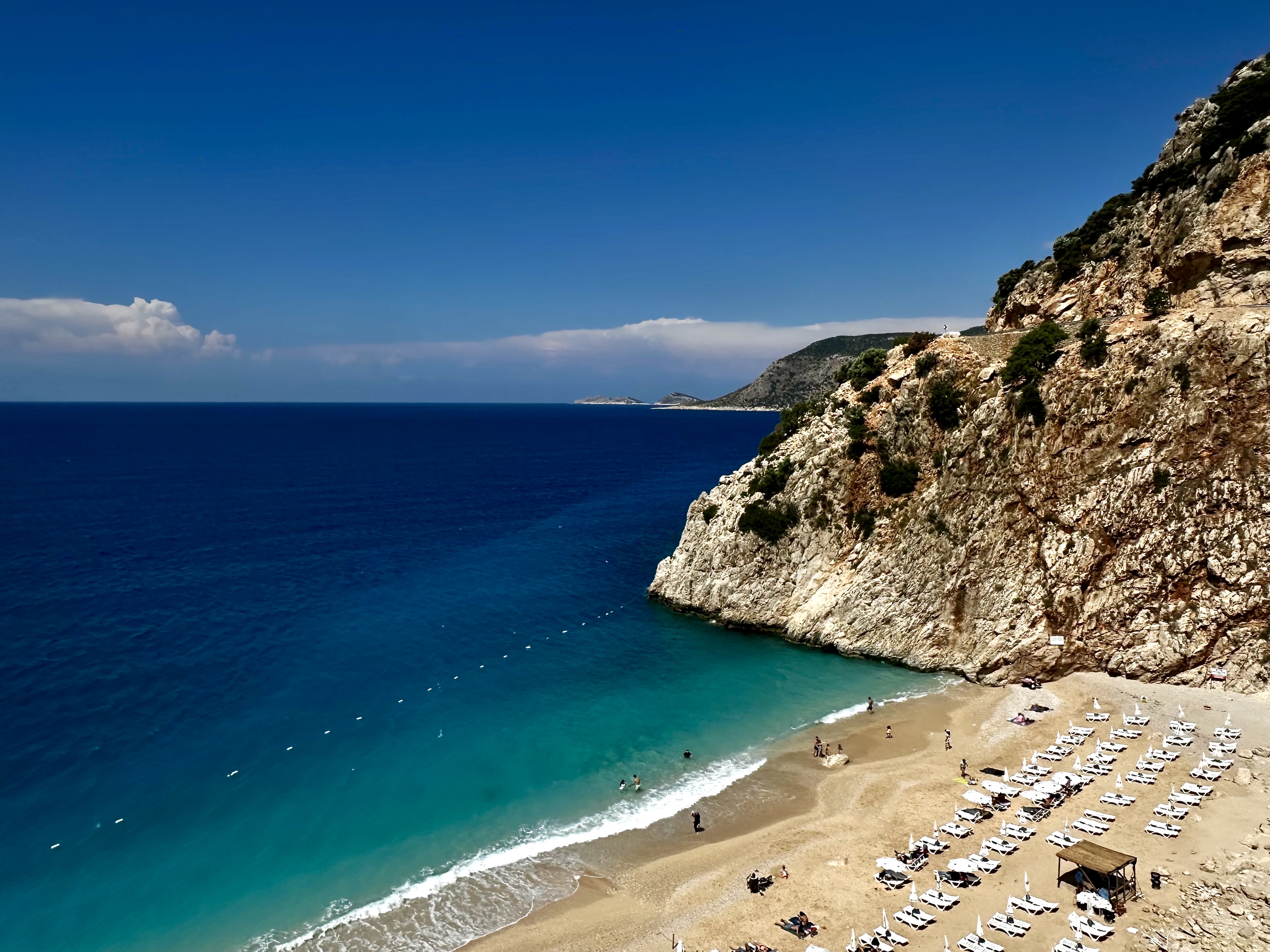
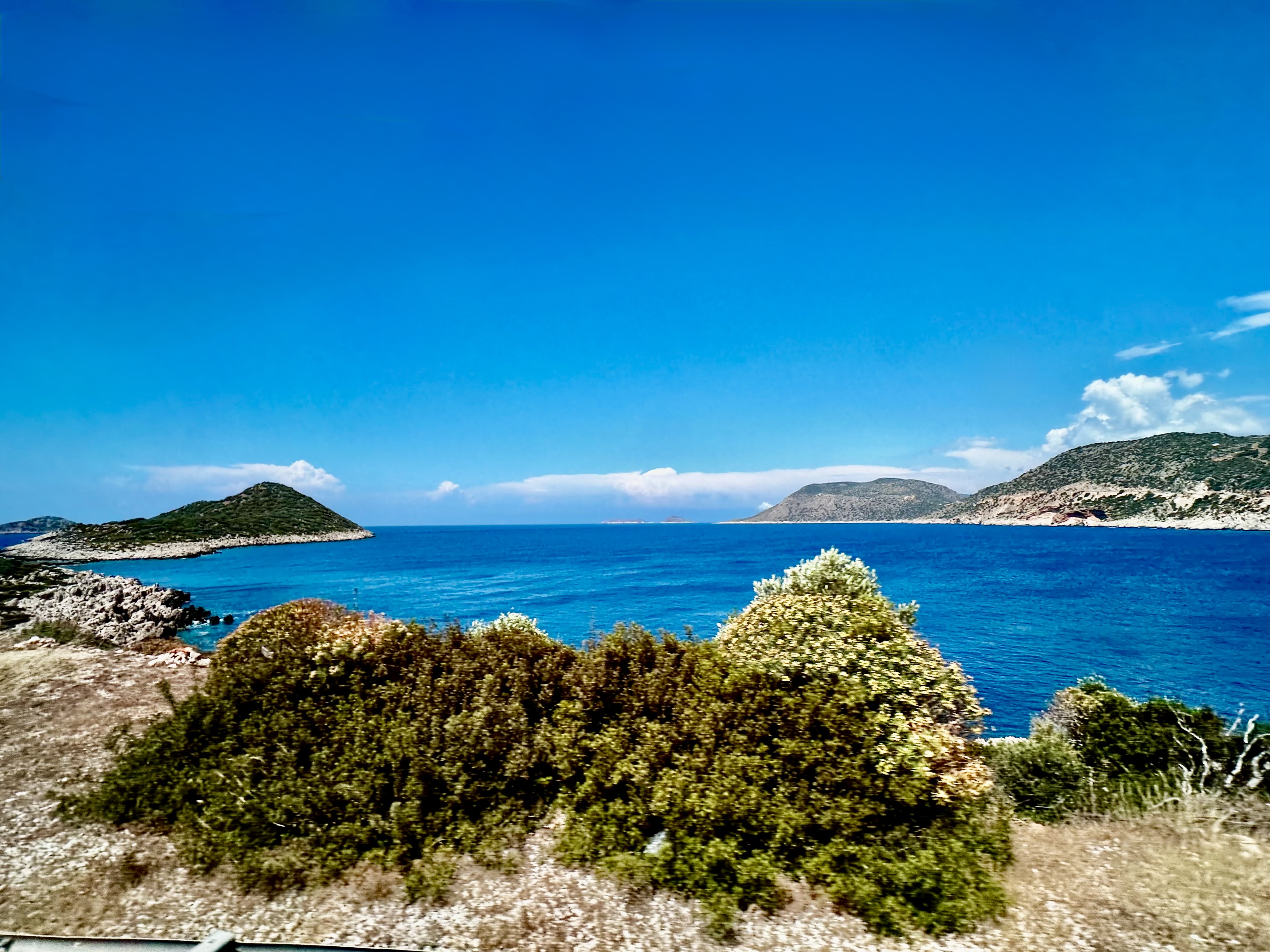
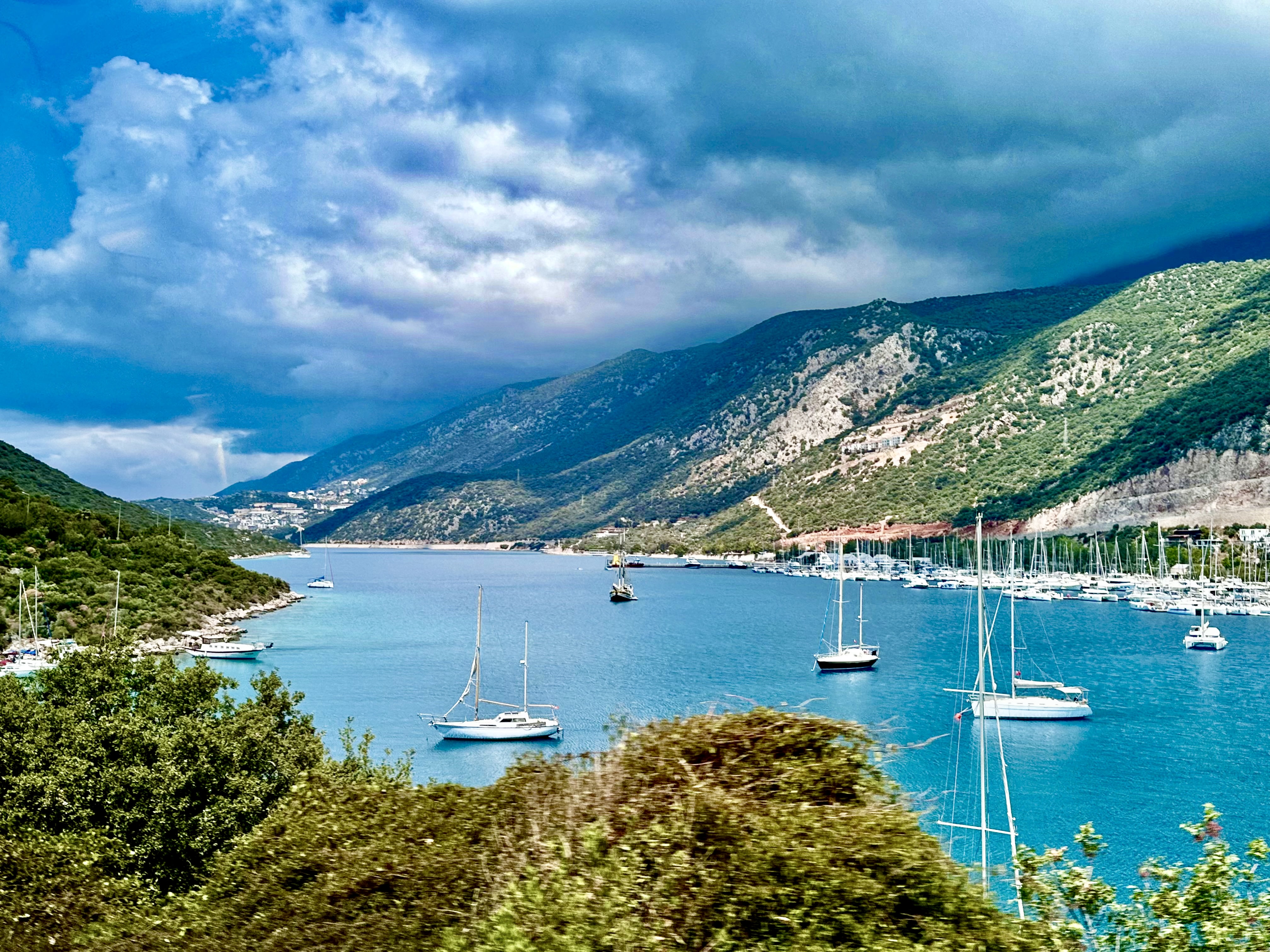
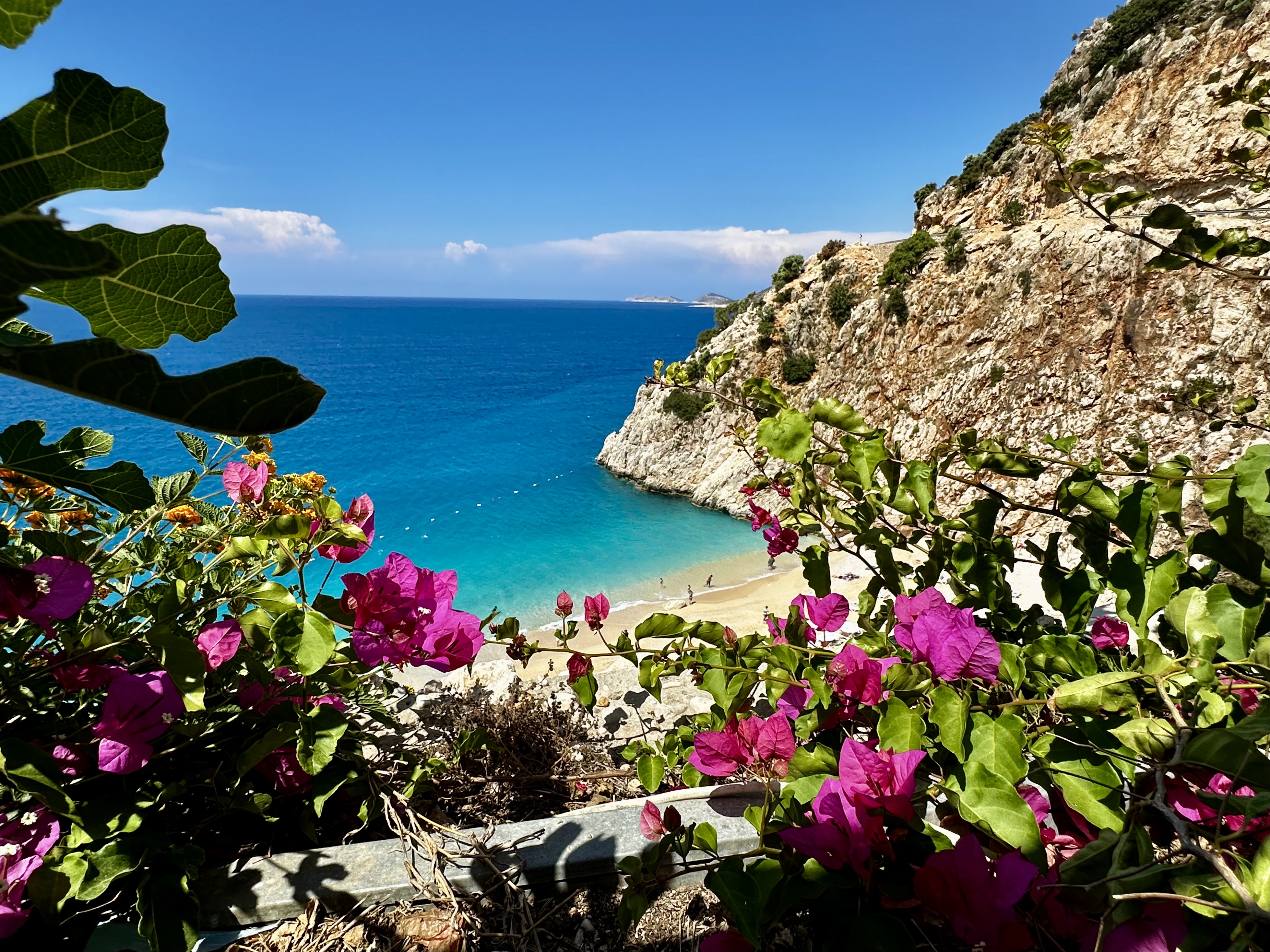
After we left the ruins at Ephesus we started to head to the junction of the Agean and Mediterranean Seas. The next few days found us on the Mediterranean Coast. The water is so blue and the sky is so blue and all the limestone formations made the colors more vivid.
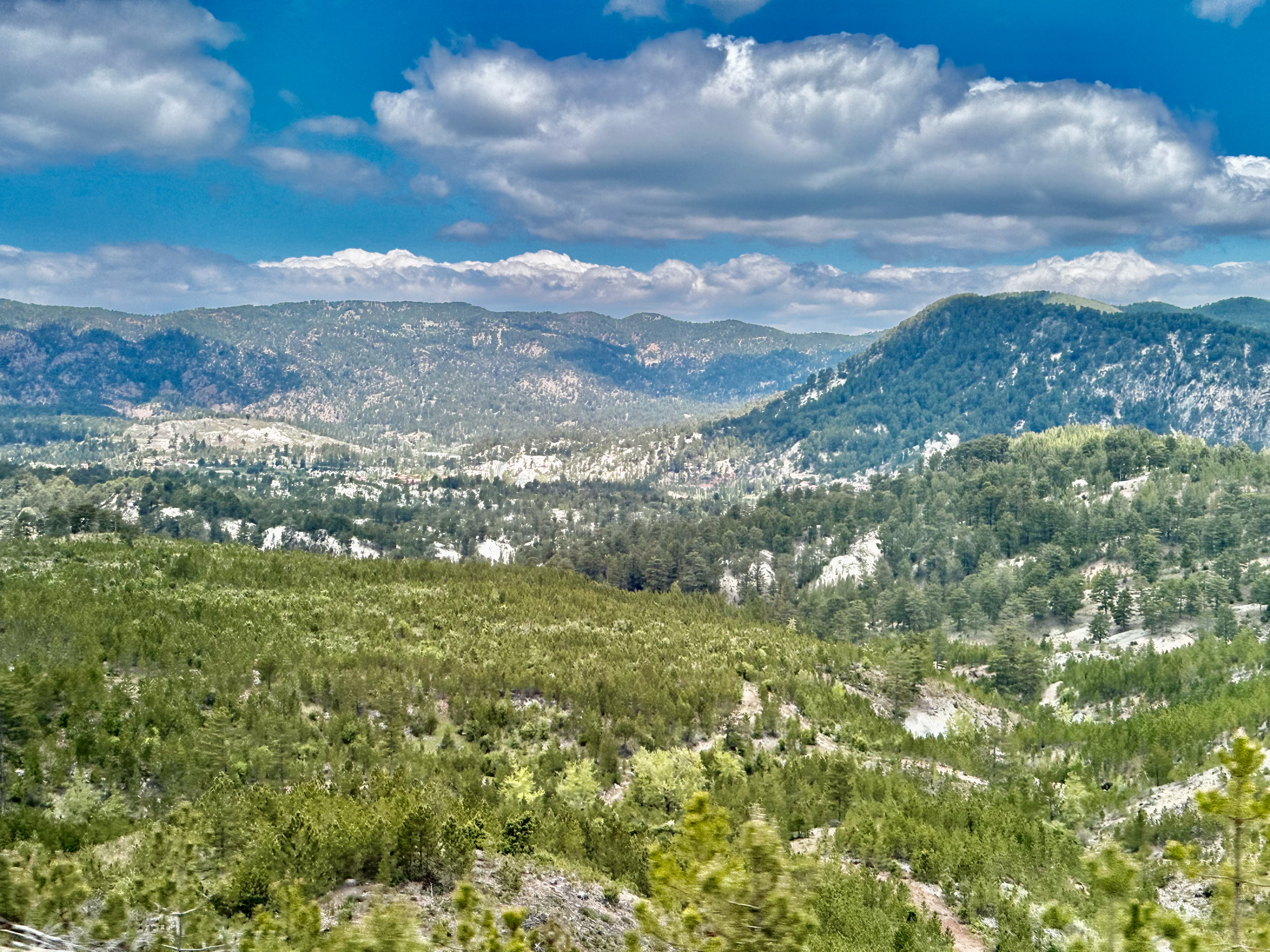
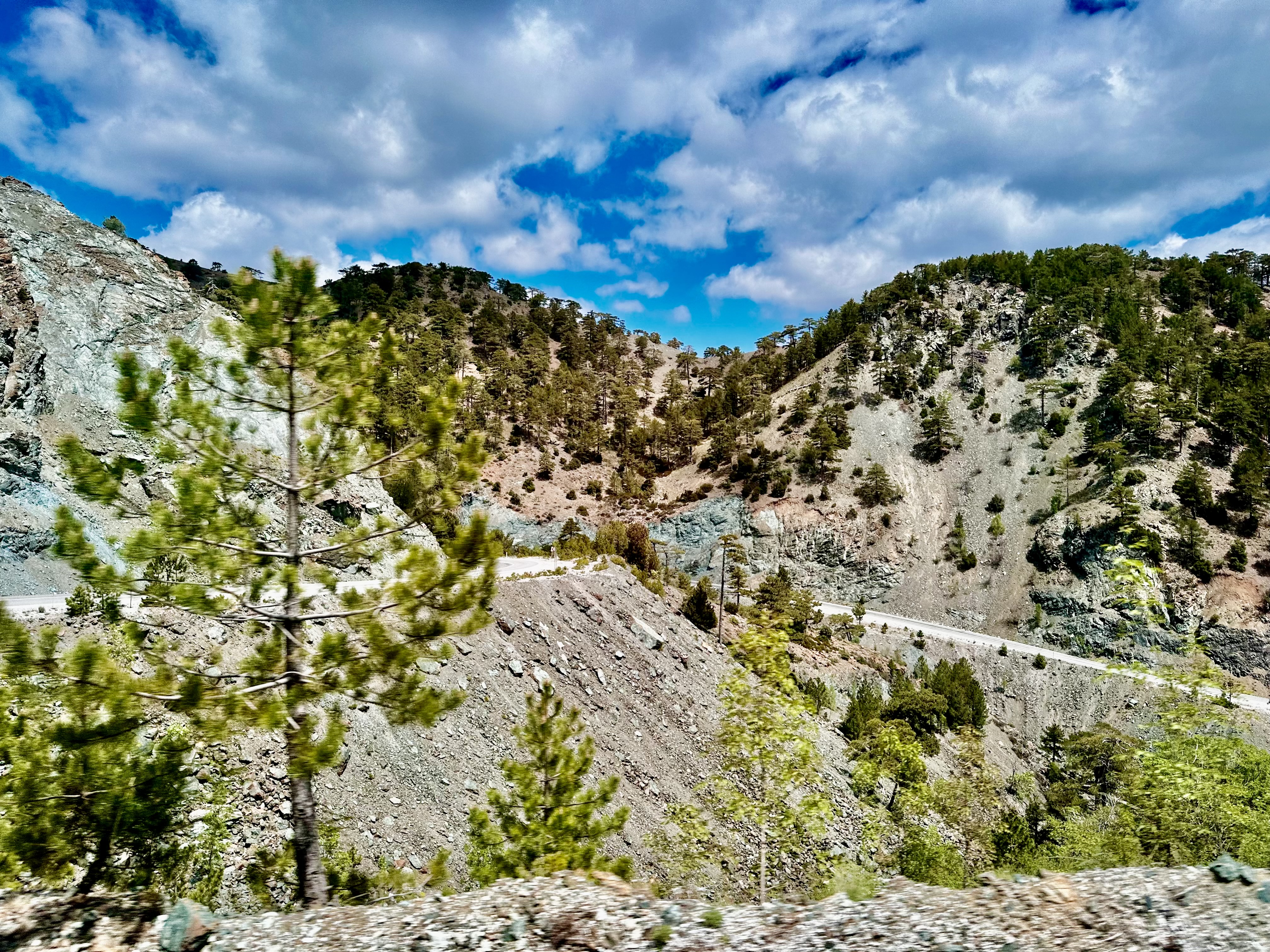
Riding across the Taurus Mountains to arrive at the Sea.
The Mediterranean Sea
We stayed in the town of Kas for two nights.
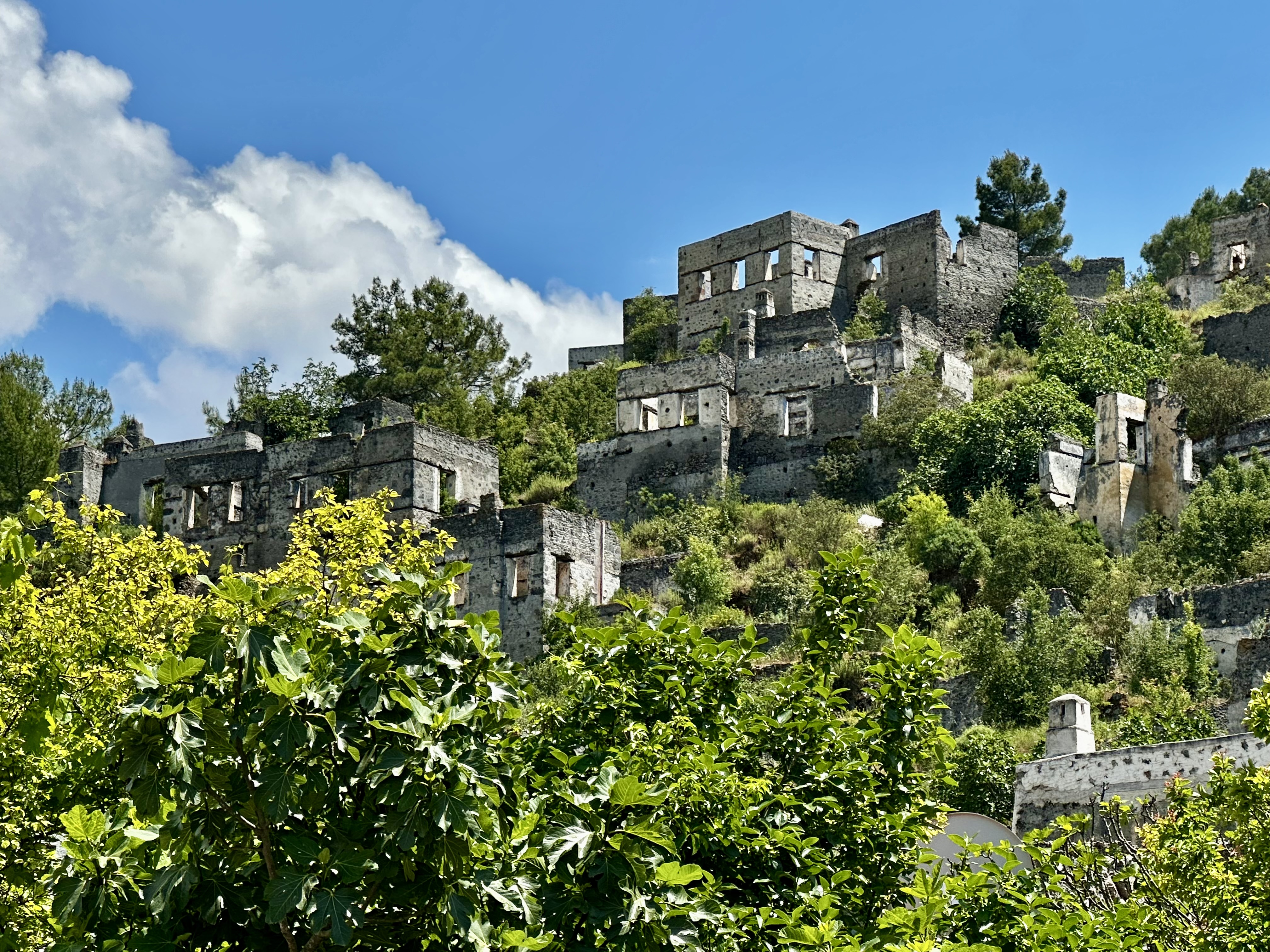
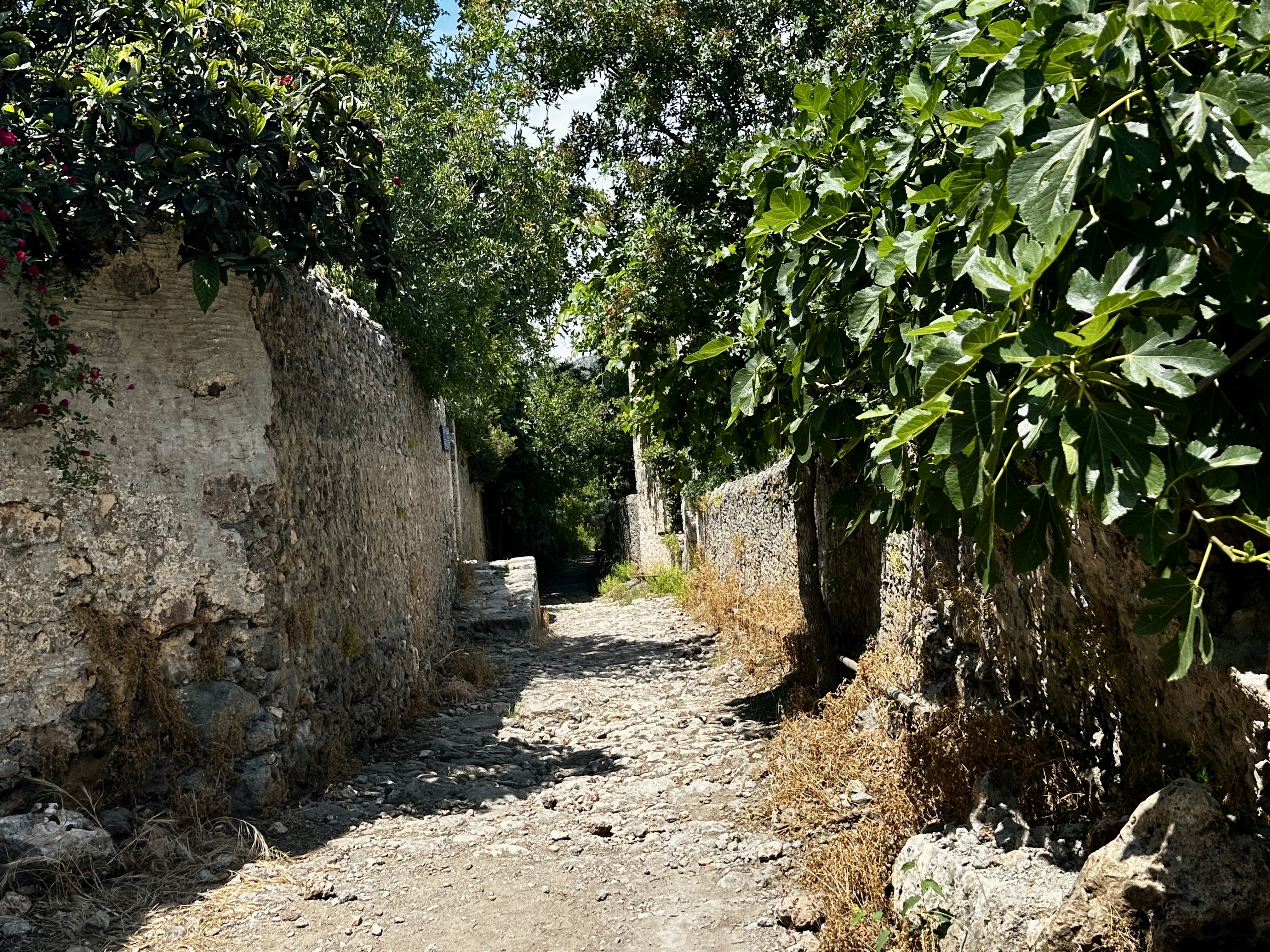
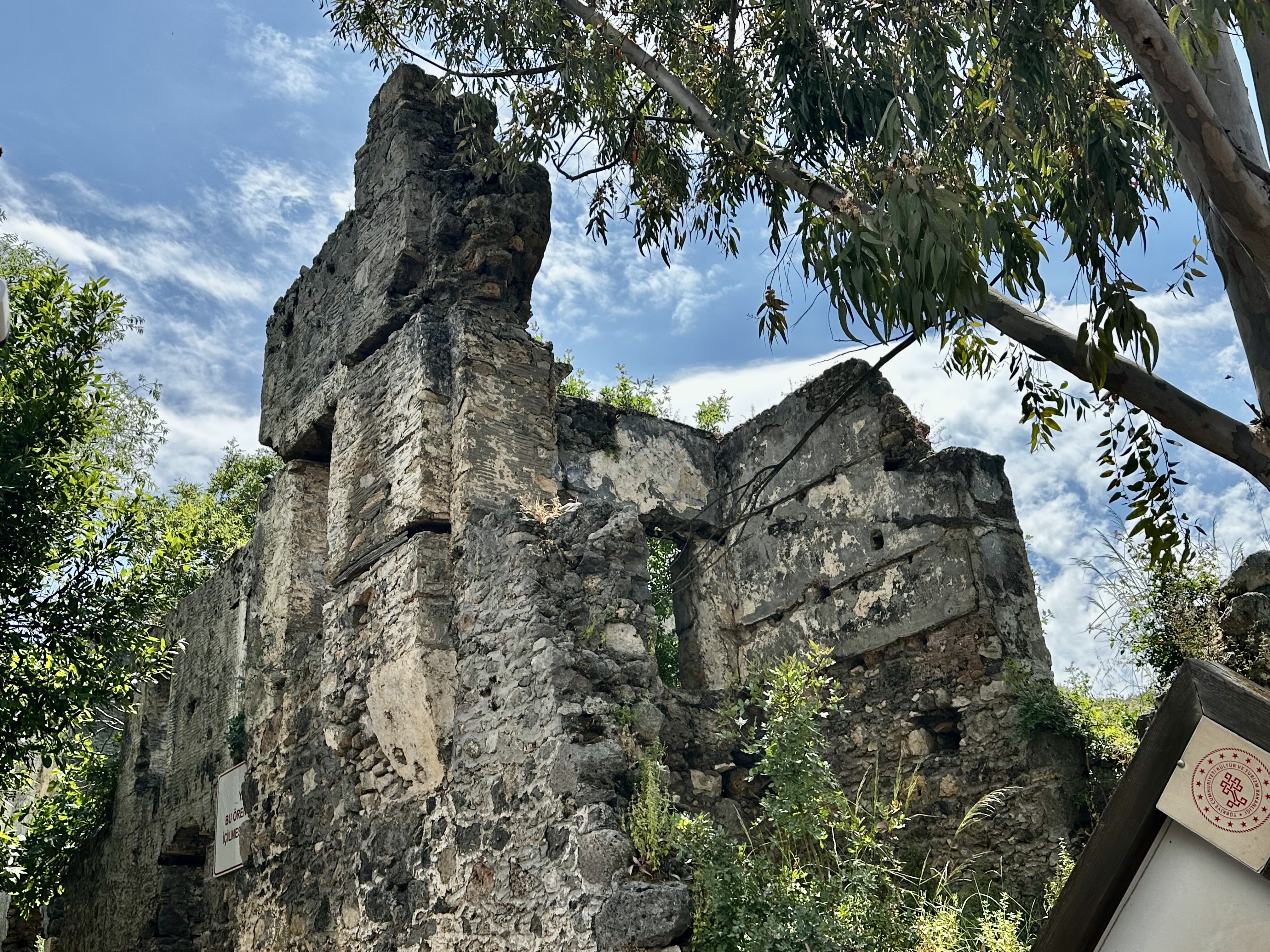
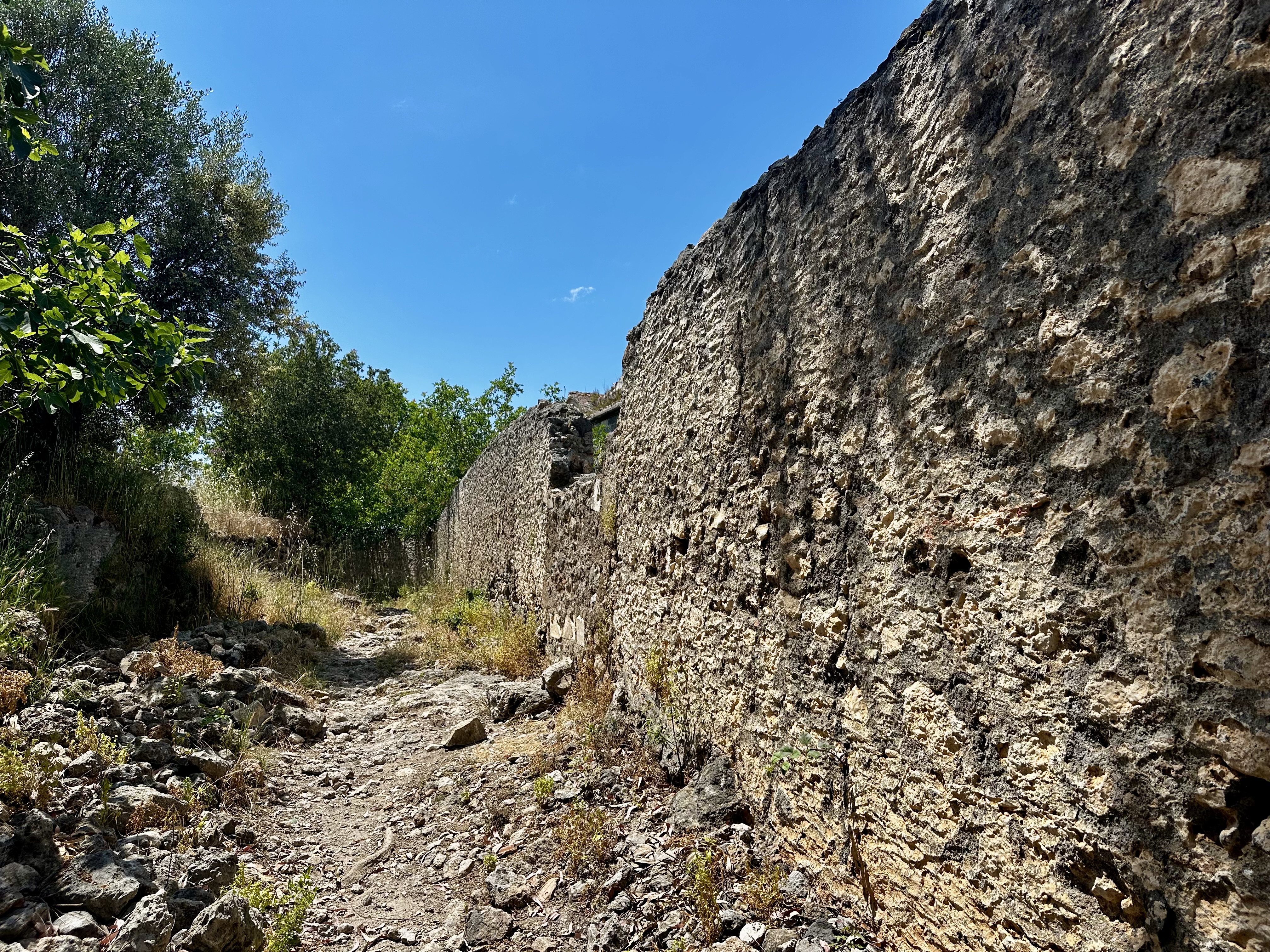
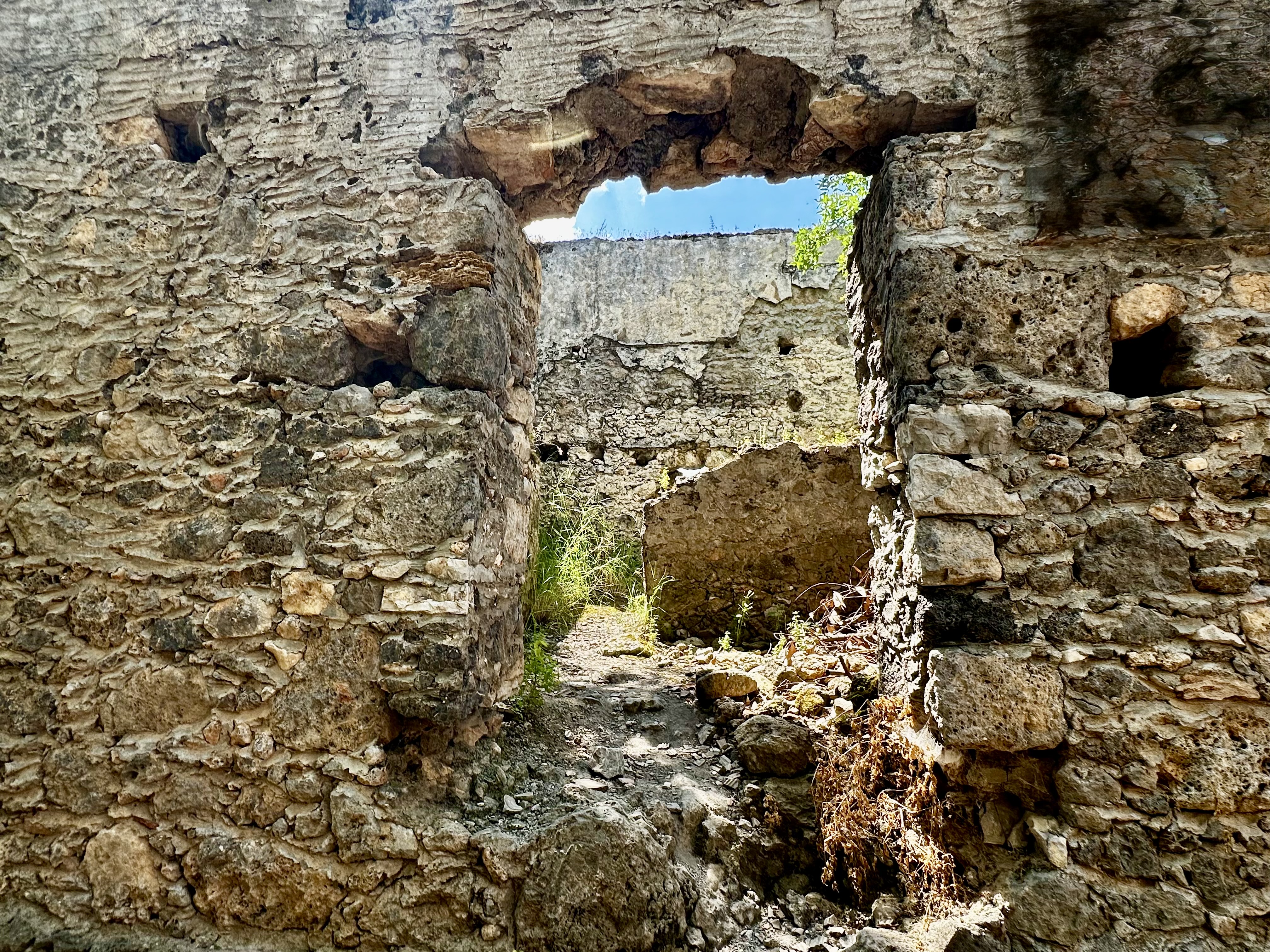
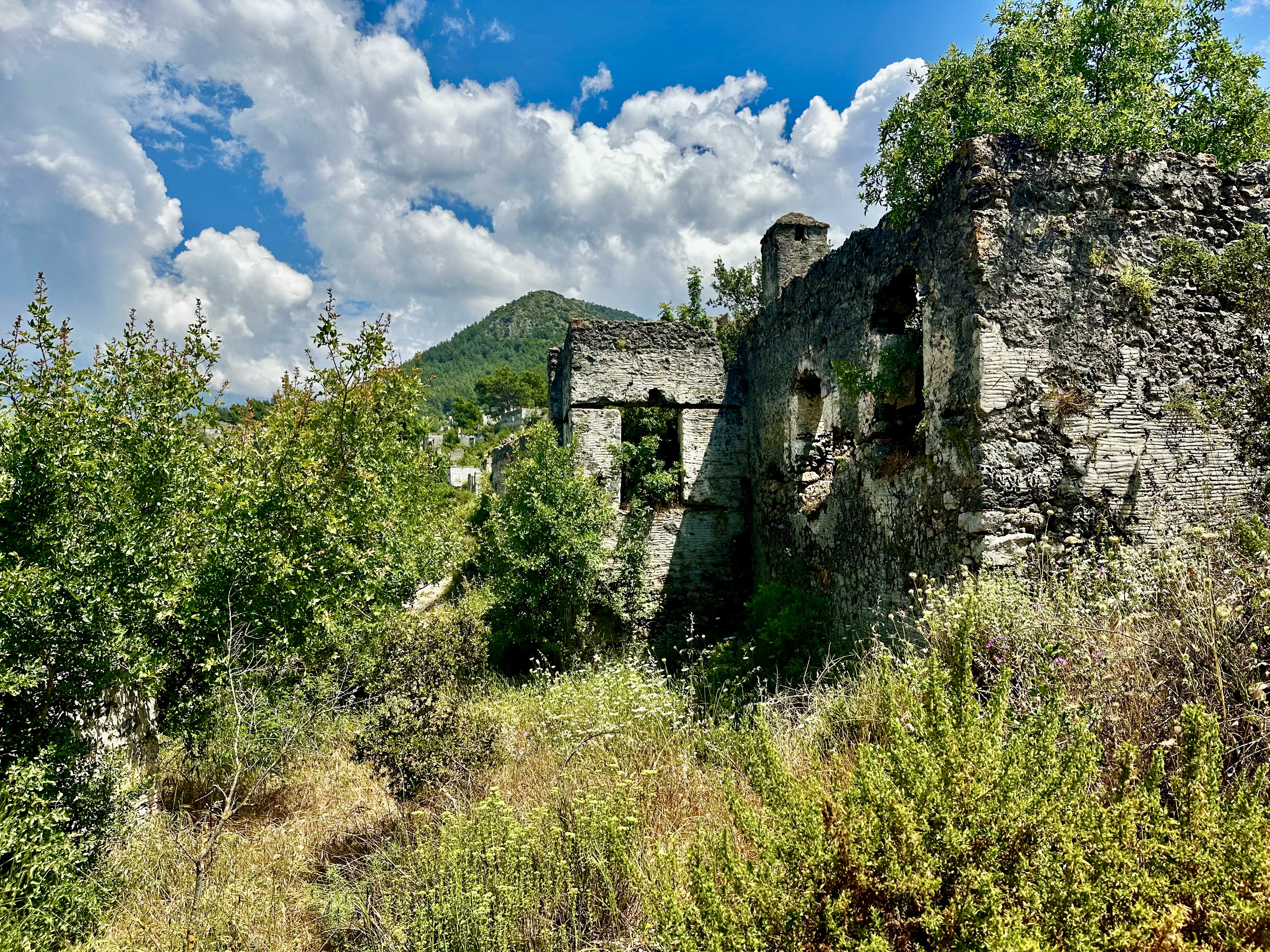
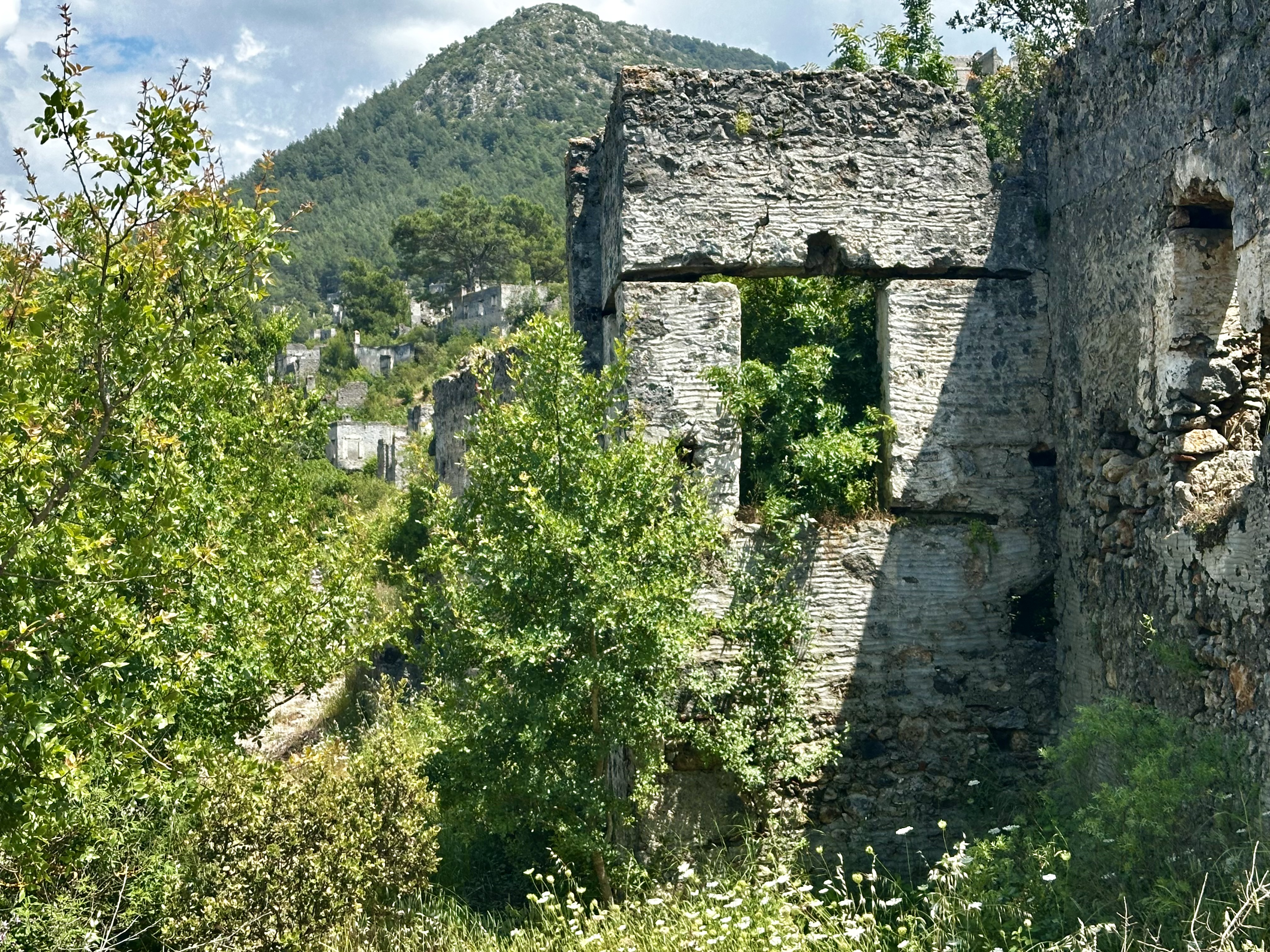
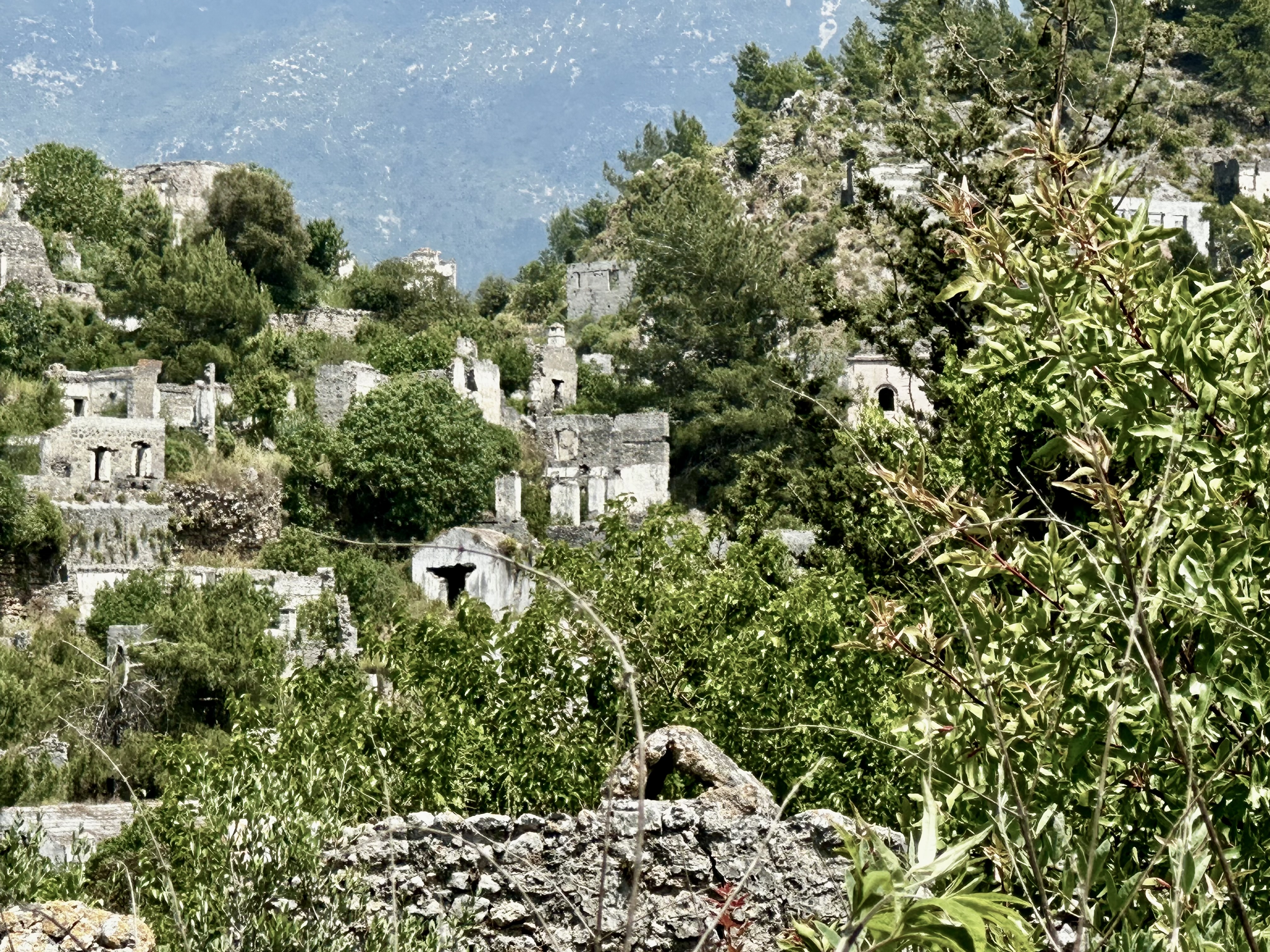
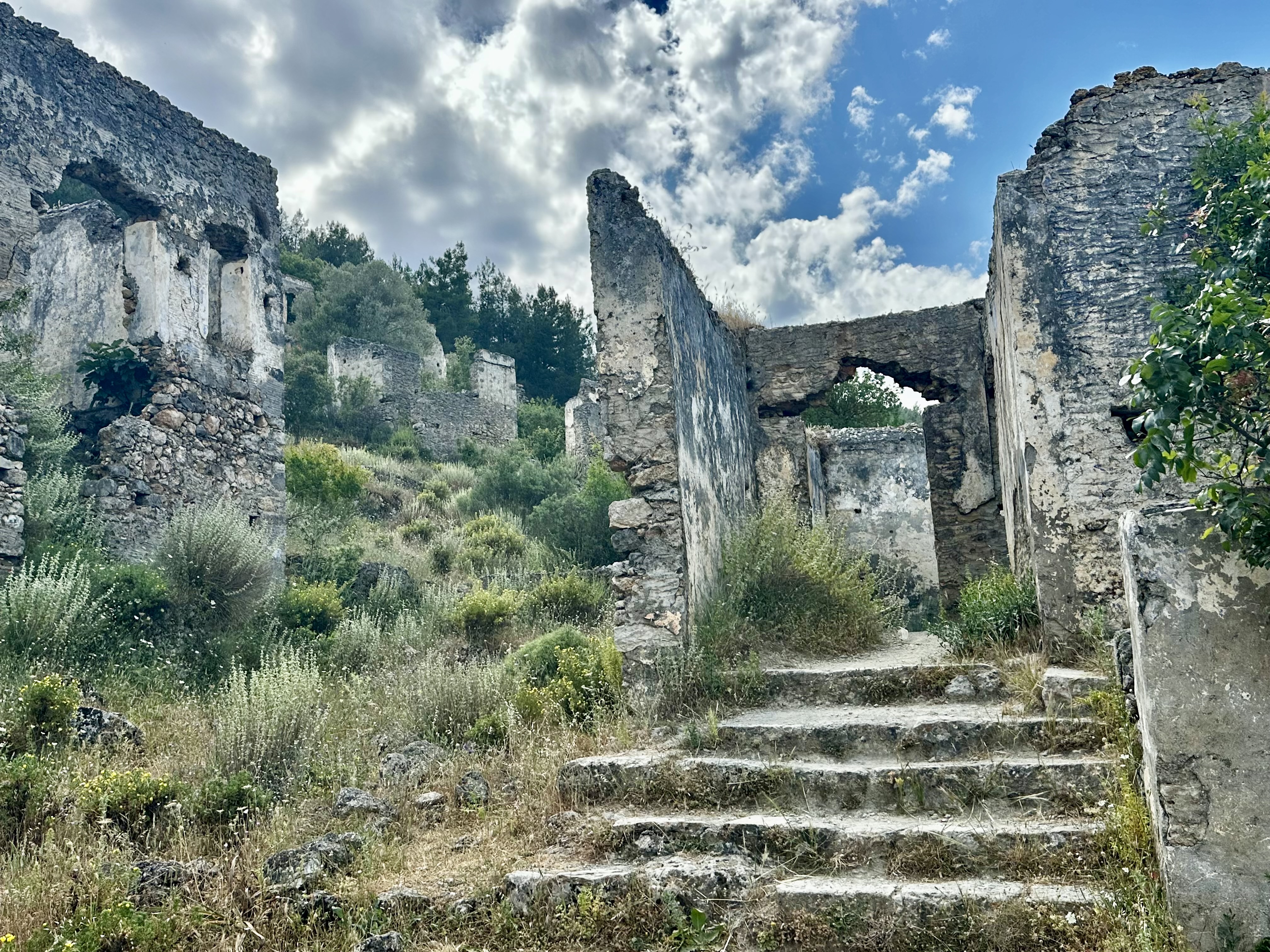
One afternoon we went to a “ghost town” The Ghost Town Kayakoy village in Turkey stretches along the hillside. In the XVIII century Greeks arrived here from Dodecanese Islands and founded a town here , it’s name was Levissi. In this quite a large town with about 3.500 homes the Greeks lived for centuries. In 1923 when the city had about 6,000 Greeks the “population exchange” was started between Greece and Turkey the Greeks were forced to leave the town. Kaykoy Ghost Town in Turkey was recognized as one of the World TOP 10 Ghost Towns according to National Geographic – a world leader in geography, cartography and exploration.
Following the Kayakoy history after the departure of the Greeks the Levissi city was renamed in a Kayakoy by name of a nearby valley – Kaya Cukuru (pothole from Turkish) and vacant houses were populated with Muslims that came from Macedonia. However the Macedonians did not like Kayakoy Turkey and they left the village – Kayakoy village became the largest abandoned Greek village of Asia Minor and it is called Kayakoy Ghost Town or Kayakoy Village.
Now Kayakoy Ghost Town in Turkey is open-air museum with about 500 preserved houses and three churches
Kayykoy
Upon Arrival in Kas we had a chance to see a small Hellenistic theater. Antiphellos was a small settlement and the port for Phellos, the much larger Lycian town further north in the hills. The small Hellenistic theatre, 500m west of Kaş’ main square, could seat 4000 spectators and is in good condition. It was built in the 1st century BC and restored 300 years later, probably after the great 141 AD earthquake. There’s a good view of Kaş from the top tier of seating.
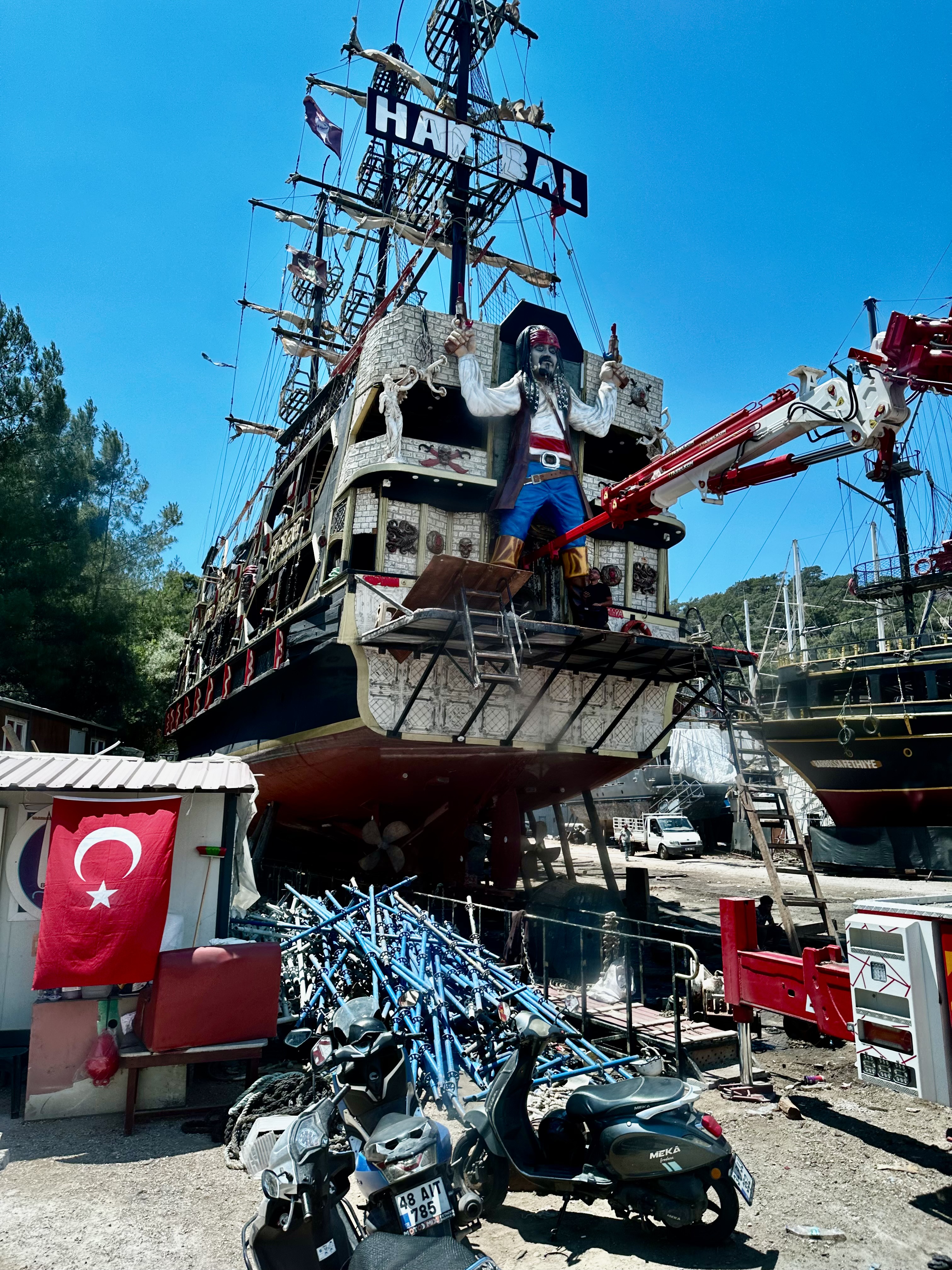
Finally we had a full day on the water. After a beautiful drive through the mountains we arrived at a small village on the Mediterranean Sea. We boarded a boat and went to explore more ruins and go swimming in the most beautiufl blue water I ahve yet to see.
Puffer FishMe swimming in the Sea
This area also had the ruins of a city that sunk into the sea after several earthquakes.
Located along Turkey’s stunning Mediterranean coast, the Sunken City of Kekova offers a unique glimpse into the past, where history and nature beautifully intertwine. Originally built on Kekova Island, this ancient city was a thriving harbor town before it met a tragic fate. Earthquakes and invasions led to the submersion of much of the city, leaving behind a fascinating underwater site. Dolchiste: A Glimpse into the Past Once a modestly bustling harbor town, Dolchiste was home to shipbuilders, merchants, and fish sauce producers. In the 2nd century, a massive earthquake struck, submerging much of the town into the sea. Though the city was rebuilt, it was abandoned after Arab invasions. What remains today is a fascinating blend of submerged and terrestrial ruins, collectively known as the Sunken City of Kekova. The Sunken City Today
The day ended with a climb to a castle, where the view was stunning. There were tombs and sarcophagi scattered among the hills
Simena Castle, also known by its Turkish name ‘Kalekoy’ meaning ‘castle village’, is located on Turkey’s stunning Mediterranean coast in the Kekova Region between the modern town of Kasand Antalya, the province’s capital city. Once a notable Lycian settlement, the castle remains largely intact upon a hill overlooking the Gokkaya bay. Villagers have made their homes on one side of the ancient site and a handful of local restaurants can be found next to a small harbour, offering the daily seafood catches. It’s an interesting mix of old and new as locals have managed to build their modern lives while still maintaining the rich historical sites. To the west a series of rock-cut tombs are scattered across the slopes of the castle, you can walk down from Simena Castle and take a look inside.
Today I am leaving the coast and we are driving into another area of Turkey, Cappadocia.
I will see you all soon. Next post coming up. Wait for it.
As many of you know, I am traveling. After a 12-hour flight, I am in Istanbul, Turkey. I am traveling for the next month. Two weeks in Turkey and then on to Croatia.
I realize that not everyone is on social media, so…..I decided to create a travel log on my blog for the next month. People want to see pictures. It might be a little less writing and a few more pictures.
After much debate, I decided to travel with only my cell phone and challenge myself to take good photos. I definitely am traveling lighter. I shall see how this experiment progresses.
Enjoy the photos.
First night in Istanbul.
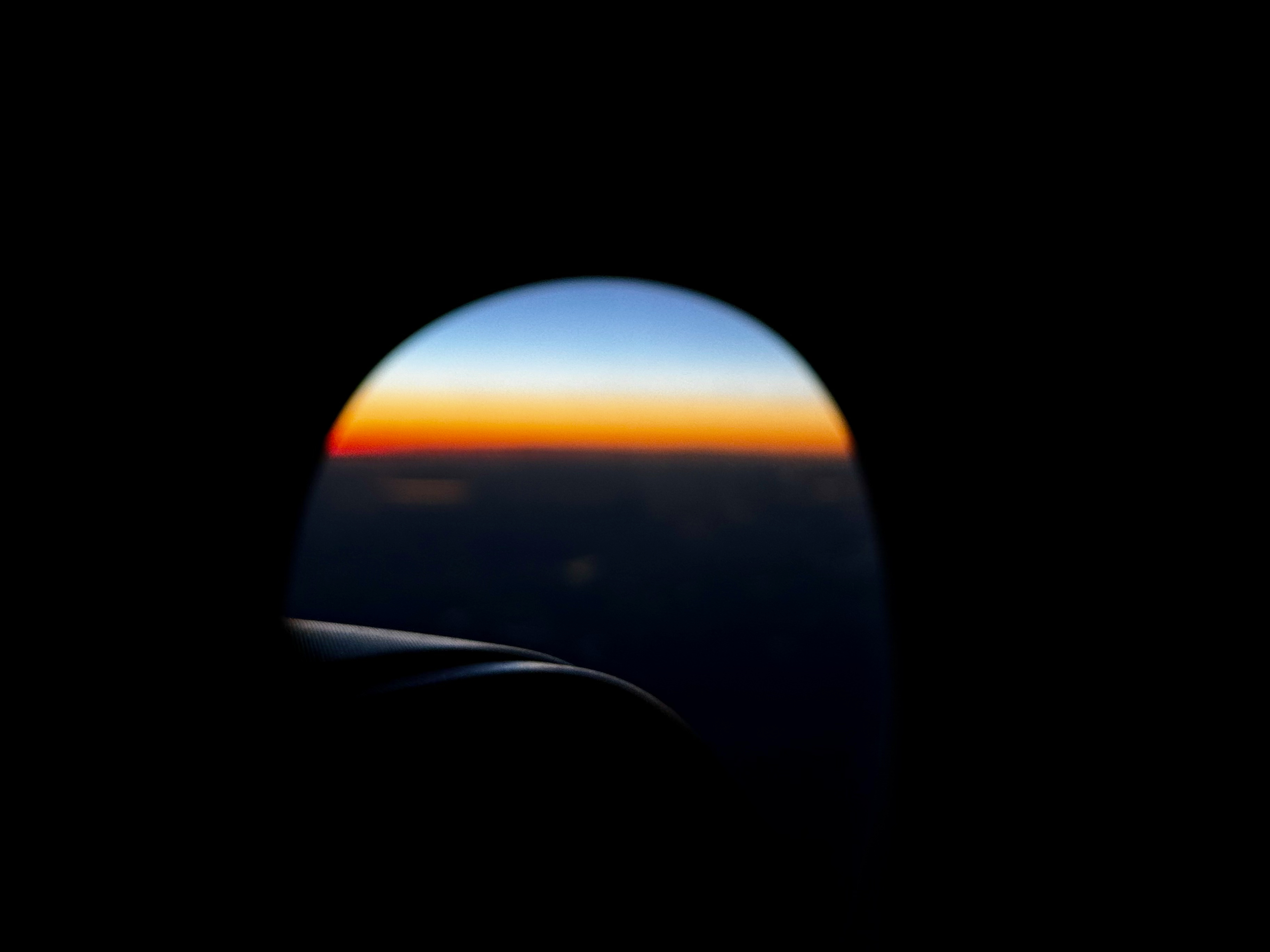
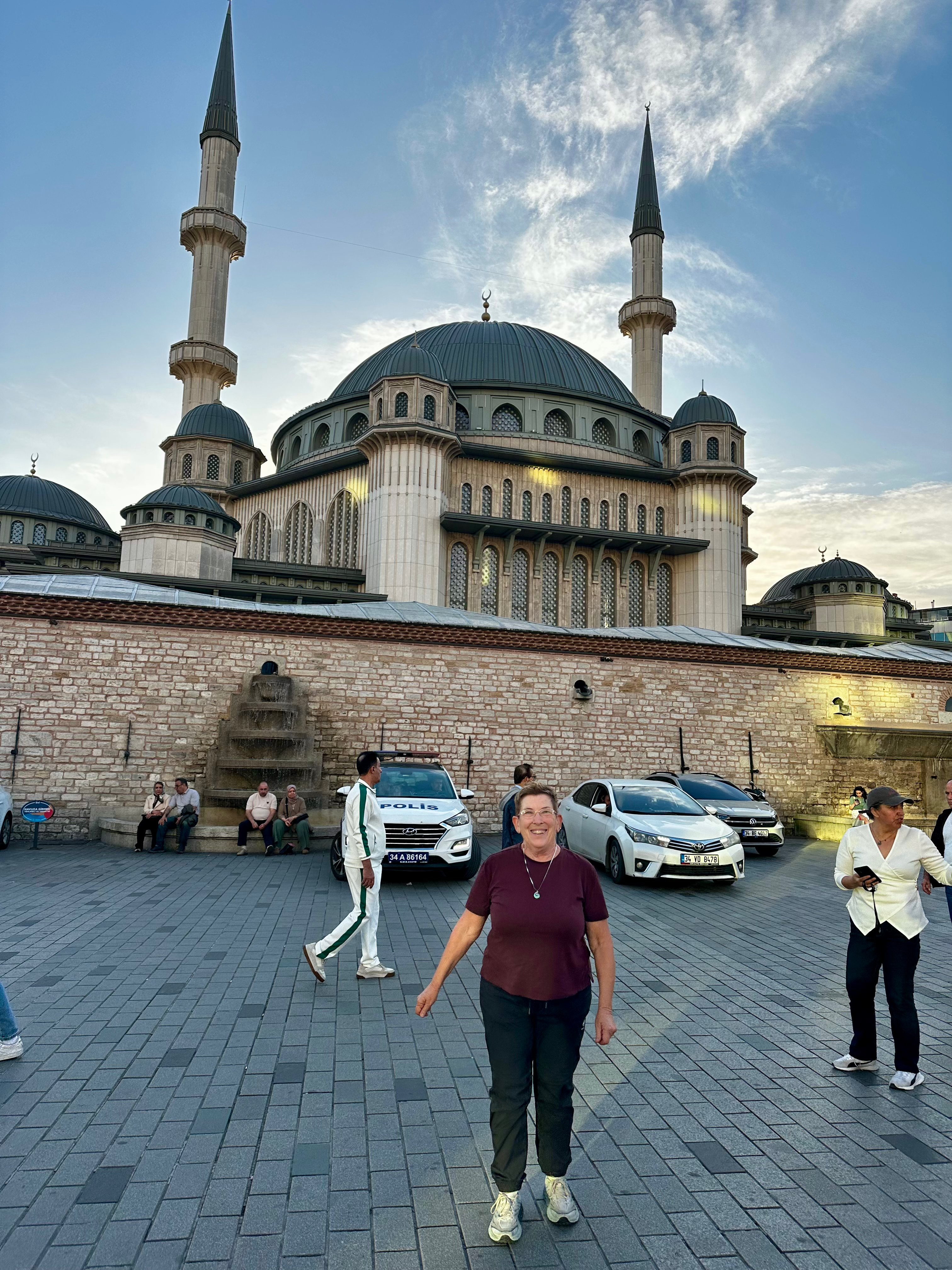
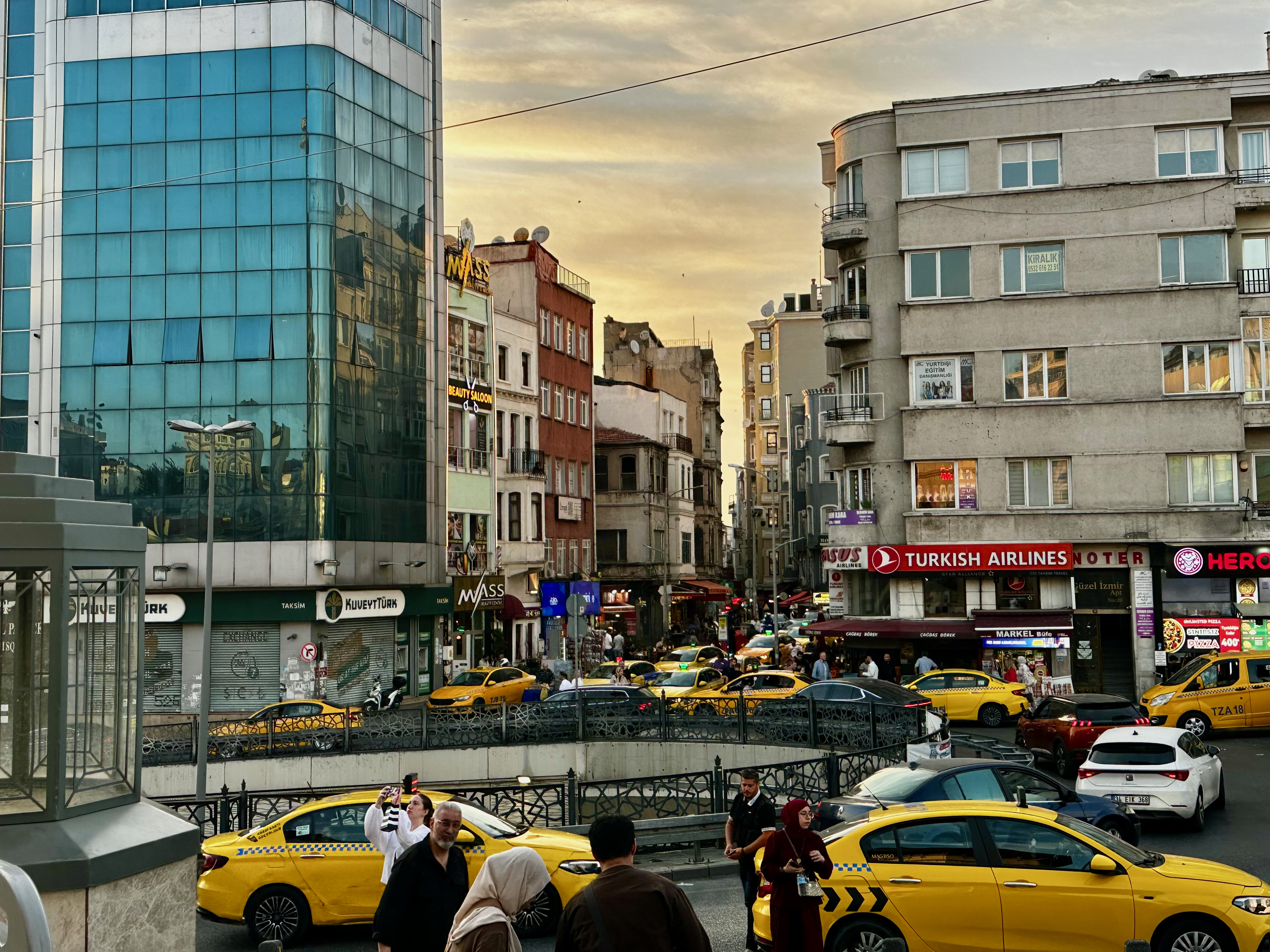
Sunset from the planeTaksim MosqueTraffic EverywhereTaksim Mosque at Sunset
The first full day, we had a walking tour of Istanbul with her very informative guide. Saw many churches and mosques. The oldest Catholic Church in Turkey and an Anglican church.
Day 2 – Istanbul Walking Tour
Hagia Trinidad-Greek Orthodox Church of St Anthony of PaduaGalata Tower
Day 3 – Topkapi Palace and the Hagia Sophia Mosque.
Topkapi Palace Museum in Istanbul, Turkey, was the primary residence and administrative center for Ottoman sultans for nearly 400 years, serving as a governmental, educational, and art center before becoming a museum in 1924. It showcases imperial collections, including the treasury (with the Topkapi Dagger and Spoonmaker’s Diamond), sacred relics, imperial robes, and manuscripts, all housed within its extensive courtyards, pavilions, and the Harem. The palace complex is a major historical site, offering a glimpse into the opulent life of the Ottoman court.
Hagia Sophia is a monumental architectural marvel in Istanbul, Turkey, renowned for its massive central dome and rich 1,500-year history. Completed in 537 AD by the Byzantine Emperor Justinian I, it has transitioned from an Eastern Orthodox cathedral to an imperial mosque, a museum, and, as of 2020, a working mosque once again.
Finally we were let loose in the Spice Bazaar.
No visit to Istanbul is complete without stopping by the atmospheric Spice Bazaar. While the Grand Bazaar may be the largest and most famous of Istanbul’s covered bazaars, this spice market wins the prize for being the most colorful, fragrant, and often the most fun – as visitors can taste the goods on offer.
Built in 1664, as part of the Yeni Camii (New Mosque) complex, it is known in Turkish as Mısır Çarşısı, and sometimes translated to “Egyptian Bazaar” or “Corn Market” (mısır means both Egypt and corn in Turkish).
Day 4 – Our last full day in Istanbul we visited The Blue Mosque and the Grand Bazaar
The Blue Mosque (officially the Sultan Ahmed Mosque) in Istanbul, Turkey, is an architectural masterpiece constructed between 1609 and 1616. Renowned for its cascading domes, six soaring minarets, and interior walls adorned with over 20,000 handcrafted blue İznik tiles, it remains a fully active place of worship.
The Grand Bazaar (Kapalıçarşı) in Istanbul, Türkiye, is one of the world’s oldest and largest covered markets, a historic labyrinth with over 4,000 shops across 61 streets, selling goods like jewelry, ceramics, textiles, spices, and Turkish delights. It’s a major tourist attraction known for its vibrant atmosphere, traditional Turkish craftsmanship, and the necessity of bargaining, operating Monday through Saturday from morning until evening, and closed on Sundays and public holidays.
In less than one week, I will be taking my healing foot on a new adventure. Next Monday I am going International. A friend of mine, Zee, and I are going to Turkey for two weeks and then on to Croatia for two more. It is time to travel.
Remember the Trojan Horse? Troy is on the itinerary. Ephesus, Istanbul, Cappadocia, all the names out of World History are going to come alive as we travel through Turkey. History will certainly come alive.
After the tour is complete, Zee and I will be moving on to Croatia. tour-free, although we did have help organizing our time. We are going to stay near the water, island-hopping, kayaking, sailing, and more. As I told Zee, no matter what we do, it will be amazing. When I have never seen a place, everything becomes interesting and the best place ever.
Covering Turkey in Two Wee
I always get the pre-travel jitters. I worry about everything imagined or real. This year it began with worrying about what type of suitcase I should take. Should it be small or large, soft or hard sided? What should I take? I worried so much I would stay awake at night. It is amazing what one’s mind can focus on instead of sleep.
Just as I had made a decision about the suitcase, the community page I am on for the Turkey tour, told us to travel light. Back I went to worrying about the darn suitcase again. When a good friend, Phyllis, loaned me her suitcase. I could breathe and feel good about my decision. Although it really was made by Phyllis.
Once the suitcase situation was resolved, on I went to all other matters real or imagined that my sweet brain could build up in the middle of the night. What camera should I take? What clothes should I take? Sunglasses, hat, shoes and on and on. What about this? What about that?
Once I am on the plane and on my way I am good but oh my, the getting there. When Jim, my husband was still here, he could calm me down. Burt now there is no one and I have free reign to imagine and fuss and worry. Oh my goodness I miss him at moments like this.
Mission Trails Regional Park
Each day I continue to move forward trying my best to love myself and find some joy in each day. And even if it is only for a short bit I find my way into nature where I am most content. Today I walked into Mission Trails Regional Park. There was rain during the early hours that left these beautiful clouds and blue sky behind.
How is my heel?, you may ask. A little over three months ago I had surgery to repair a bone spur and Achilles Tendon issue. I am doing well. Am I completely healed? No, yet I am getting there. This time I will take things to help me. Hiking Poles? Yes. Scar Cream? Yes. Compression Socks? Yes. I have worked hard to get to this point and I am proud of my determination, following what was outlined by my doctors, Physical Therapist, Acupuncturist, Chiropractor, Massage Therapist, ART Specialist and Myofascial Release Tech. Oh yes I have been busy healing. I am going on vacation from my regimen.
EmmyLou, my rig is going into storage on Friday. She is going to be put inside and watched and cared for. When I return they will have washed her and gotten her ready for summer travel. Ah, does that sound nice?
The countdown is on. Each day I have a list. If I allow it, my friends in San Diego help divert my attention and keep me on an even keel. Each day I take a deep breath, get ready, do a little yoga and take a walk. I am getting there.
Today I am thankful, for this crazy woman who is me. Today I am thankful for techniques to get me through my own craziness. Today I thankful for the opportunity to explore new places and be amazed.
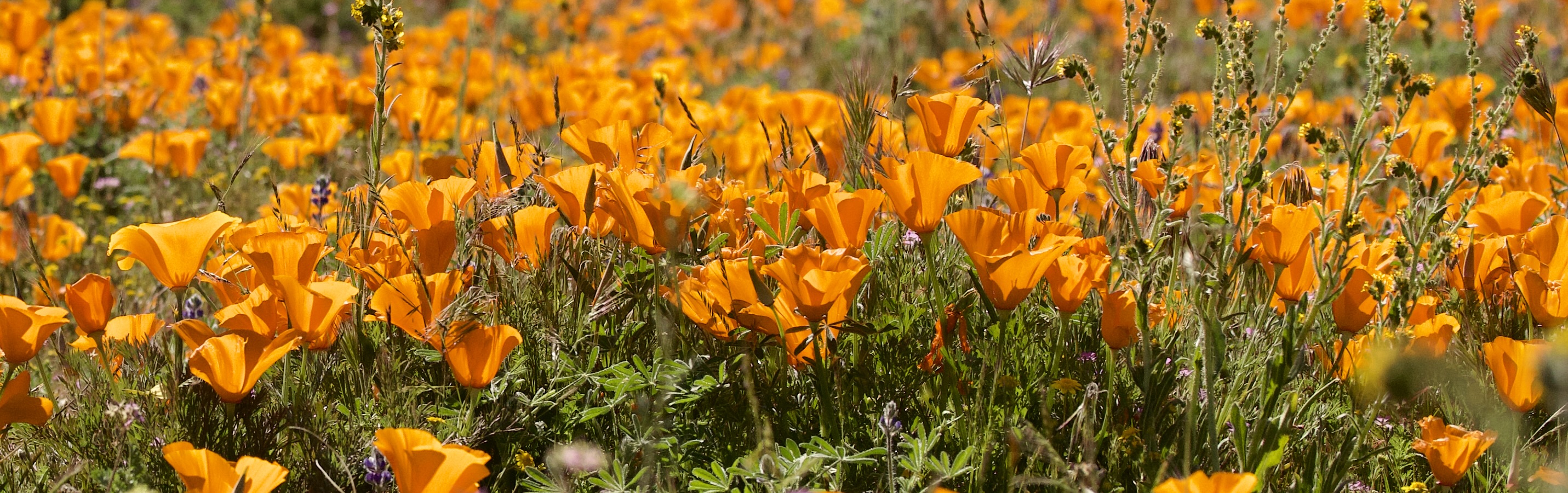
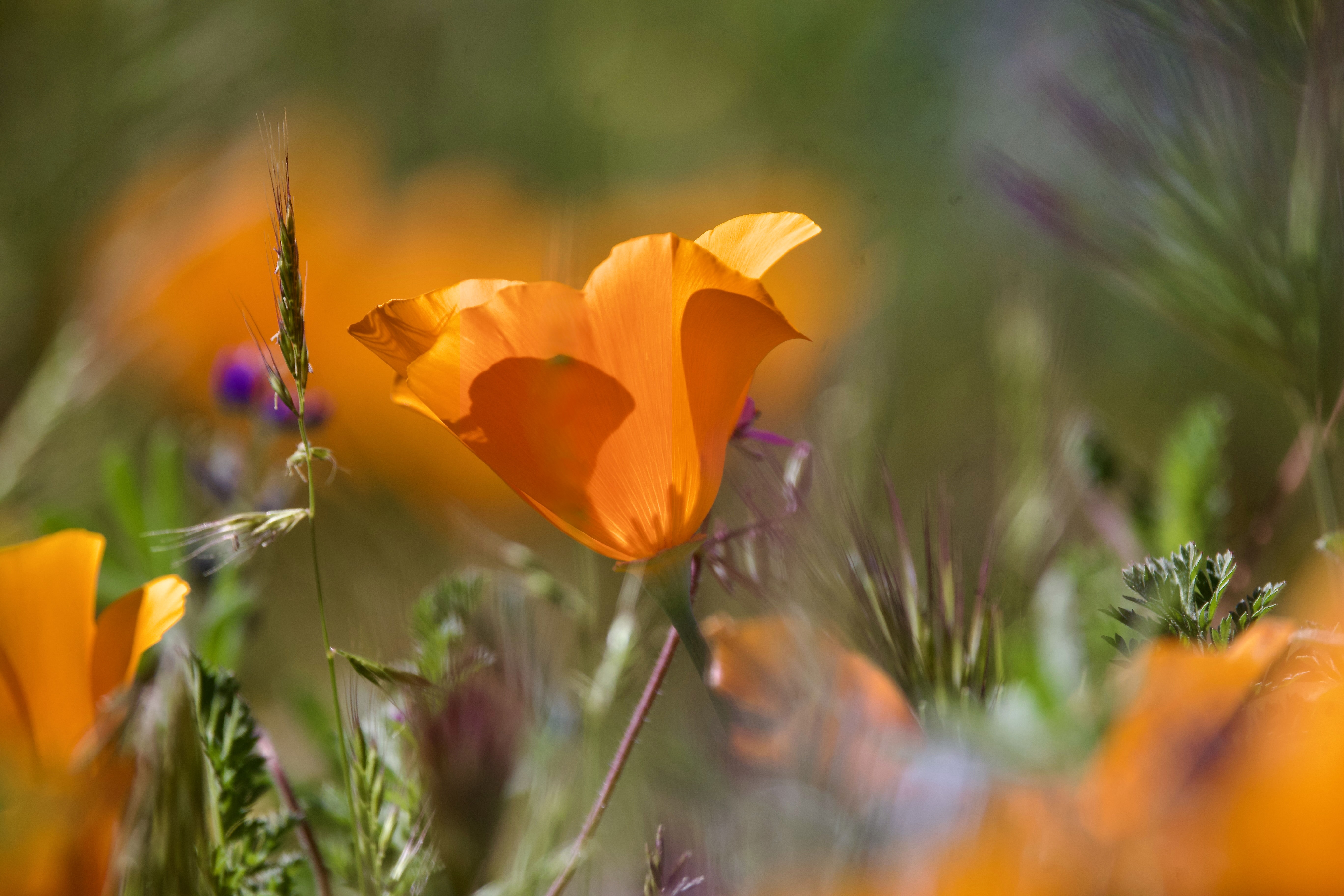
In 1903 the California poppy, Eschscholzia californica, became the official state flower of California. The California poppy is commonly seen blooming in the spring and summer. It flowers along country roads and freeways throughout much of the state. This makes the plant a highly recognizable symbol of California. April 6 of each year is officially designated as California Poppy Day.
I have been asked many questions since I began my full time RV Lifestyle. Where is your favorite place? Are you going back to….? When will you choose where to live? What has been your best day ever.
There are many Best Days Ever. They can big days or little days, big events or little events. Best days ever make my heart sing no matter the size or event.
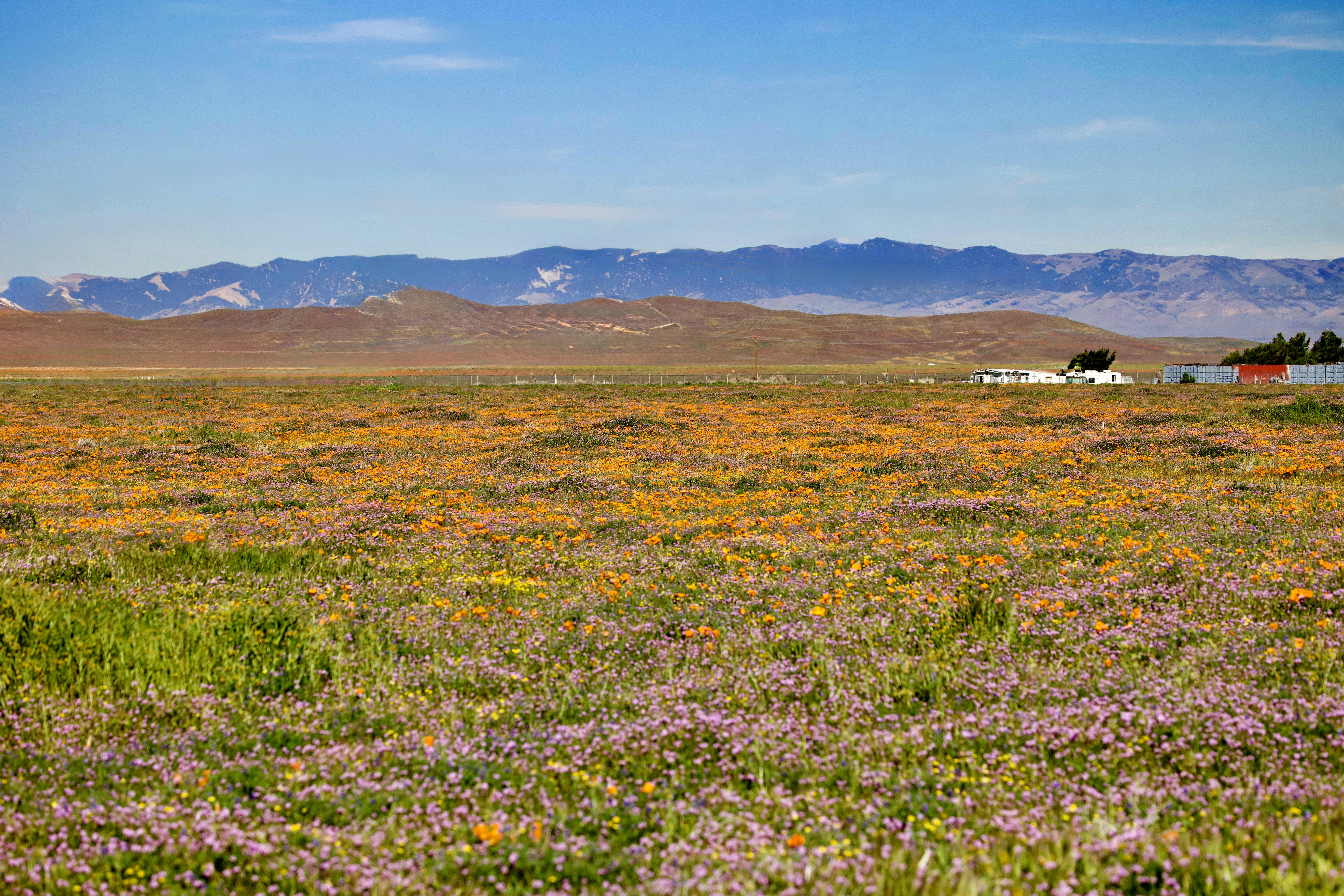
Last week I had my Latest Best Day Ever. A good friend of mine, Phyllis, and I decided to take a road trip. We drove four hours north to see the poppy fields in bloom at the Antelope Valley Poppy Preserve. We drove into the Poppy Preserve in the mid-afternoon on Wednesday.
As I was still in a boot, (post heel surgery) walking and hiking was limited. We walked out on a paved trail. It allowed us to see over the Antelope Valley and enjoy all those beautiful orange flowers. But wait…there were many other flowers as well that helped those California Poppies pop even more.
What flowers grow among the California Poppies?
Goldfields: Yellow flowers that often carpet the fields alongside the poppies.
Owl Clover: Purplish-pink flowers.
Creme Cups: White, cup-shaped flowers.
Lupine: Ranging from dwarf to taller purple spikes.
Lacy Phacelia: Purple-blue flowers.
Coreopsis: Yellow sunflowers.
Red Stem Filaree: Small pink-purple flowers.
After spending the night in Lancaster, California we went back to the poppy fields the next morning. We never made it to the reserve. We discovered good dirt roads surrounded with poppy fields and many other kinds of flowers. We never resist a challenge. So, we took Phyllis’s Prius onto the dirt roads. We immersed ourselves in the flowers of the Antelope Valley.
I am a photographer so how could this post not include a video of my most current Best Day Ever. It is 7 minutes long. There is a slight pause between the first and second piece of music. Don’t leave too soon. And you can click on any photo in the blog and it will enlarge the photo. You can get more eye candy that way. Enjoy the Slideshow.
As most know I am a traveler and wanderer. I look for places outside. I look for wildlife to keep my camera busy. I have been stationary for almost six weeks. I have been getting itchy to move. I knew going into this heel surgery that the healing process is long. And I have been good giving myself the time to heal. I know that getting out was good for this wandering woman
I love nature. It always has the ability to surprise me. I knew I would see poppies. I did not realize how absolutely charmed and enthralled I would be among the fields of blossoms. It was so wonderful to spend the day looking at flowers and a few birds. It was breathtakingly beautiful. It made me so happy. It made me decide that this was one of my Latest Best Day Ever.
And a big shout out to Phyllis. It is always so wonderful to have a friend who is willing to go along on a last minute adventure.
Today I am thankful for the big wide open outdoors. There is always something new to find and explore and be in awe over.