Well it has been an action-packed two weeks. When traveling with a tour group, one is on the move. I have seen a lot of Turkyie and reawakened some ancient world history.
Before I get on the plane, I wanted to share some photos of the last places I have been since I last posted.
First stop was on the Silk Road at a Caravanserais. Hmmm…What is that?
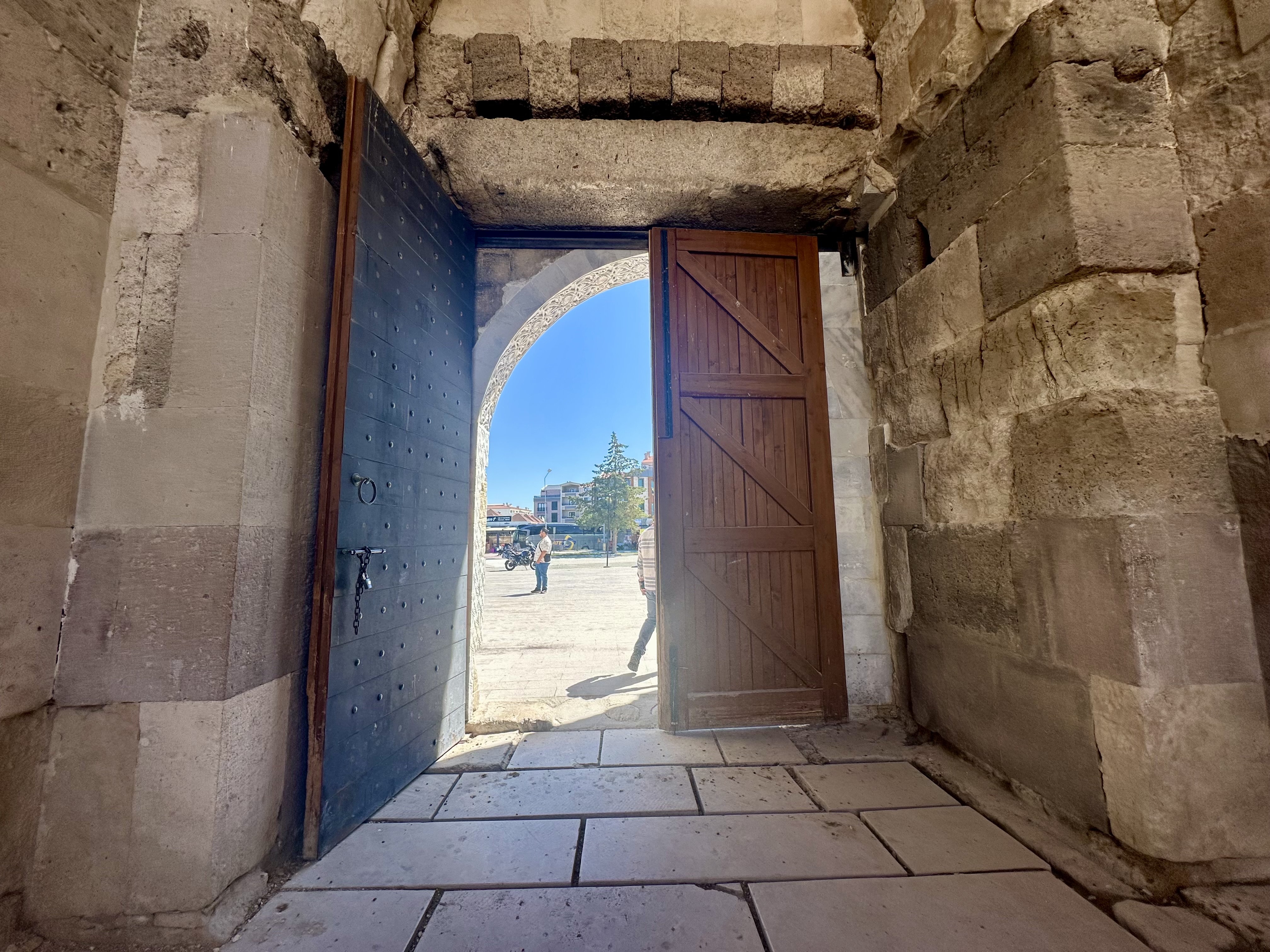
The site, formally known as Sultan Han, is widely regarded as one of the finest surviving examples of Seljuk-era architecture anywhere in the world, and carries the additional distinction of being the largest caravanserai still standing in the entire country — covering approximately 4,900 square metres, which is a considerable amount of 13th-century stonework by anyone’s standards. It was built between 1229 and 1236 on the orders of the Seljuk Sultan Alaeddin Keykubad I, who had apparently decided that the 300-kilometre stretch of road between Konya and Aksaray needed a decent pit stop, and wasn’t going to do things by halves.
The word han translates roughly as “inn” or “hostel,” which rather undersells this place. Caravanserais like this one were the essential infrastructure of the medieval trading world — vital stopping points along the great overland routes of the age, including the Silk Road, that extraordinary network of tracks and paths connecting China and Central Asia to the Mediterranean and beyond. Merchants travelling these routes were shifting silk, spices, ceramics, glassware, and every other commodity you care to mention across thousands of miles of difficult and often dangerous terrain. They needed somewhere to stop, eat, sleep, water their animals, and repair their equipment. Sultan Han provided all of that, and at the Seljuk Sultan’s express instruction, it did so entirely free of charge for the first three days of any traveller’s stay. Three days. Free food, free lodging, free stabling. The medieval equivalent of an extremely generous service station.
In practical terms, these structures were simultaneously inns, warehouses, stables, bathhouses, mosques, and fortresses. The fortress element was not decorative — travelling merchants were carrying valuable goods through remote and occasionally lawless territory, and the thick stone walls and single heavily guarded entrance were there for very good reason. The Seljuk Sultanate of Rûm, which controlled much of Anatolia during this period, built a string of caravanserais roughly a day’s journey apart — approximately 30 to 40 kilometres (about 25 miles), a camel’s ride length— specifically to encourage and protect trade.

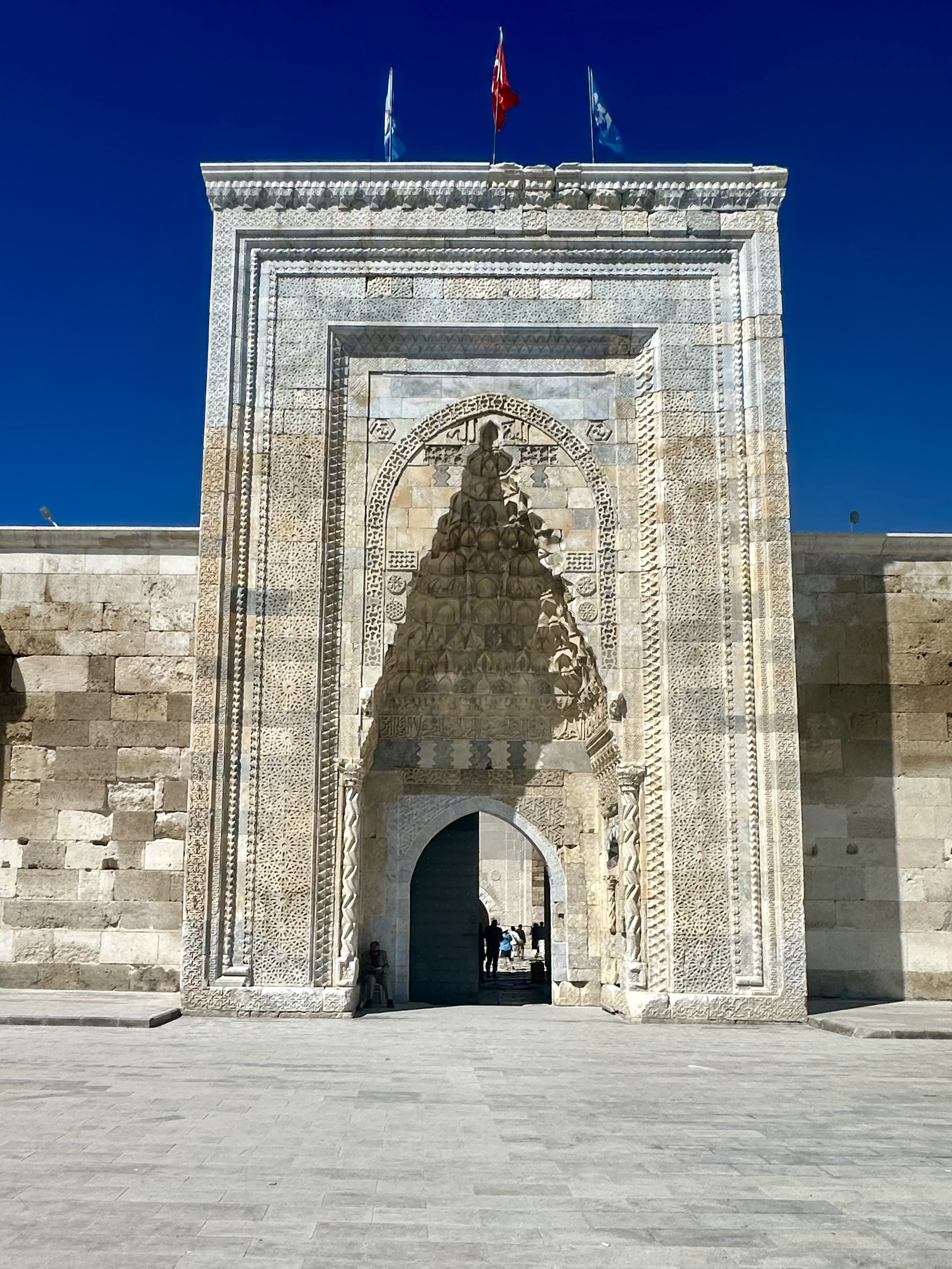
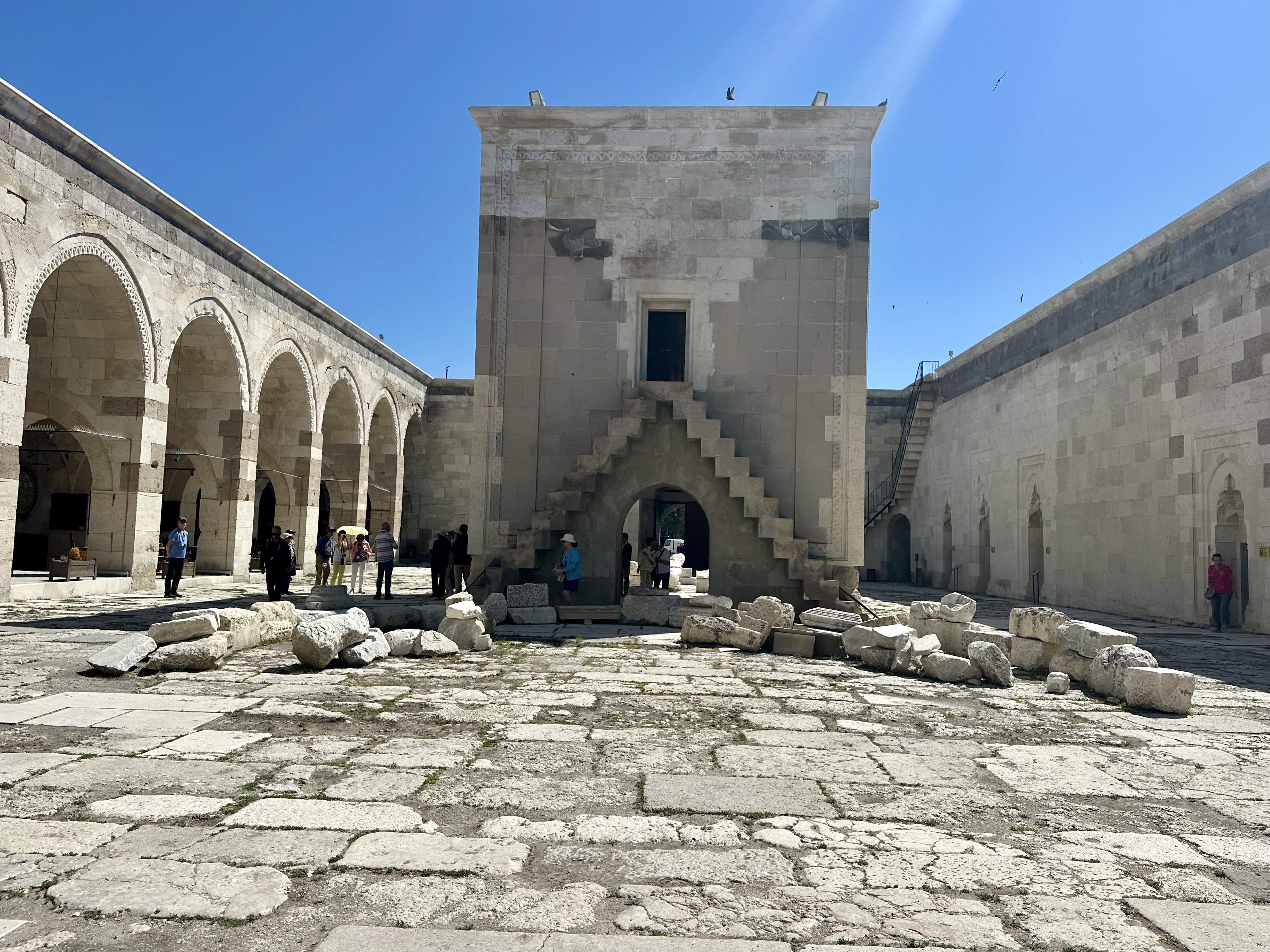
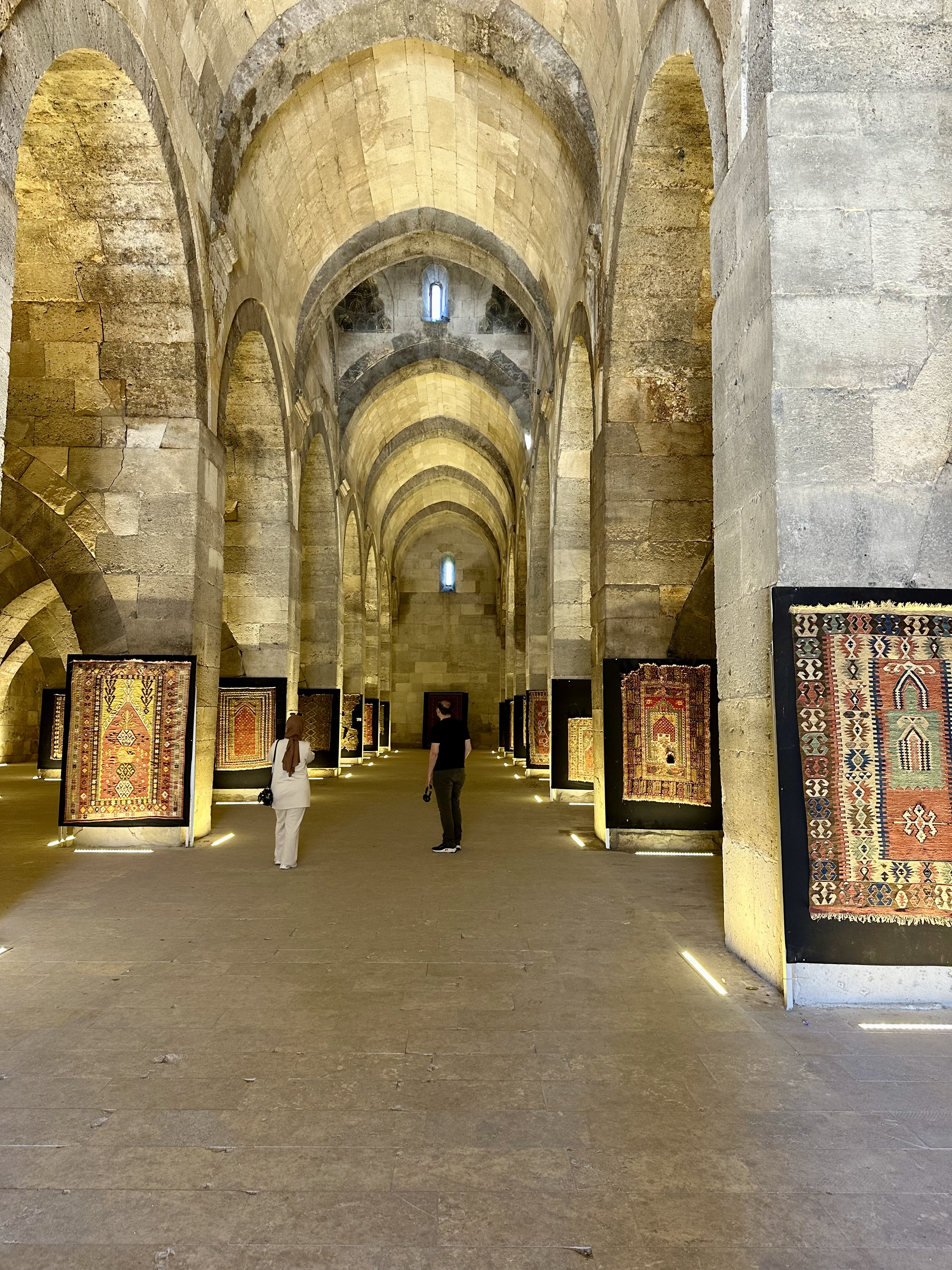
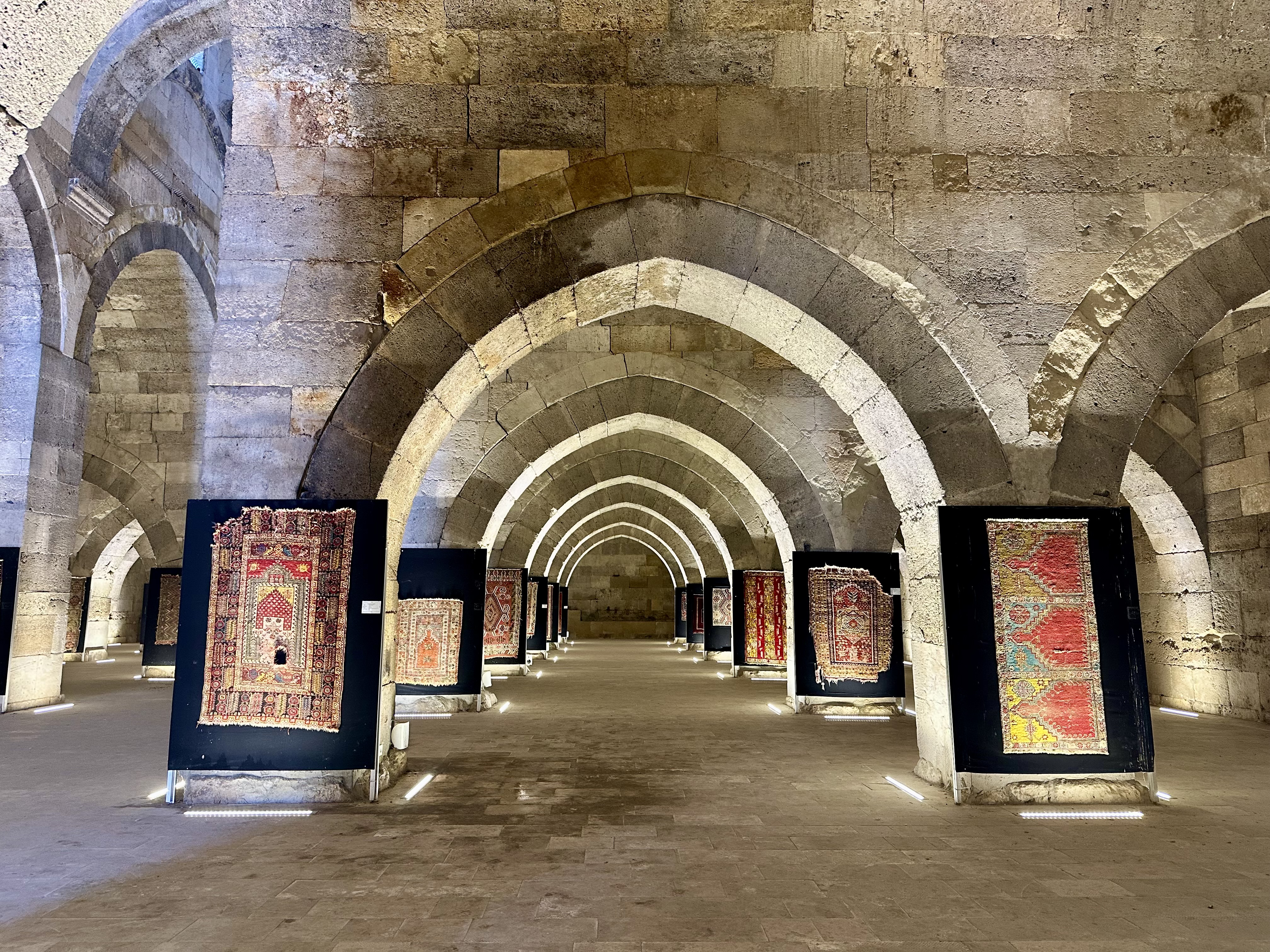

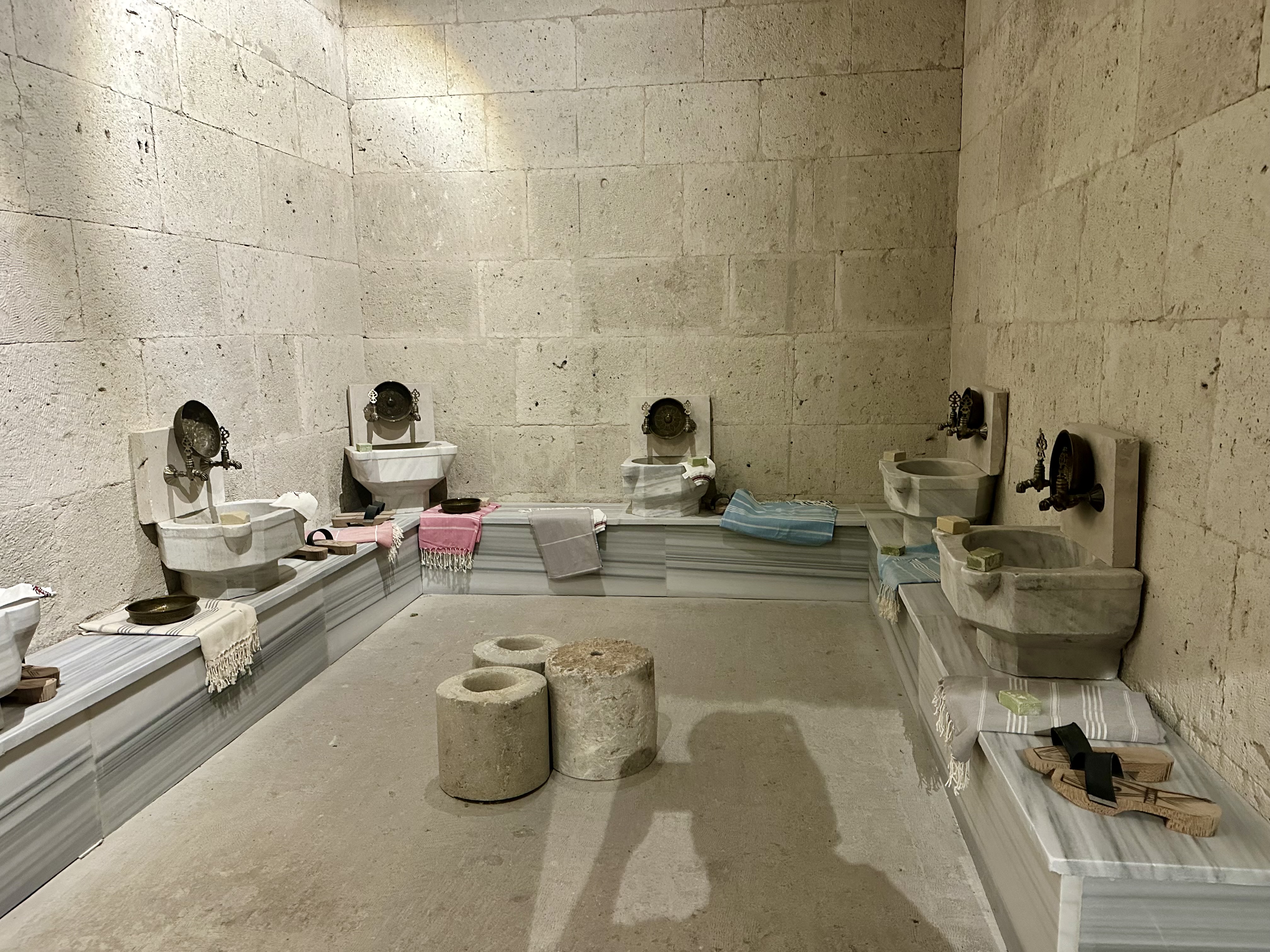
Once through the entrance, this courtyard would have been absolutely heaving with life. During the warmer months, traders arriving along the old caravan routes would have bedded down here alongside their camels, horses, and whatever else they’d dragged across the desert. It wasn’t glamorous, but then neither is a Premier Inn, and at least here you could see the stars.
One side of the courtyard is lined with a covered arcade — a shaded walkway of the kind you find all over the ancient trading world, designed less for aesthetic charm and more for keeping the sun off your head while you argued about the price of silk.
It’s generally believed that this arcade area originally served as stabling for animals or storage for goods — the kind of unglamorous but essential infrastructure that kept the whole trading system ticking. Nobody builds a plaque for the horse stalls, of course, but without them the merchants would have got precisely nowhere. Over the centuries, as the caravans stopped coming and tourism quietly took their place, the space was repurposed. It’s a practical reuse of what was there, and to be fair, it doesn’t feel cynically commercial — more like a sensible acknowledgement that the world moves on and people still need somewhere to sit.

As a reminder of the Caravan Days today next to the site is a small shopping area with a cafe. You can buy many things there but tea and ice cream are still a favoriite.
Next it was on to Cappadocia the place of the Cave Houses and Churches with a history that goes way back.
The cave houses of Cappadocia, carved directly into the soft volcanic tuff of central Anatolia, have been continuously inhabited for thousands of years. Originally adapted by ancient civilizations as basic shelter, they later served as safe havens for persecuted Christians before evolving into today’s sought-after boutique hotels.


Hittites & Phrygians (circa 8th–7th Centuries BC): Early inhabitants of the Anatolian plateau began carving basic structures into the soft volcanic rock for seasonal storage, wineries, and simple dwellings.
Geological Advantage: The landscape’s “fairy chimneys” are made of volcanic tuff, which is remarkably easy to carve with basic tools, yet hardens into a strong, insulating material when exposed to air.The cave houses of Cappadocia, carved directly into the soft volcanic tuff of central Anatolia, have been continuously inhabited for thousands of years. Originally adapted by ancient civilizations as basic shelter, they later served as safe havens for persecuted Christians before evolving into today’s sought-after boutique hotels.
The Origins: Ancient Civilizations
Hittites & Phrygians (circa 8th–7th Centuries BC): Early inhabitants of the Anatolian plateau began carving basic structures into the soft volcanic rock for seasonal storage, wineries, and simple dwellings.
Geological Advantage: The landscape’s “fairy chimneys” are made of volcanic tuff, which is remarkably easy to carve with basic tools, yet hardens into a strong, insulating material when exposed to air.
Kayakapi Premium Caves – Cappadocia
The Byzantine Era: Monasteries and Refuge
Early Christians (4th Century AD onward): During the Roman Empire and subsequent Arab-Byzantine conflicts, Christians facing religious persecution sought refuge in the region.
Underground Cities: Locals expanded the cave systems into massive, multi-level underground cities like Derinkuyu Underground City and Kaymaklı. These subterranean marvels contained living quarters, ventilation shafts, wells, and stables, allowing thousands to hide from invaders for weeks.
Cave Churches: Above ground, monks and ascetics carved intricate churches and monasteries into the cliffs and spires, such as those found in the Göreme Open Air Museum.


The Ottoman Period: Community Living
Expansion (18th & 19th Centuries): Throughout the Ottoman Empire, the rock-cut homes continued to be heavily utilized by the local Turkish and Greek populations.
Architecture: Traditional Cappadocian stone-cutting flourished during this time. Houses were built with arched doorways, stylized ivy motifs, and were often paired with carved dovecotes (pigeon houses) which provided essential agricultural fertilizer.Modern Times: Desertion and Revival
Mid-20th Century Relocation: By the mid-20th century, many residents began abandoning the cave dwellings for modern brick-and-mortar homes, as living in caves was increasingly associated with poverty.
Tourism Boom: In the late 1990s and 2000s, the value of the caves was radically reassessed. Their unparalleled natural insulation—cool in the summer, warm in the winter—and unique aesthetic transformed them into a booming tourism industry.
Today: Many historic cave houses have been beautifully restored into world-famous boutique hotels, preserving an ancient architectural legacy while meeting modern living standards


The Byzantine Era: Monasteries and Refuges
Early Christians (4th Century AD onward): During the Roman Empire and subsequent Arab-Byzantine conflicts, Christians facing religious persecution sought refuge in the region.
Cave Churches: Above ground, monks and ascetics carved intricate churches and monasteries into the cliffs and spires, such as those found in the Göreme Open Air Museum.
The Ottoman Period: Community Living
Expansion (18th & 19th Centuries): Throughout the Ottoman Empire, the rock-cut homes continued to be heavily utilized by the local Turkish and Greek populations.
Architecture: Traditional Cappadocian stone-cutting flourished during this time. Houses were built with arched doorways, stylized ivy motifs, and were often paired with carved dovecotes (pigeon houses) which provided essential agricultural fertilizer.
Modern Times: Desertion and Revival
Mid-20th Century Relocation: By the mid-20th century, many residents began abandoning the cave dwellings for modern brick-and-mortar homes, as living in caves was increasingly associated with poverty.
Tourism Boom: In the late 1990s and 2000s, the value of the caves was radically reassessed. Their unparalleled natural insulation—cool in the summer, warm in the winter—and unique aesthetic transformed them into a booming tourism industry.
Today: Many historic cave houses have been beautifully restored into world-famous boutique hotels, preserving an ancient architectural legacy while meeting modern living standards.

Our accomodations were in one of the cave hotels. It was exotic and stayed a pretty steady temperature without the need for airconditioning. It was a large room. When we first open the door I thought I was looking in a mirror. My bed was in the back and Mary’s to the forward part of the photo.
The last evening we had the opportunity to see the Prayer ceremony featuring the Whirling Dervishes.

A “whirling dervish” refers to a practitioner of the Mevlevi Order of Sufism, a mystical branch of Islam. Founded in the 13th century by the followers of the poet and mystic Jalāl al-Dīn Muḥammad Rūmī (Mevlana), they are famous for their Sema—an ecstatic, spinning meditation ritual performed to achieve a connection with God.The traditional ceremony and physical movements carry deep symbolic meaning:The Attire: Dervishes wear a tall, brown felt cap called a sikke (symbolizing the tombstone of the ego) and a long, sleeveless white robe called a tennure (symbolizing the ego’s shroud).The Dance: While spinning rhythmically, the dervish raises their arms toward heaven. Their right palm points upward to receive divine grace, while the left palm points downward to bestow that grace upon humanity.Cosmic Connection: The continuous spinning is a symbolic imitation of the planets in the solar system orbiting the sun and a mechanism to abandon personal desires in order to reach the divine.


The last day before we flew back to Istanbul was a mix of events leading off with viewing the area of the Fairy Chimneys. We were suppose to fly over them in a Hot Air Balloon but the weather did not cooperate.


Weather and Wind hellped create thes unique formations.

We stopped at a coffee house that served Turkish Coffee, Pistachio Coffee and Hazelnut Coffee. I had the Pistachio and it was delicious.
One of our last stops before our flight back to Istanbul was a stop to learn about pottery making and it’s importance to Turkyie.
The art of Turkish ceramics developed in Anatolia in the earliest ages of the region, and play a very important role in Turkey’s history and culture.


Turkey’s history of ceramic production dates back to about 10,000 years, with different types developing in multiple regions. During the mid-20th century era, mass production began as Turkish ceramic producers built factories to produce the ceramics on a much larger scale, leading to the popularity and incline in production of Turkish ceramics.
A big part of the fascination with Turkish ceramics was, and is, the strength of the shell. Turkish ceramics can hold good condition and their color for centuries.
During the 12th century, the Seljuk Turks created the ceramics using themes that focused on geometrical shapes and patterns and prioritizing shades of blue. As the culture shifted from the 15th and 17th centuries during the Ottoman Empire, colors of ceramics became more bold and distinctive, with clearer outlines and shapes. Iznik work grew to its peak in the 16th century, leading to the production of over 300 artistic workshops running effectively at once.


During this time, ceramics were not only used for decoration but also to assist in building and formulating a design for plain surfaces. Tile making, brick production, and roof production all have creative groups that are considered branches of ceramics. The most popular type of Turkish ceramic is the Iznik, however, there are many historic, regional variations of ceramics.
And just like that my time in Turkey has come to an end. Well almost.